

The grocery shopping experience has completely transformed in the past few years. With busy lifestyles, rising consumer expectations, and the convenience of doorstep delivery, grocery apps have become a necessity rather than a luxury. Whether you’re a supermarket chain, a local store, or a startup entering the on-demand delivery space, a well-designed grocery app can significantly increase sales, customer loyalty, and overall brand visibility.
But what exactly makes a grocery app successful? What features actually influence user experience, conversions, and long-term growth?
This blog breaks down the key features, must-have functionalities, and advanced additions that you should look into before grocery app development in today’s competitive digital marketplace.
Why Grocery Apps Are More Popular Than Ever
The on-demand grocery delivery market is booming, driven by changing shopping behaviors and digital transformation. Customers want speed, convenience, and smooth experiences. Your grocery apps can deliver that by offering personalized product recommendations, scheduled deliveries, and secure payments, all in one place.
Businesses benefit from grocery apps because they streamline operations, reduce in-store rush, and provide valuable user data to make smarter decisions.
Whether you’re building a simple app or a full-scale delivery platform like Instacart, Walmart+, or Blinkit, the features you choose will determine your app’s success.
Core Features Every Successful Grocery App Must Have
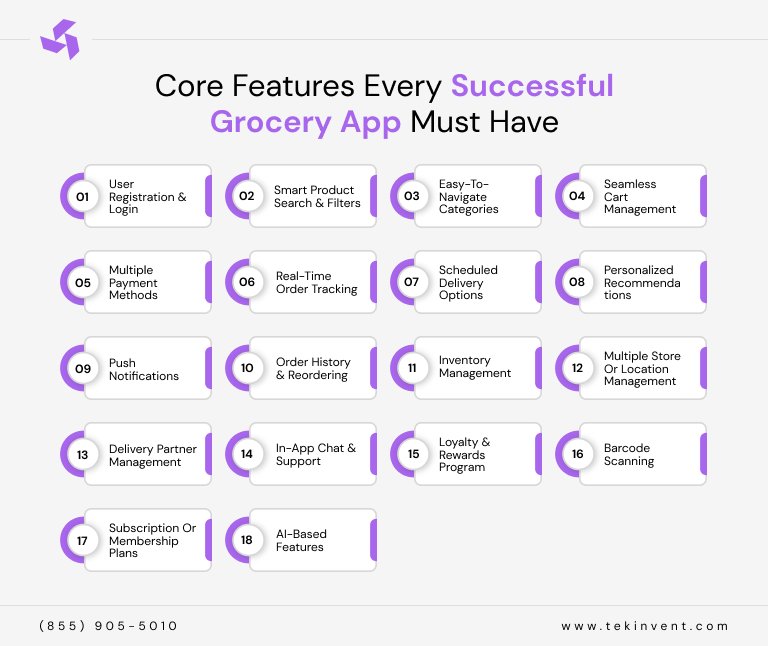
These are the essential features that ensure a smooth shopping experience and help users complete their purchase effortlessly.
1. User Registration & Login
Simple registration with email, phone, or social login ensures quick access and a personalized shopping experience from the first interaction.
Simple Registration
- Signup via email, phone number, or social media
- Quick OTP-based verification
- Minimal form fields
Social Login
- Google, Facebook, and Apple login
- Increases signup rate and user retention
2. Smart Product Search & Filters
Your grocery app may contain hundreds or thousands of items. Advanced search with filters helps users quickly find items by category, brand, price, or dietary preference.
Powerful Search
- Predictive suggestions
- Voice search for added convenience
- Error-tolerant search to handle misspellings
Advanced Filters
Users should be able to sort by:
- Price
- Brand
- Category
- Dietary preferences (organic, gluten-free, halal, vegan)
Fast and accurate search improves user satisfaction and boosts sales.
3. Easy-to-Navigate Categories
Fully organized categories make browsing effortless, allowing users to find essentials faster without confusion or unnecessary steps. Clear categorization reduces user frustration and increases add-to-cart rates.
Common Categories Include:
- Fruits & Vegetables
- Dairy & Eggs
- Snacks & Beverages
- Household Items
- Personal Care
- Frozen Foods
Essential Shopping & Checkout Features
These features ensure users complete their purchase without friction.
4. Seamless Cart Management
Add, remove, or update items easily with smooth cart syncing across devices for a hassle-free checkout experience. Persistent carts also help with retargeting customers.
Key Cart Features:
- Add/remove items with one tap
- Auto-save cart for later
- Real-time inventory updates
- Apply promo codes instantly
5. Secure & Multiple Payment Methods
Offer cards, wallets, COD, and net banking with strong encryption for safe, flexible, and trusted payments. Users trust apps that offer seamless and secure payment options. The easier it is to pay, the more likely users will complete their purchase.
Common Payment Options:
- Debit/credit cards
- Cash on delivery
- Mobile wallets (Apple Pay, Google Pay)
- Local payment systems (e.g., Easypaisa, Paytm)
Security Includes:
- PCI-DSS compliance
- Encrypted transactions
- Tokenization
6. Real-Time Order Tracking
Once users place an order, they want to know where it is. Live tracking updates customers on packing, dispatch, and delivery status, providing complete transparency throughout the order journey. Live tracking increases transparency and trust, leading to better customer satisfaction.
Tracking Includes:
- Order confirmed
- Packed
- Out for delivery
- Estimated delivery time
7. Scheduled Delivery Options
A major advantage of grocery apps is the ability to choose delivery times. Allow customers to choose preferred delivery slots for convenience, flexibility, and better order planning. Providing flexibility sets a strong competitive edge.
Options Include:
- Instant delivery (within 30–60 minutes)
- Same-day delivery
- Next-day delivery
- Slot-based scheduling
Customer Experience Features That Boost Engagement

These features enhance user experience and make the app more enjoyable.
8. Personalized Recommendations
Recommendations significantly improve conversions and average order value. AI-driven product suggestions and smart algorithms help users discover products they might need but didn’t search for. In fact, doing that based on user history increases convenience and boosts average order value.
Recommendations Based On:
- Purchase history
- Browsing patterns
- Seasonal demand
- In-stock items
9. Push Notifications
Send timely updates about offers, restocks, order status, and personalized deals to increase engagement. Personalized notifications increase repeat purchases without overwhelming users.
Useful Notifications:
- Delivery updates
- Price drops
- New arrivals
- Discount alerts
- Reorder reminders
10. Order History & Reordering
Easy access to past purchases enables quick reordering, saving time for repeat shoppers. Most grocery purchases are repetitive. Users absolutely love an app that saves users significant time and increases app stickiness.
Features Include:
- View past orders
- One-tap reordering
- Frequently purchased items list
Admin & Management Features for Smooth Operations
A successful grocery app works well for both customers and business owners.
11. Inventory Management
Nobody likes to put something in the cart and pay for it only to find out it’s out of stock. Real-time stock updates prevent order issues, ensuring accurate product availability and better operational efficiency. A strong inventory management prevents lost sales.
Includes:
- Track product availability
- Auto-remove unavailable items
- Update stock levels instantly
12. Multiple Store or Location Management
If the business has multiple outlets then you should be able to manage inventory, pricing, and delivery areas across multiple locations within a single dashboard. This is essential for chains and franchises.
Capabilities Include:
- Geo-location-based store assignment
- Different price lists for each store
- Unique inventory per branch
13. Delivery Partner Management
Smooth delivery operations lead to faster and more reliable service. Assign tasks, track riders, and monitor deliveries to ensure timely order fulfillment. Fast and reliable deliveries build customer trust.
Include Features Like:
- Delivery agent app
- Route optimization
- Status tracking
- Performance analytics
Advanced Features That Give Your Grocery App a Competitive Advantage

These are not mandatory but can significantly elevate your mobile app.
14. In-App Chat & Support
Customers don’t appreciate it if they have to email and wait for the grocery app to get back on their issue. Instead instant assistance for order issues, refunds, or general queries enhances trust and customer satisfaction.
Support Options Include:
- Live chat
- Chatbot for FAQs
- Call and email support
15. Loyalty & Rewards Program
Reward repeat customers with points, discounts, and exclusive perks to boost retention.
Things You Can Offer:
- Points for every purchase
- Cashback
- Referral bonuses
- Exclusive discounts
16. Barcode Scanning
Quick product scanning lets users add items to the cart instantly or check details in-store.
Uses Include:
- Quick product lookup
- Checking item details
- Price comparison
17. Subscription or Membership Plans
Offer unlimited free deliveries, exclusive discounts, and scheduled orders through paid membership tiers.
Examples:
- Free delivery
- Exclusive discounts
- Priority support
18. AI-Based Features
AI improves recommendations, predicts demand, automates support, and enhances overall shopping convenience.
Examples Include:
- Smart recommendations
- Personalized home screens
- Predictive ordering (“You may need milk this week”)
What Makes a Grocery App Truly Successful?
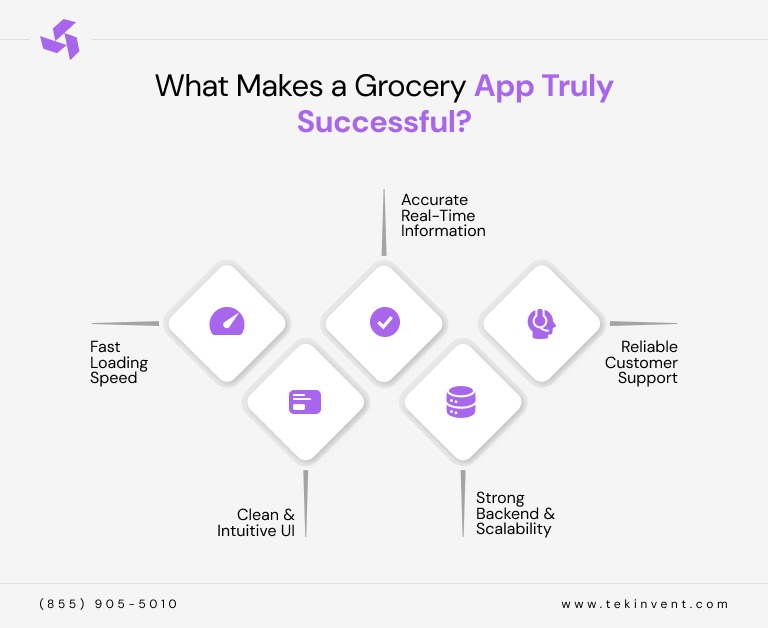
A successful grocery app delivers convenience, speed, and reliability. It must provide smooth navigation, accurate product availability, secure payments, real-time updates, and a seamless shopping experience. When users trust the app for daily essentials, engagement increases, retention improves, and long-term business growth becomes easier and more predictable.
Here’s what truly sets top-performing apps apart:
1. Fast Loading Speed
Fast loading speed is crucial because grocery shoppers expect instant access to products and categories. Slow performance directly impacts cart abandonment and user satisfaction. Optimizing images, using caching, and building a strong backend ensures quick responses, keeps users engaged, and significantly improves conversion rates, especially during peak shopping hours or promotions.
2. Clean & Intuitive UI
A clean, intuitive UI makes navigation effortless, helping users find essentials quickly. Clear categories, minimal clutter, and visually appealing layouts enhance shopping flow. When customers can browse, search, and checkout without confusion, satisfaction rises. A user-friendly interface builds trust and encourages repeat purchases, turning casual shoppers into loyal customers.
3. Accurate Real-Time Information
Accurate real-time updates matter for grocery apps because users rely on availability, delivery slots, and pricing details. Outdated data leads to frustration and canceled orders. Integrating real-time inventory, live order tracking, and dynamic pricing ensures transparency, reduces errors, and provides a consistent shopping experience that customers can confidently depend on every time.
4. Strong Backend & Scalability
A strong backend ensures the app handles heavy traffic, large inventories, and multiple orders without slowing down. Scalable architecture supports growth as your customer base expands. With efficient APIs, secure databases, and optimized server management, businesses maintain smooth performance, reduce downtime, and support long-term operational success in competitive markets.
5. Reliable Customer Support
Reliable customer support is essential in grocery apps due to time-sensitive orders. Whether it’s missing items, delivery delays, or payment issues, fast assistance builds trust. Integrating chat support, FAQs, and quick ticket resolution helps customers feel valued. Responsive support leads to higher satisfaction, repeat orders, and stronger brand loyalty.
Final Thoughts
Building a successful grocery app goes beyond adding basic features. It requires a deep understanding of user needs, seamless usability, strong backend infrastructure, and advanced tools that enhance convenience and personalization. Whether you’re a startup or an established retailer, focusing on the right features will help you create an app that customers trust, love, and use regularly.
With the right development partner, strategy, and tech stack, your grocery app can become a powerful growth engine for your business.

Build Smart with The Right Team.
We bring expertise, technology, and trust you look for in your digital journey.