Retail app development cost depends on the shopping experience and store operations the product needs to support. A catalog and checkout flow for one retailer is different from an omnichannel product with loyalty, inventory visibility, store pickup, returns, and multiple systems. Define the customer journey and the business processes behind it before comparing estimates.
The visible shopping screens are only part of the work. Product data, pricing, promotions, order fulfillment, customer accounts, and support also need clear rules. A proposal that does not describe those dependencies is difficult to compare with another.
Start with the customer journey
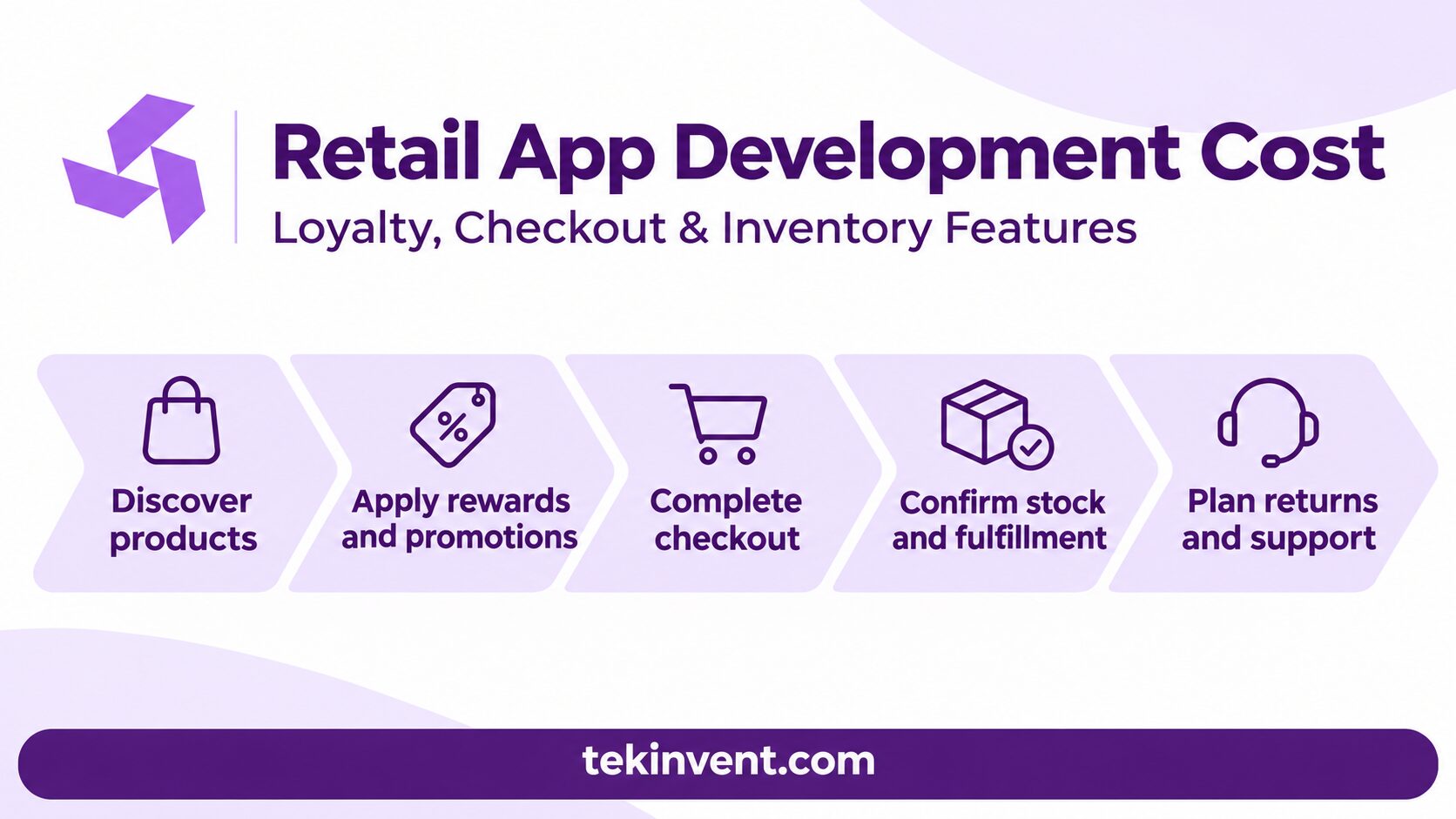
Map how a customer discovers a product, checks details, adds it to a cart, pays, receives the order, and gets help. Identify the moments where customers need accurate information: price, size, availability, delivery estimate, pickup location, and return terms.
Decide whether the app supports delivery, in-store pickup, ship-to-home, or a mix. Each method affects inventory, checkout, order status, and customer service. A retailer may want all options eventually, but the first release can focus on the flow that matters most.
Ask store and support staff where the current process creates repeated work. If employees cannot see online order status, customers may receive conflicting answers. Include those operational users in discovery before building the customer interface.
Product catalog and discovery
The catalog may include categories, images, variants, sizes, colors, product descriptions, stock status, and related items. Product data needs an owner and a reliable source. If the retailer maintains details across several tools, decide how the app receives updates and how errors are corrected.
Search, filters, and sorting should reflect how customers shop. A small catalog may need simple categories and clear search; a broad catalog may need better filtering, synonyms, and variant handling. Test real customer tasks rather than adding search features because they are common in other retail apps.
Product imagery and content can also affect launch effort. Determine who provides and approves photos, descriptions, and accessibility text. Content preparation is often separate from software development and should be budgeted explicitly.
Checkout, payments, and promotions
Checkout can include guest purchase, accounts, saved addresses, shipping options, taxes, discount codes, gift cards, and order confirmation. Each policy needs a clear rule. For example, decide whether a promotion can combine with loyalty rewards and what happens when a product becomes unavailable after payment.
Use a payment provider’s supported flow and understand its fees and integration requirements. Plan refunds, partial fulfillment, failed payments, duplicate submissions, and receipts. Test those cases with the systems the retailer actually uses.
Keep checkout focused. Extra account steps or unclear fees can make customers stop before purchase. A usability test can show whether the information is presented at the right point and whether the customer understands the final total.
Loyalty and personalization
Loyalty functionality can range from a digital membership card to points, rewards, tiers, referrals, and personalized offers. Each rule adds configuration, testing, and customer support needs. Define the business goal first: increase repeat purchases, make rewards easier to redeem, or provide a unified membership experience across channels.
If loyalty data already lives in another platform, confirm how accounts are matched and points are synchronized. Decide what happens when a customer uses a different email or phone number. Duplicated accounts can lead to missing rewards and support requests.
Personalized offers depend on data quality, consent, and clear relevance. Do not assume that collecting more behavior data improves the experience. Specify what is collected, how it is used, and who can access it, with appropriate privacy review.
Inventory and fulfillment integrations
Inventory visibility is valuable only when it is accurate enough for the promise the retailer makes. Define how often stock updates and which system is authoritative. If the count is delayed, communicate availability carefully and establish what staff do when an order cannot be filled.
Store pickup may require location selection, pickup windows, order staging, arrival notifications, and handoff verification. Shipping needs carrier options, tracking updates, and exception handling. Returns may start in the app but still depend on store policy and staff tools.
List connections to ecommerce platforms, point-of-sale systems, inventory tools, payment providers, loyalty services, shipping carriers, and customer support. Confirm API access, documentation, credentials, sandbox availability, and vendor responsibilities before finalizing the schedule.
Cost factors and proposal structure
Ask for an estimate broken into discovery, design, customer interfaces, staff tools, catalog and checkout, integrations, testing, deployment, and support. State the platforms, store count, fulfillment methods, and systems included.
Common cost drivers include:
- Catalog size, variants, and content condition
- Checkout rules, promotions, and payment methods
- Loyalty logic and existing membership data
- Inventory sync and multi-location availability
- Shipping, pickup, returns, and order status
- Staff permissions and administrative tools
- Accessibility, testing, monitoring, and maintenance
The effort depends on the retailer’s existing technology and data. Ask vendors to list assumptions, unknowns, and exclusions. A quote should make clear whether content cleanup, product entry, data migration, vendor fees, training, and app store preparation are included.
Ongoing costs and responsibilities
Budget for hosting, payment processing, messaging, shipping or mapping services, monitoring, maintenance, and platform updates after launch. Assign an internal owner for product data, promotions, loyalty rules, support, and access reviews.
Also consider operational costs. Store staff may need to pick, pack, stage, or reconcile app orders. If the new workflow requires manual entry in a second system, include that labor in the business case. A product can increase digital sales while also creating workload that should be planned.
Protect customer account and purchase data. Use role-based access and secure account recovery. Set retention and analytics practices with appropriate privacy review, and avoid sending sensitive details into tools that have not been assessed.
Reduce risk with a phased release
Choose one customer journey and one fulfillment model for the first release. For example, start with a focused catalog and pickup workflow before adding shipping, returns, and advanced rewards. Make sure the first release supports a full purchase path and gives staff enough information to fulfill it.
Pilot with a defined group or store. Test checkout, inventory accuracy, order status, refunds, and support. Review completion rates alongside cancellations, unavailable items, staff rework, and customer questions. Use the findings to prioritize the next phase.
If a custom commerce experience is being considered, compare it with configuring an existing retail platform. Custom development may fit a distinctive workflow, but it also requires the retailer to own maintenance and future changes. Decide based on full lifecycle effort, not only launch features.
TekInvent’s ecommerce app development services may be relevant when planning catalog, checkout, and fulfillment flows. A mobile app development company can help define what belongs in the first retail release and how integrations fit.
Scope a Retail App Around the Shopping Journey
TekInvent can help map catalog, checkout, loyalty, and store operations before development.
Align customer promises with store capacity
Inventory visibility and pickup estimates are only useful if store teams can fulfill them. Define how many pickup orders a location can handle in each time window and how that capacity changes during busy periods. Decide who can close a slot and how quickly that change appears to customers.
For ship-to-home orders, determine whether inventory is allocated when an order is placed or later during fulfillment. If a store and warehouse can both serve the same customer, specify how the system selects the source and what happens if that location cannot complete the order. These rules affect cost because they shape integration logic and exception handling.
Test an order that is split across locations or arrives when inventory has changed. Customers should receive one coherent status view even if internal teams fulfill different parts. Support staff need enough detail to explain partial shipments, delays, or refunds.
Choose loyalty measures that match the goal
Before adding points or rewards, define the behavior the retailer wants to encourage. Is the goal to make redemption easier, recognize repeat purchases, or connect online and in-store membership? A loyalty feature should have a clear rule for earning, expiration, returns, and account matching.
Measure whether customers can understand and use the program. Track reward lookup, redemption completion, and support contacts about missing points. If staff cannot explain how a purchase qualifies, customers may lose trust even when the software works as designed.
Keep promotion administration manageable. Decide who creates an offer, who approves its terms, and how the app handles conflicting discounts. A complicated loyalty engine can add support burden if store teams do not have time or training to maintain it.
Prepare for customer support and returns
An app creates another channel for questions about orders, accounts, rewards, and returns. Decide whether support begins inside the app, through a website form, or through existing phone channels. Make sure a support agent can retrieve the relevant order and see its current status without broad access to unrelated customer information.
Define how a customer starts a return and whether the process differs for online shipment and store pickup. The app may initiate a request, but store policy and staff tools determine how it is approved and completed. Include cancellation and refund states in testing so the customer sees consistent information across channels.
Include content and merchandising work
Retail teams need a process for launching seasonal collections, changing product details, and retiring discontinued items. Decide who updates this information, how changes are reviewed, and whether updates should appear immediately across channels. If the app and website use separate catalogs, include the reconciliation work in the plan.
Promotions should be tested with real examples before launch. Check minimum purchase rules, excluded items, redemption limits, and what happens when a customer returns a discounted item. A promotion engine may support the campaign, but staff still need clear policies and a way to answer questions.
Make cost comparisons specific
Retail app development estimates become clearer when every proposal describes the same customer journey, store workflow, integrations, and ongoing responsibilities. Share a requirements brief and ask for assumptions in writing. This makes it easier to spot whether a quote omits product data work, staff tooling, or support.
The right first release gives customers a useful way to shop and gives staff a workable way to fulfill orders. Use pilot results to decide whether the next investment should go toward loyalty, inventory accuracy, or another part of the experience.

Build Smart with The Right Team.
We bring expertise, technology, and trust you look for in your digital journey.