
Have you ever asked a development agency for a quote on an app you’ve dreamed up, only to get back a number that felt impossible to pin down? You are not alone. Mobile app development cost is one of the most searched, and most misunderstood, questions in the entire tech industry. The honest answer is that there is no single price tag. For most businesses, the average cost of mobile app development falls between $10,000 and $300,000 or sometimes even more. Smaller, simple apps stay on the lower end. Complex, feature-rich platforms require a much higher investment. Understanding why that range is so wide, and where your own project fits into it, is the first step toward building something that actually gets finished on your budget. This guide breaks down exactly what drives app development cost, why it matters, and how to estimate your own project realistically, without any fluff or confusing jargon. We’ll look at real factors like whether you need a dedicated iOS app development team or a broader approach.
What Actually Determines Mobile App Development Cost?
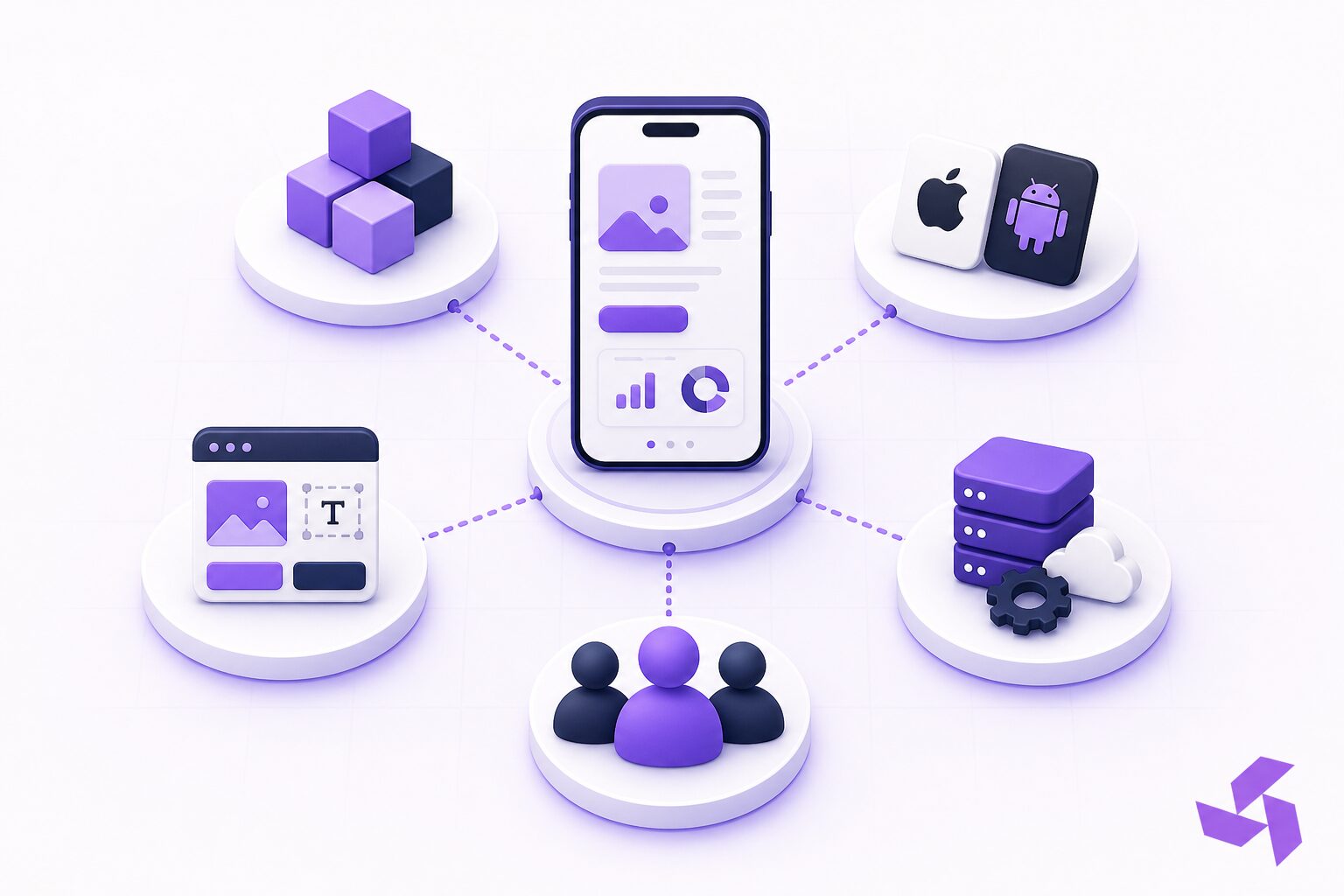
App development cost is simply the total investment needed to design, build, test, and launch a mobile application. It is not one line item. It is the sum of several distinct phases, and each phase has its own price tag attached to it.
The biggest factor driving the cost is the app’s complexity. This is the most important thing to grasp. A simple app with a login screen, a few static pages of information, and basic data storage costs far less than an app with real-time messaging, GPS tracking, payment processing, or AI-driven recommendations. The more it does, the more time it takes to build, and time is money in this business.
Platform choice matters a lot too, right from the start. Building separately for iOS and Android essentially doubles the engineering work. You are building two different apps. This is called native development. On the other hand, cross-platform frameworks like Flutter or React Native let one codebase serve both platforms at once. This can be more cost-effective for many projects. You can explore a cross platform app development company to understand this route better.
Design is another piece that people often underestimate. Professional UI and UX work, including wireframes, prototypes, and a proper design system, typically makes up fifteen to twenty five percent of a mid-complexity project’s total budget. This is not just about making it look pretty; it’s about how it works for the user.
Backend infrastructure, third-party integrations such as payment gateways like Stripe or mapping services like Google Maps, and quality assurance testing all add their own hours on top of that base build. All these hours add up quickly.
Finally, team location changes everything. A senior developer’s hourly rate can range from under thirty dollars in some offshore markets to well over a hundred and fifty dollars in North America or Western Europe. Two different teams building the identical app can land on wildly different final invoices simply because of where their developers are based. Finding a good partner is key, regardless of location. You might look for a software development company in Austin or a specialized team elsewhere.
Why Getting This Cost Number Right Actually Matters So Much
Underestimating app development cost is one of the fastest ways to derail a product before it ever reaches real users. When a founder or business owner walks into development with a number that is too low, the usual result is a rushed build to save time. This means corners get cut on testing, which is a terrible idea, or the team runs out of runway halfway through the project and cannot finish it.
On the other hand, overpaying is just as common, especially when a company hires a large, expensive agency for a simple MVP that could have been built leaner and faster by a smaller team. Knowing the realistic cost of mobile app development lets you match your budget to the actual scope of your idea instead of just guessing and hoping for the best.
There is also a market reason this matters more now than it used to. The mobile app economy has grown into one of the largest segments of the digital economy, and competition for a spot on a user’s home screen is fierce. There are millions of apps. That means the apps that succeed are usually the ones that were budgeted with enough room for a proper design phase, real user testing before launch, and a post-launch iteration cycle rather than a bare-bones build that ships once and never gets updated again. An abandoned app is a wasted investment.
A clear cost estimate also protects relationships. When a business owner and a development team agree on scope and pricing upfront, there is far less friction later when new feature requests inevitably show up. Everyone knows what is included. Budgeting properly at the start is what keeps a project moving instead of stalling in disputes over what was originally promised in the initial talks.
A Step-by-Step Method for Estimating Your Own App Development Cost
So, how do you figure out a number for your own app? Start by defining your app’s tier honestly. A basic app with a login system, simple forms, and static content generally sits in the lower range of costs, maybe $10,000 to $50,000. A mid-complexity app with user accounts, API integrations to pull data, and a payment gateway sits in the middle, often $50,000 to $150,000. A complex, feature-heavy platform with real-time data, custom algorithms, or heavy third-party integrations sits at the top, exceeding $200,000.
From there, create a list of all your features. Then, separate your must-have features from your nice-to-have features. This single exercise saves more money than almost anything else you can do, because it stops “scope creep” before development even begins. Scope creep is when you keep adding little things that balloon the budget. A fitness app with custom workout plans and subscription billing, for example, is a fundamentally different build than a simple loyalty card app, even though both might get labeled the same generic tier by a quick online calculator. Be specific.
Next, decide on your platform strategy early in the process. If your audience is split fairly evenly between iOS and Android, cross-platform development is usually the more cost-effective route, since it can cut costs by roughly thirty to fifty percent compared to building two separate native apps from scratch. You build one app that runs everywhere. If your users are heavily concentrated on one platform, building natively for just that one platform first can be the cheaper, faster path to market to test the waters. A specialist mobile app development company can advise you on the best path.
Get multiple quotes, but don’t just compare the bottom line. Ask each vendor to break their number down by phase: discovery, design, development, testing, and deployment. This is crucial. A vendor who cannot explain where the money goes is a warning sign in itself. It shows a lack of transparency. Finally, always budget separately for post-launch maintenance. This is where so many people mess up. Ongoing costs like OS updates for new iOS and Android versions, bug fixes that always pop up, and server hosting typically run fifteen to twenty percent of the original build cost per year. Skipping this line item is one of the most common budgeting mistakes you can make.
Common Mistakes and Misconceptions About App Costs
The biggest misconception is that app development cost is a fixed number you can look up once in a table and apply to any project. It is not. It’s not like buying a gallon of milk. In reality, a simple single-purpose app and a full-featured marketplace app are not comparable, even if a quick search result puts them under the same “mobile app” umbrella. Their requirements are totally different.
Another common mistake is treating the initial build as the entire budget. People think “I paid $50k, now I’m done.” That is completely false. Maintenance, server costs, app store fees, and future updates are ongoing expenses that continue well after launch. Ignoring them leads to apps that get abandoned within a year because there is no money left to keep them running and updated for users.
Business owners also frequently confuse cheap with cost-effective. A rock-bottom quote often means corners were cut on testing, code quality, or security. This tends to cost more in the long run through bugs that drive users away, bad app store reviews, or having to hire a different team to rebuild the app from scratch. On the flip side, assuming that the most expensive agency automatically delivers the best product is equally risky and naive. The right fit depends on your specific feature list, your industry, and your goals, not on price alone. It is about finding a team that understands your vision.
The Hidden Role of Design and User Experience in Your Budget
People often think design is just the “skin” of the app, something you add at the end. This is a big mistake. Design, specifically UI (User Interface) and UX (User Experience), is a fundamental part of the build and a significant cost driver. Good design is not just about looking good; it’s about how the app functions and feels to use. It’s how you guide the user to achieve their goal in the app.
A professional design process involves several stages. First, there’s user research to understand who will be using the app and what they need. Then comes wireframing, which are like architectural blueprints of the app’s screens without the visual details. This is followed by prototyping, which creates a clickable version of the app to test the flow. Finally, there’s the visual design, creating the colors, fonts, and imagery that define the app’s look.
Skipping or rushing this process to save money is a false economy. A poorly designed app will confuse users, lead to high uninstall rates, and generate negative reviews. Fixing these problems after the app is built is far more expensive than getting the design right in the first place. The design phase usually accounts for a substantial chunk of a mid-complexity project’s budget, often around 15-25%, and for good reason. It’s what makes the app intuitive and usable.
Native vs. Cross-Platform: Making the Right Choice for Your App and Budget
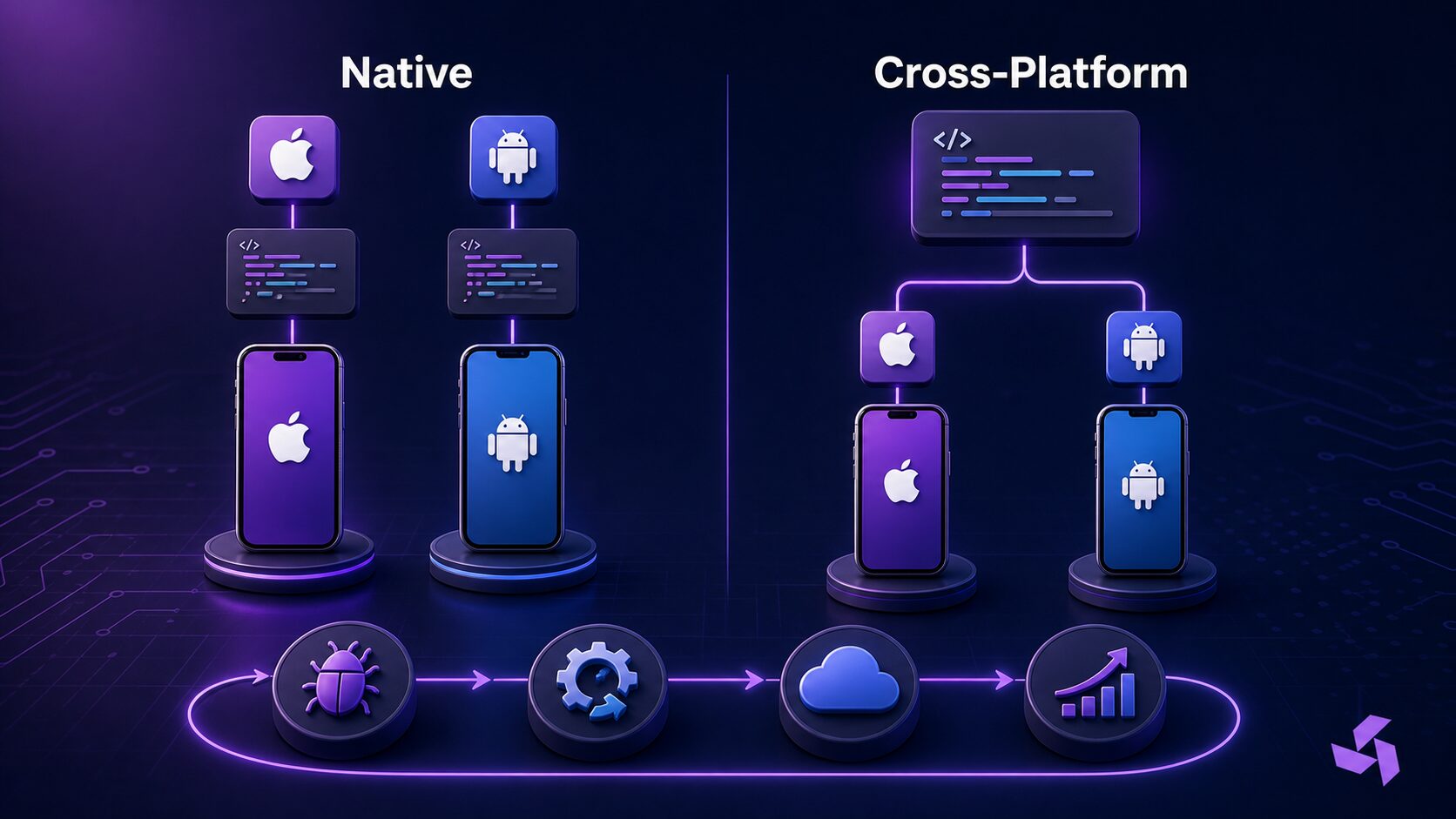
One of the biggest early decisions you’ll make is whether to build natively or cross-platform. Native apps are built specifically for one platform, like using Swift or Objective-C for iOS, or Kotlin or Java for Android. They offer the best performance and can fully utilize all the features of the device, like the camera, GPS, and push notifications. However, you are essentially building two separate apps, which means double the development time and double the cost for updates and maintenance.
Cross-platform apps are built using frameworks like React Native (using JavaScript) or Flutter (using Dart) that allow developers to write code once and deploy it on both iOS and Android. This can be a huge cost saver, often cutting development time and budget by 30-50%. For many apps, especially MVPs and content-driven apps, the performance difference is negligible for the average user.
However, for apps that are very graphics-intensive, like high-end games, or that require deep integration with the device’s hardware, native development is still the way to go. The choice depends on your target audience, your budget, your timeline, and the specific features your app needs. It’s a strategic decision that you should discuss with experienced developers. You can consult a react native development company to see if that framework is a good fit for your idea.
Why Post-Launch Maintenance and Updates Are Non-Negotiable
You’ve launched your app. The hard work is done, right? Wrong. This is just the beginning of the app’s life cycle. Post-launch maintenance is not optional; it’s a critical and ongoing expense that you must budget for from day one. Think of it like owning a car. You don’t just buy it and never pay for gas, oil changes, or repairs. An app needs constant care to stay relevant and functional.
The mobile landscape is always changing. Apple and Google release new versions of iOS and Android every year with new features and, more importantly, new security updates and privacy rules. Your app needs to be updated to be compatible with these new OS versions, otherwise it will stop working correctly or even get removed from the app stores. This is a constant battle.
Beyond OS updates, you’ll also need to fix bugs that inevitably appear as more users interact with your app in ways you didn’t anticipate. You’ll also need to keep your server running, which costs money every month. And as your user base grows, you’ll need to scale your infrastructure to handle the increased load. Finally, to keep users engaged and coming back, you’ll want to add new features and improvements based on user feedback. All of this costs money. A realistic budget should allocate 15-20% of the original build cost for annual maintenance. Failing to do so will leave you with a dead app.
Final Thoughts on Estimating Mobile App Development Cost
Mobile app development cost is a variable, not a constant. It depends on a variety of factors, including the complexity of your app, the platforms you choose, the quality of the design, and where your development team is located. The most important thing is to be realistic about your budget and to define your feature set clearly from the very beginning. Don’t try to build everything at once. Start with an MVP, test it with real users, and iterate from there. This is the most cost-effective way to build a successful app.
Get itemized quotes from a few different development teams, and don’t just go with the cheapest one. Ask questions and make sure you understand exactly what you’re paying for at each stage of the process. And remember to budget for post-launch maintenance and updates from day one. This is a marathon, not a sprint. Taking the time to plan and budget properly will make the entire process far less stressful and will greatly increase your chances of building an app that users love and that delivers real value for your business. A trusted partner like Tekinvent can help you navigate these decisions and build your vision. You can explore their mobile app development Austin services or other locations they serve to get started.

Build Smart with The Right Team.
We bring expertise, technology, and trust you look for in your digital journey.