
Fintech product teams operate under constant pressure to release new features, improve reliability and respond to changing security and fraud risks.
At the same time, experienced professionals in cloud infrastructure, payments, identity, data engineering and application security can be difficult to hire. A conventional recruitment process may not match the timing of an important launch, migration or security initiative.
Fintech staff augmentation allows a company to add selected external specialists to its existing delivery team. The fintech organization retains control of the roadmap, engineering standards and daily priorities, while the provider helps supply the required talent.
This structure can increase capacity without transferring ownership of the product. However, it requires disciplined access management, vendor governance and secure software-development practices.
The most important question is not simply how quickly a developer can start. It is whether the company can add that person without weakening the controls protecting customers, financial information and production systems.
Where Fintech Teams Need Specialized Capacity
Fintech roadmaps frequently combine general product development with highly sensitive systems.
A release may involve payment processing, transaction monitoring, identity verification, lending workflows or integrations with banks and financial-data providers. Each area introduces different risks and technical requirements.
Staff augmentation can be particularly valuable when an internal team understands the product but lacks a particular capability.
That capability may include secure backend development, cloud engineering, DevSecOps, mobile security, data engineering, automated testing or site reliability engineering.
Augmentation can also provide additional capacity during a platform migration, compliance initiative or major product launch.
However, the model is less effective when nobody inside the fintech company can establish priorities, approve architecture or evaluate technical work.
In that situation, a dedicated team or managed engagement may offer clearer ownership. Understanding the difference between staff augmentation and a dedicated team can prevent a business from purchasing flexible capacity when it actually needs an independently managed delivery unit.
Establish the Regulatory Scope Before Hiring
Fintech is a broad business category, not one regulatory framework.
The requirements that apply to a fintech product depend on its business model, legal entity, customers, jurisdictions, data and role in the financial system.
A payment application, lender, personal-finance platform and financial software provider may have different obligations. Qualified compliance professionals should determine which regulations apply.
For certain financial institutions under Federal Trade Commission jurisdiction, the FTC Safeguards Rule requires an information security program designed to protect customer information.
Its requirements include service-provider oversight, which makes vendor screening, contractual safeguards and ongoing monitoring relevant to an augmented engagement. However, applicability should be confirmed rather than assumed from the fintech label alone.
If a product stores, processes or transmits payment-account information, relevant PCI Security Standards may affect its systems and controls. Teams developing payment software may also need to consider the PCI Secure Software Standard.
PCI responsibilities depend on architecture and the company’s role. A developer’s previous PCI experience does not automatically make the current product compliant.
State privacy laws, breach-notification rules, partner agreements and customer security commitments may also influence the engagement.
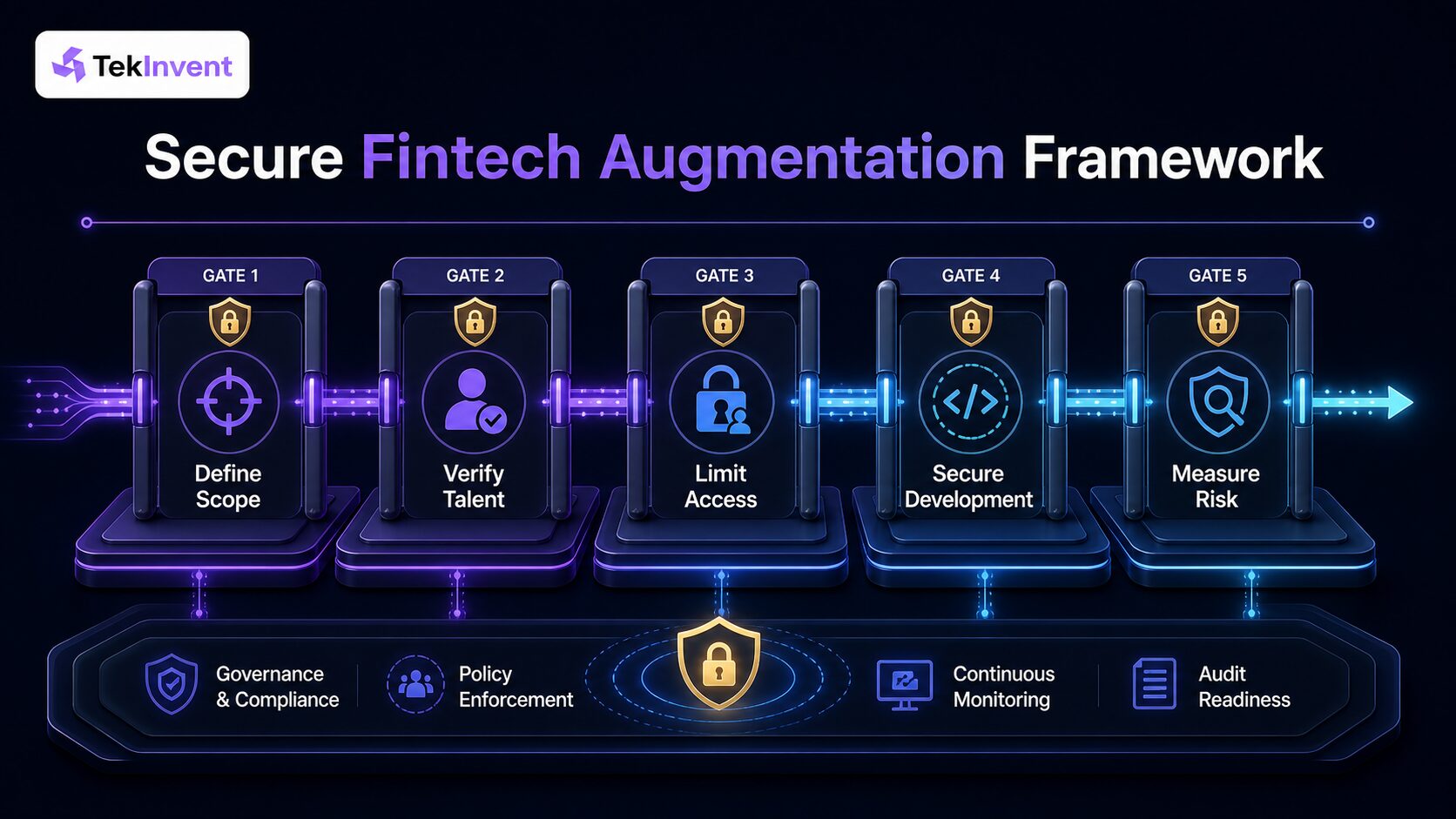
The company should start with a documented map of systems, information classifications, applicable requirements and control owners.
Treat External Access as a Designed System
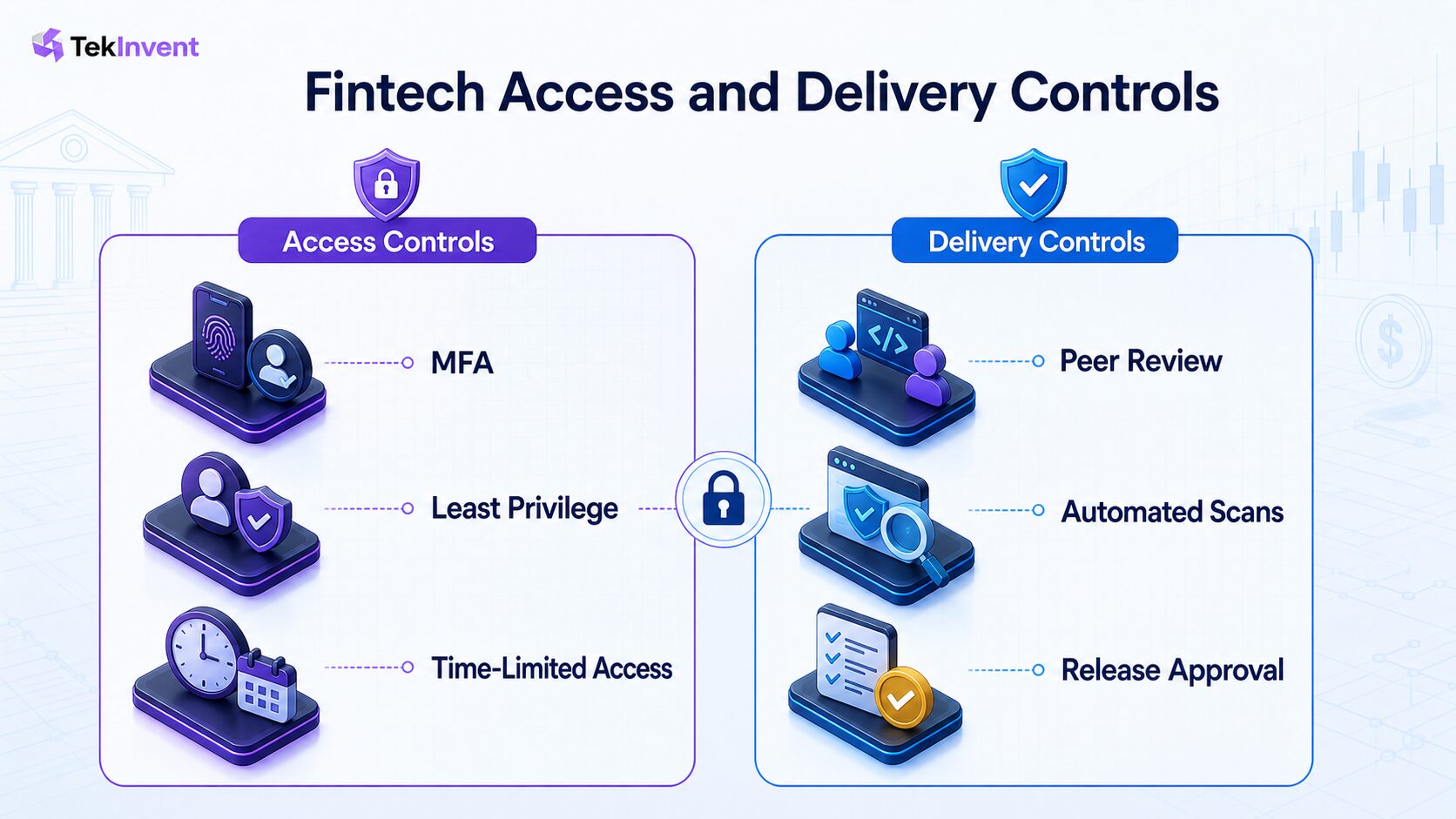
Augmented engineers should receive named accounts and only the permissions required for their assigned tasks.
Use multifactor authentication, centralized identity management, role-based permissions and short-lived credentials where possible.
Shared production accounts make individual actions difficult to trace and should be avoided.
Development and testing environments should use synthetic or appropriately masked information whenever possible. Production access should be exceptional, monitored, approved and time-limited.
An engineer who needs to diagnose a service does not necessarily need unrestricted database access.
Endpoint security also requires attention. The organization should decide whether an augmented professional will use a client-managed device, provider-managed computer or secured virtual environment.
The chosen approach should address encryption, updates, endpoint protection, local storage, removable media and insecure networks.
Contractual requirements must match the technical setup that actually exists. A contract claiming that no information is stored locally is ineffective if engineers regularly download production logs onto unmanaged computers.
Offboarding should also be planned during onboarding. Record which repositories, systems, groups and credentials each professional can access so everything can be removed promptly.
Include Augmented Engineers in the Secure SDLC
Security cannot depend entirely on a final penetration test.
NIST’s Secure Software Development Framework recommends integrating security practices throughout the software-development lifecycle. For fintech teams, augmented professionals should follow the same secure engineering controls as internal employees.
Code changes should pass peer review and appropriate automated checks. These can include dependency analysis, secret detection, static analysis, infrastructure-as-code scanning and container-security checks.
High-risk functionality should receive threat modeling and targeted security testing before release. This is particularly important for payments, authentication, account recovery, financial reporting and third-party integrations.
Branch protections and deployment approvals can prevent delivery pressure from bypassing essential oversight.
Fintech organizations also need dependable observability. Logs should provide enough information to investigate failures and suspicious activity without exposing unnecessary payment, identity or account information.
Alerts should have named owners and escalation procedures. Every engineer should know how to report a suspected incident, even when its severity is uncertain.
A reviewer should be able to determine who proposed a change, who approved it, which tests were completed and how it entered production.
Screen Candidates for Fintech Judgment
The role description should identify the product domain, technology stack, expected outcomes and risk environment.
Requesting five years of fintech experience is not enough. A candidate who developed consumer budgeting interfaces may not have the expertise needed for payment orchestration or ledger systems.
Use realistic technical discussions to evaluate reasoning.
Ask backend engineers how they would implement idempotent transaction processing, prevent credentials from entering logs or investigate inconsistent balances.
Ask cloud engineers how they would restrict deployment permissions and recover safely from a failed release. Ask QA professionals how they would test authorization rules, retries and partially completed transactions.
Security behavior is as important as technical terminology. Strong candidates recognize uncertainty, avoid copying sensitive data into debugging tools and escalate unsafe shortcuts.
They should also be able to explain technical trade-offs clearly to product managers and internal engineers.
Certifications and references may strengthen a candidate’s profile, but structured interviews, work samples and a controlled initial assignment generally offer better evidence of suitability.
Define Ownership Clearly
The fintech company should retain named owners for product decisions, architecture, security acceptance and production access.
The staffing provider should be responsible for presenting properly screened candidates, fulfilling its employment responsibilities and responding when availability or performance changes.
Confusion between these responsibilities can produce delivery delays and security gaps.
Contracts should address confidentiality, intellectual property, security duties, work locations, subcontractors, incident notification, equipment and termination.
TekInvent’s IT staff augmentation services are designed for organizations that need additional professionals while retaining control over product delivery.
Companies that need broader industry-focused design and implementation can also explore TekInvent’s fintech software development services.
Measure Delivery and Risk Together
An engagement should not be judged by hours or headcount alone.
Measure whether the additional capability improves meaningful outcomes. Useful indicators include time to the first approved contribution, delivery cycle time, escaped defects, system availability and progress against the initiative that justified augmentation.
Security indicators should appear beside delivery metrics. These can include high-severity findings, remediation time, access exceptions, failed deployments and compliance with code-review requirements.
The purpose is not to discourage reporting. A team that discovers and resolves problems early may be healthier than a team that reports no problems.
Financial analysis should include staffing fees, onboarding, internal management, tools and transition costs. Compare that total with the value of accelerated delivery, increased reliability, avoided delays or a reduced backlog.
The guide covering the benefits, use cases and limitations of staff augmentation provides additional help when evaluating whether this model fits the business requirement.
Start With a Controlled Pilot
A small pilot is often the safest starting point.
Assign one or two professionals to a clearly bounded workstream. Define its acceptance criteria, assign an internal owner and place the professionals inside the same secure development workflow as the internal team.
Review technical quality, communication and delivery after the first few development cycles.
If the pilot performs well, increase access and responsibility deliberately. Document important architectural decisions and require knowledge sharing.
Do not allow one external engineer to become the only person who understands a critical component. Pairing and internal code review preserve business continuity when the engagement eventually ends.
If the project remains highly uncertain, begin with discovery or a technical assessment before hiring several developers. Additional capacity can amplify good direction, but it cannot create product clarity on its own.
Scale Fintech Development Securely
Fintech staff augmentation can help US financial-technology companies access hard-to-hire expertise and accelerate a defined product roadmap.
Its value is strongest when the company already has clear engineering leadership and needs specialists who can operate inside its delivery model.
Responsible scaling combines talent with governance. The company must classify its information, confirm applicable requirements, design least-privilege access, include every contributor in its secure development lifecycle and measure risk alongside delivery speed.
With those controls in place, augmented professionals can extend the fintech team without creating a separate and less accountable engineering process.

Build Smart with The Right Team.
We bring expertise, technology, and trust you look for in your digital journey.