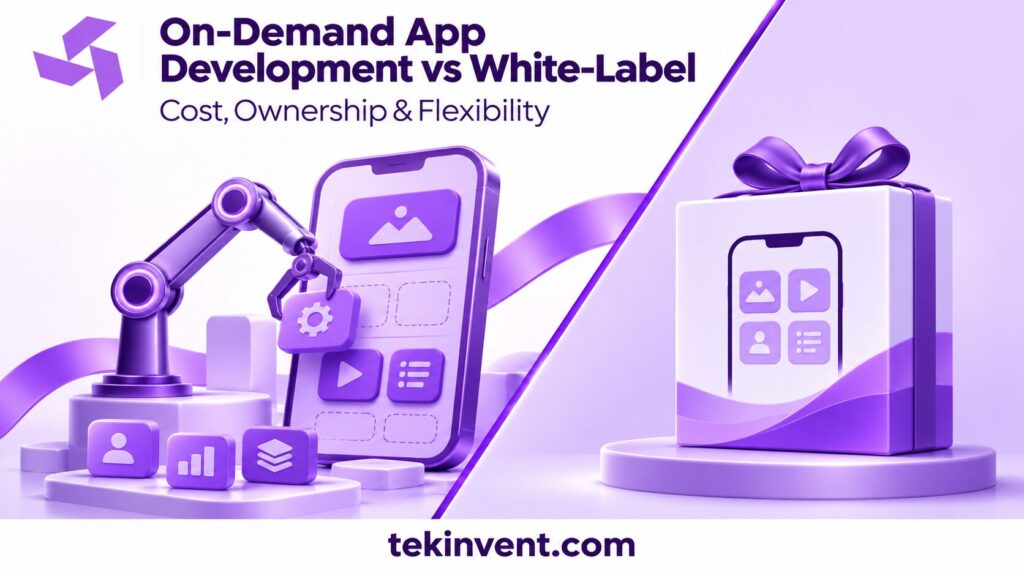
Choosing between custom on-demand app development and a white-label platform depends on how closely the existing product fits the service you plan to run. White-label software can help a business launch with established workflows and branding options. A custom build offers more control over features and integrations but requires a larger commitment to design, development, and maintenance.
Neither route is automatically cheaper or better. Compare the total effort over the period you expect to use the product, including setup, subscriptions, transaction fees, integrations, staff workarounds, and future changes. The key question is whether the platform can support the way your service needs to operate.
What the two options mean
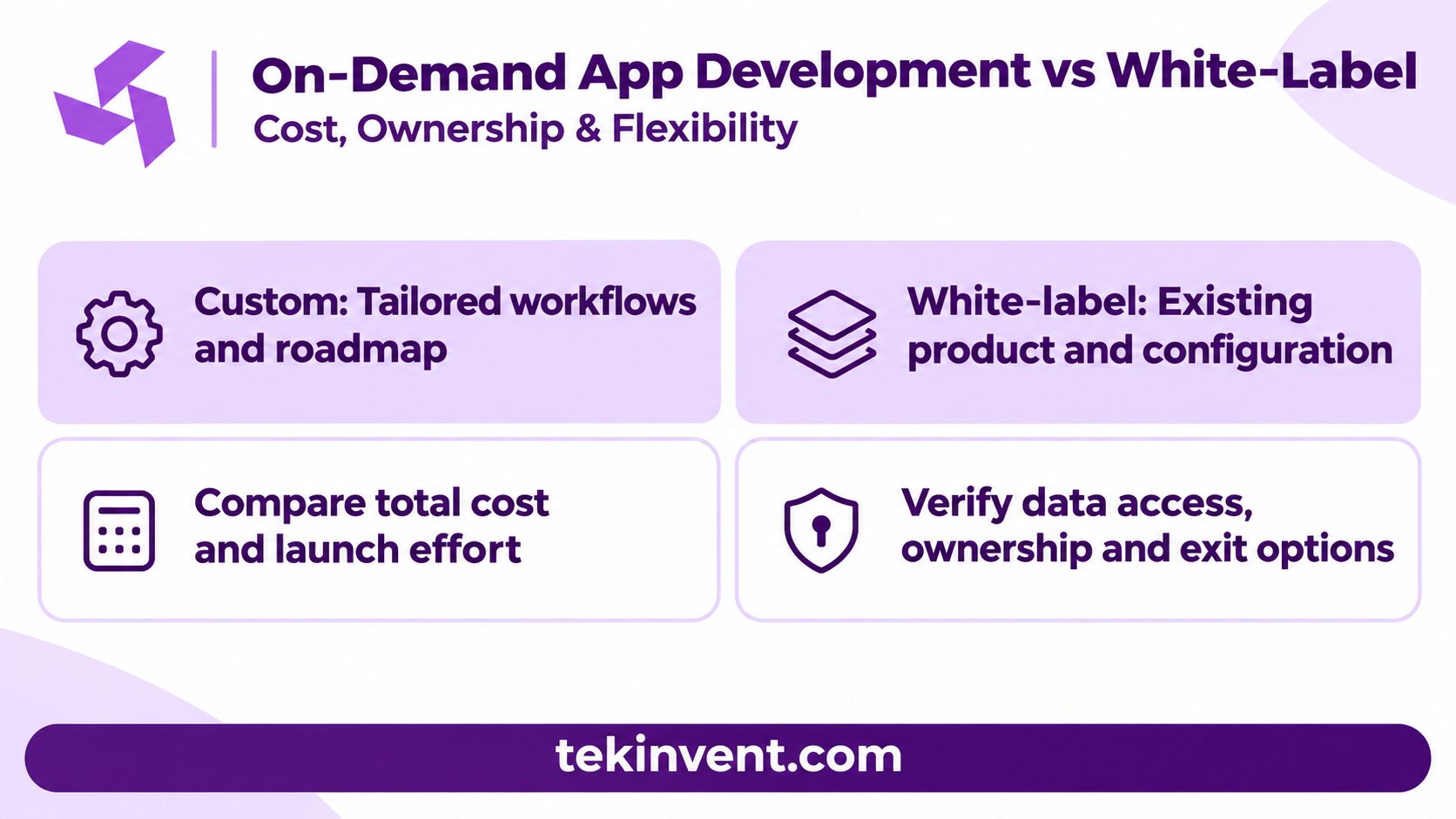
A white-label platform is an existing product that a provider lets another business brand and configure. The provider maintains the underlying software, while the customer selects from available settings and workflows. The range of control varies by vendor and contract.
Custom development means building an application around the business’s requirements. The organization has more influence over user journeys, data flows, integrations, and roadmap, though it still depends on its development team and third-party services. Custom does not mean every component must be built from scratch; teams can use existing frameworks and services where they fit.
Some vendors offer a middle option: a configurable platform with custom integrations or interface changes. Include this in the comparison rather than treating the decision as all-or-nothing.
Compare the operating fit first
Write down the service workflow before reviewing platforms. For an on-demand home service, that may include customer request, provider availability, quoting, acceptance, scheduling, completion, payment, and support. For delivery, it may include order intake, merchant confirmation, dispatch, pickup, tracking, and handoff.
Mark which steps are essential and how often exceptions occur. Can a customer reschedule after a provider accepts? Can a dispatcher assign a request manually? Does the business need multiple service zones or provider types? A white-label demo may look complete while relying on a fixed process that does not match these requirements.
Test the critical flow with the platform before signing a long commitment. Use realistic examples, including cancellations, refunds, incomplete profiles, schedule changes, and system errors. Ask who handles each exception and whether the vendor’s support team can change the behavior.
Time to launch and implementation effort
White-label can reduce the need to build common functionality, but launching still requires configuration, branding, data setup, payments, staff training, policies, and testing. Integrations or workflow changes can add time and may depend on the provider’s roadmap.
Custom development usually requires discovery, design, implementation, integration, and validation. The organization has more control over sequencing, but it must make decisions and review working software throughout the project. Unclear requirements or slow stakeholder feedback can delay either approach.
Define what “launch” means. A branded demo is not the same as a product that staff can support and customers can use reliably. Compare the time needed to reach a tested, operational release, not just the time to configure an account or finish a prototype.
Cost beyond the initial quote
White-label costs can include setup, subscription tiers, per-user or transaction charges, add-on modules, payment fees, support packages, and fees for data export. Ask how costs change as usage grows and whether the price can change at renewal. Confirm which services are separate from the platform fee.
Custom development costs may include discovery, implementation, hosting, third-party services, maintenance, security work, and future enhancements. The business also needs a product owner who can prioritize changes. Owning the application code does not eliminate operating expenses or vendor dependence.
Build a comparison over a realistic planning horizon. Include initial implementation and recurring costs, but also quantify manual workarounds and limitations that affect service. For example, a platform may have a low monthly fee but require staff to reconcile orders in another system. A custom integration might take more up-front effort and reduce that repeated work.
Flexibility, integrations, and roadmap control
White-label platforms are flexible within the options the provider supports. A configuration change may be quick, while a new workflow may require a vendor feature request or may not be possible. Ask how requests are prioritized, how releases are communicated, and whether custom work remains available after an update.
Custom development gives the business greater influence over its roadmap and system connections. It also means the organization must manage those choices. More flexibility can result in more complexity if requirements keep expanding or different teams request one-off behavior.
List the integrations required now and later. For each, verify data ownership, access, direction, synchronization timing, and failure handling. With white-label, confirm whether the vendor supports the connection and whether the business can access its data. With custom software, confirm who maintains the integration when the third-party API changes.
Data access and exit options
Before selecting a platform, determine what data the business can export, in what format, and at what point in the contract. Confirm who owns customer records, provider information, transaction history, and content. Review how data is returned or deleted when service ends.
For custom development, document ownership of source code, design files, cloud accounts, domains, and third-party subscriptions. Keep company administrators in control of essential accounts. Ask how the system would be handed over if the original development partner were replaced.
Exit planning may feel premature, but it can prevent a business from discovering that it cannot transfer critical records or continue a service without a vendor. Consider switching costs and migration effort as part of the choice.
A decision framework
White-label may suit a business when its workflow closely matches the platform, launch speed matters, available configuration is sufficient, and the total recurring cost is acceptable. It can also help a team test demand before investing in a custom product, provided users understand any temporary limitations.
Custom development may be appropriate when the business depends on a distinctive workflow, needs integrations the platform cannot support, requires more control over data or roadmap, or has evidence that the product itself is central to its service advantage. The organization should be ready to fund ongoing ownership.
Use a scorecard to compare options across workflow fit, implementation effort, integration access, data ownership, recurring cost, support, and exit terms. Weight the criteria by business importance. A platform that scores well on launch speed but poorly on a core workflow may not be a suitable foundation.
Questions to ask a vendor or development team
- Which parts of our workflow can we configure ourselves?
- Which changes require vendor work or a custom build?
- What setup, subscription, transaction, and support charges apply?
- Can we export our operational and customer data at any time?
- Who owns custom integrations and handles them after updates?
- What support is available during outages or critical failures?
- What happens to our branding and data if we end the contract?
- For a custom product, who controls code, accounts, and documentation?
Get answers in writing and verify them against the product demonstration. If the team proposes a hybrid approach, identify which components come from the platform and which are custom so future costs and responsibilities remain clear.
A mobile app development company can help assess custom requirements and compare them with available platform options. Bring the current workflow, vendor terms, and integration list to the discussion so the options can be evaluated against the service you intend to operate.
Choose an App Model That Fits Your Service
TekInvent can help compare workflow needs, integrations, and long-term ownership options.
Verify product and contract limits before committing
Use a trial or structured demo to test the workflows that matter most. Ask the vendor to show how a dispatcher corrects an address, a provider changes availability, or a customer disputes a completed service. Note which actions are configurable, which require vendor support, and which are not available.
Review the contract for renewal timing, price changes, data processing, service availability, support hours, and termination. Confirm how quickly the vendor will notify you about planned changes or outages. If the business depends on a specific feature, make sure its availability and support expectations are documented rather than relying on a sales demonstration.
Ask whether the platform has limits that could affect growth: number of locations, roles, transactions, languages, or integrations. Understand whether an upgrade changes pricing or requires a migration. A business should know the path from a small test to a larger operation before it invests in customer acquisition.
Test the alternative path
For custom software, request a discovery phase that produces an architecture outline, first-release scope, integration assumptions, delivery plan, and ownership terms. Ask how the team will test the product with customers and operators. Establish who approves changes and how priorities are decided after launch.
For white-label, ask for a data export sample and understand the migration process. For custom development, verify that the business will control the source repository, cloud accounts, credentials, and documentation. In either case, identify a person responsible for product decisions and support.
The choice can change as the business learns. A platform may be a sensible way to test demand, while evidence from actual operations may later justify custom features. Preserve records of workflows, customer feedback, and costs so a future transition is based on the real limits of the current approach.
Consider the impact on the customer relationship
The platform choice can affect what the business can learn about its customers and how it communicates with them. Confirm which customer data the business can access, how consent is recorded, and whether the platform supports the service messages customers expect. Do not assume that branding control also means control of data or messaging.
Consider the experience if a customer uses more than one service location or provider. Can the platform represent those relationships accurately? If the workflow requires exceptions, can support staff see what happened and correct the record? A narrow test with actual users can reveal those limits before a broad rollout.
Choose based on the work you need to own
The right choice is the one that supports the service workflow at a sustainable cost and gives the business enough control over data, integrations, and change. Evaluate real processes rather than relying on feature lists or a polished demo.
If a white-label platform covers the critical journey, it may be a practical way to launch. If its limitations affect the core service, custom development may be worth the additional responsibility. A short requirements exercise and platform test can make the trade-off clearer before a major commitment.

Build Smart with The Right Team.
We bring expertise, technology, and trust you look for in your digital journey.