
Mobile apps have been around for a while and let’s face it; they’ve made our lives easy! Such technological advancements have made it possible to connect with people around the world if you own a smartphone.
With that said, most of the time small business owners wonder about the cost to build apps when hiring an agency.
Today, we’ll discuss the factors that impact the cost to build apps, the estimated cost based on the type of app, and finally the tips you need to keep in mind.
What Factors Affect the Cost to Build Apps?
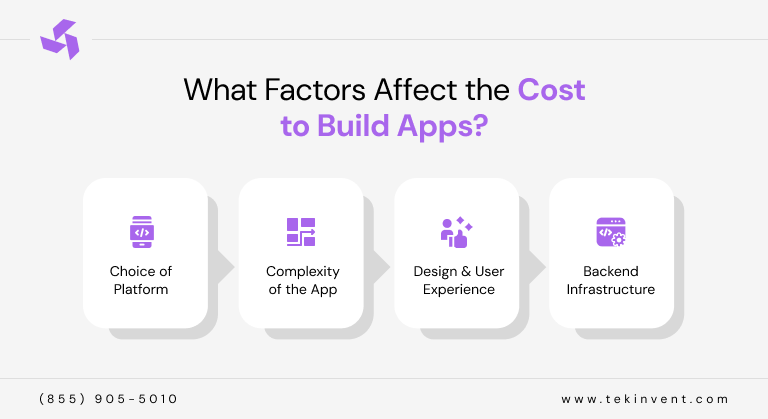
The main factors that affect the cost of building an app.
Several elements influence the cost to build apps. These include the app’s complexity, chosen platform, design requirements, backend infrastructure, and geographic location of the development team.
Understanding these factors helps businesses estimate budgets accurately and make informed decisions, avoiding unexpected expenses while ensuring high-quality development.
- Choice of Platform
The platform you choose significantly affects app development costs. Developing for iOS, Android, or both requires different programming languages, tools, and testing processes. Cross-platform solutions like Flutter or React Native can reduce costs by enabling one codebase for multiple platforms, but native apps often provide better performance and user experience.
- Complexity of the App
App complexity directly impacts development time and cost. Simple apps with minimal features are less expensive, while medium or complex apps with user accounts, payment integration, real-time data, or AI capabilities require more resources. Planning features carefully helps manage costs and ensures the app aligns with business goals without overspending.
- Design and User Experience
Design and user experience (UX) play a crucial role in app costs. Simple templates are cost-effective, while custom designs with animations, intuitive navigation, and interactive features increase expenses. A well-designed UX enhances user engagement, retention, and app success, making it a worthwhile investment despite higher initial development costs.
- Backend Infrastructure
The backend powers your app’s functionality, managing data storage, server communication, and security. Robust backend development is essential for apps with high user activity, cloud integration, or API connectivity. Complex infrastructure increases development time and cost, but ensures scalability, reliability, and smooth performance for long-term app success.
Types of Apps & Their Costs
Apps vary widely in functionality, design, and development requirements, which affects their costs. Understanding app types helps businesses plan budgets effectively. From simple utility apps to medium-complexity apps with advanced features, and complex apps with AI or real-time systems, each category demands different resources, timelines, and investment levels.
- Simple App
Simple apps have basic functionality, limited features, and straightforward design. Examples include calculators, note-taking apps, or simple catalog apps. Development is faster and less expensive, typically ranging from $10,000 to $30,000. These apps are ideal for testing ideas or launching a minimum viable product without a significant financial commitment.
- Medium Complexity App
Medium complexity apps include features like user accounts, API integration, payment systems, and basic analytics. Examples are e-commerce platforms, booking apps, or social apps with essential interactivity. Development costs range from $30,000 to $70,000, depending on features and design. They balance functionality, performance, and affordability for growing businesses.
- Complex App
Complex apps involve advanced functionality, custom backend systems, real-time data, AI, AR/VR, or multi-platform integration. Examples include ride-sharing, fintech, or large-scale social media apps. Development costs start around $70,000 and can exceed $200,000. These apps require experienced teams, longer timelines, and significant investment for high-quality performance and scalability.
Tips to Get the Best Cost for Your App
Managing app development costs requires strategic planning. By defining priorities, selecting appropriate technologies, and focusing on essential features, businesses can control budgets effectively. Understanding cost drivers, using cost-saving tools, and partnering with experienced developers ensures quality without overspending, helping you build a successful app within your financial plan.
- Start With an MVP
Building a Minimum Viable Product (MVP) is an effective way to reduce costs. An MVP includes only essential features to test the market and gather user feedback. This approach minimizes initial investment, validates your idea, and provides insights for improvements before committing to full-scale development, saving both time and money.
- Outsource to Regions Outside
Outsourcing app development to regions with lower hourly rates can significantly reduce costs. Countries like India, Pakistan, and Eastern Europe offer skilled developers at competitive prices. Choosing a reputable agency abroad ensures quality, faster delivery, and budget-friendly solutions while maintaining communication and project management standards.
- Choose a BaaS Platform
Backend-as-a-Service (BaaS) platforms provide pre-built backend solutions, including authentication, databases, and cloud storage. Using BaaS reduces development time and cost by eliminating the need to build infrastructure from scratch. Popular options like Firebase or AWS Amplify help startups focus on app features and user experience rather than backend complexity.
- Go for Hybrid or Cross-Platform
Hybrid or cross-platform development allows one codebase to run on both iOS and Android. Frameworks like Flutter or React Native reduce development time and cost compared to building separate native apps. This approach ensures faster deployment, consistent user experience, and efficient maintenance, making it a cost-effective choice for many businesses.
Cost Impact on the Project Timeline
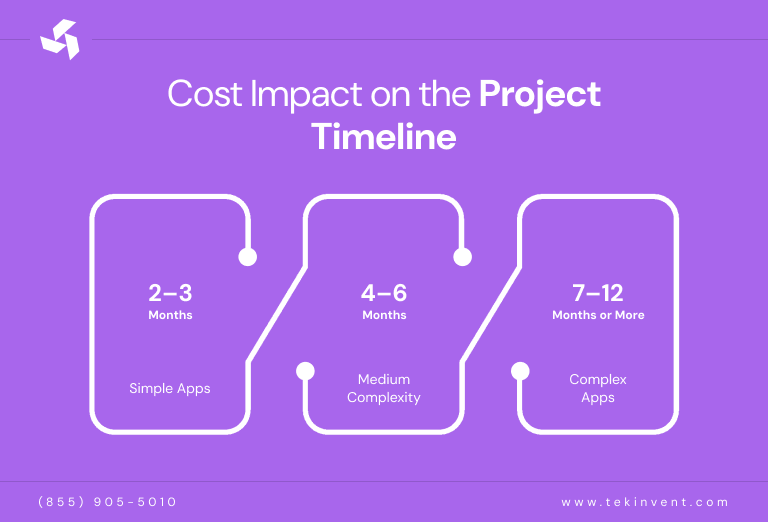
The impact of cost on the project timeline.
The complexity and features of an app directly affect both cost and development timeline. More features and advanced functionalities require longer development periods and higher expenses. Proper planning, realistic deadlines, and prioritizing essential features help control costs while ensuring timely delivery without compromising app quality or user experience.
- Simple Apps: 2–3 months
Simple apps with basic functionality and minimal features can typically be developed within 2–3 months. Shorter timelines reduce labor costs and allow faster market testing. These apps are ideal for startups or MVPs, providing quick feedback from users and enabling iterative improvements without heavy upfront investment.
- Medium Complexity Apps: 4–6 months
Medium complexity apps require more time due to additional features like user accounts, APIs, or payment systems. Development usually spans 4–6 months, depending on design and backend requirements. Proper project management ensures efficient progress, balancing quality, feature implementation, and budget constraints to meet business objectives.
- Complex Apps: 7–12 months or more
Complex apps with advanced functionality, custom backend systems, AI, or real-time processing can take 7–12 months or longer to develop. Longer timelines increase labor and infrastructure costs but are necessary for robust performance, scalability, and seamless user experience in apps with high functionality and ambitious features.
Are There Any Post-Launch Costs?
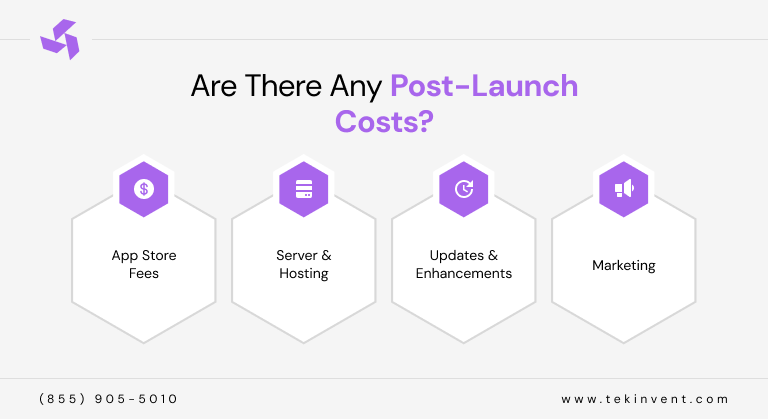
These are the post-launch costs of building a mobile app.
Yes, post-launch costs are an essential part of maintaining a successful app. These include app store charges, hosting expenses, updates, bug fixes, and ongoing marketing. Budgeting for these recurring costs ensures smooth performance, user satisfaction, and long-term growth. Ignoring them can affect app stability and overall business results.
- App Store Fees
Publishing an app comes with platform fees. Apple charges an annual $99 developer fee, while Google Play requires a one-time $25 payment. These fees are mandatory for launching, updating, and managing your app. Although relatively small, they should be included in your overall post-launch budget planning.
- Server & Hosting
Apps with dynamic content, user accounts, or real-time features require servers to store and manage data. Hosting costs vary depending on traffic, storage, and cloud provider, typically ranging from $50 to $500 monthly. Reliable hosting ensures app speed, security, and performance, essential for maintaining a professional user experience.
- Updates & Enhancements
Regular updates keep your app compatible with the latest devices, operating systems, and security standards. Enhancements, new features, and bug fixes maintain user satisfaction and competitiveness. These updates usually cost 15–20% of the original development budget annually, making continuous improvement a key long-term investment.
- Marketing
Marketing is crucial after launch to attract users and boost visibility. Strategies include social media ads, app store optimization (ASO), influencer campaigns, and content marketing. Monthly marketing costs can vary from $300 to several thousand dollars depending on goals. Effective marketing ensures user growth, engagement, and long-term app success.
How to Choose the Right Mobile App Development Company?
There is no right or wrong answer when it comes to choosing a mobile app development company. There is a massive pool of mobile app development companies out there to choose from and a lot to think about before choosing the right one for you.
Here are some things to consider before you hire a mobile app development company:
- Portfolio
A strong portfolio shows the company’s experience, design quality, and technical capabilities. Reviewing past projects helps you understand their style, problem-solving approach, and ability to deliver apps similar to yours. A diverse portfolio with successful case studies is a good sign of reliability and industry expertise.
- Technical Expertise
Technical expertise ensures your app is built using the right technologies and best practices. Check whether the team is skilled in the frameworks, languages, and tools required for your project. Developers with strong technical knowledge deliver faster, cleaner, and more scalable solutions, reducing long-term maintenance and upgrade costs.
- Communication
Clear and consistent communication is essential throughout the development process. The right agency provides regular updates, transparent timelines, and quick responses to your questions. Effective communication minimizes misunderstandings, prevents delays, and ensures the final product matches your expectations, helping you stay confident and informed from start to finish.
- Pricing Model
Understanding pricing models helps you choose a company that fits your budget. Agencies may offer fixed-price, hourly, or milestone-based billing. A transparent pricing structure ensures you know exactly what you’re paying for. Choosing the right model helps control costs while maintaining flexibility as the project evolves.
Final Thoughts
Before you think about creating an app, it’s important to understand the cost to build apps. By choosing the right features, development approach, and agency, you can create a high-quality app within your budget. Careful planning, smart decisions, and ongoing optimization ensure long-term success and strong returns on your investment.
At TekInvent, we make it our mission to build you an app that your business needs and your audience loves!

Build Smart with The Right Team.
We bring expertise, technology, and trust you look for in your digital journey.