
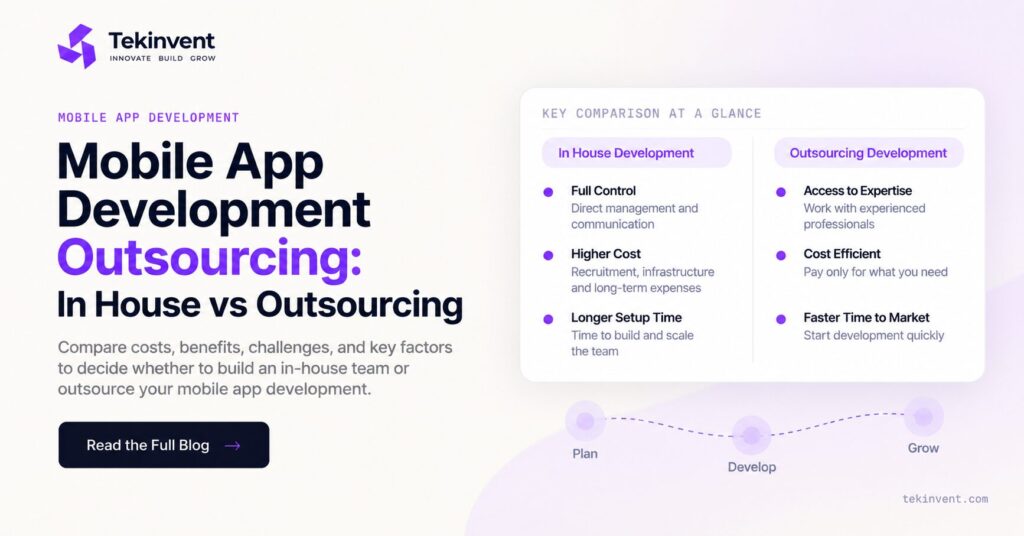
Building a mobile app is no longer only a technology decision. For many businesses, it is also a decision about people, cost, speed, expertise, and long term product ownership.
One of the first questions businesses face is whether they should build their own development team or work with an external development partner.
This is where mobile app development outsourcing becomes an important option. Instead of recruiting designers, developers, QA engineers, and project managers internally, a business can work with an experienced external team that already has the required skills and development processes.
However, outsourcing is not automatically the right choice for every project. Some companies benefit from having developers working internally, while others can reduce development time and operational complexity through outsourcing.
This guide explains both approaches so you can understand their costs, benefits, limitations, and practical differences before deciding how your next mobile application should be developed.
What Is Mobile App Development Outsourcing?
Mobile app development outsourcing means hiring an external company or development team to design, build, test, launch, or maintain your mobile application.
Instead of establishing an entire development department internally, businesses can outsource some or all of the development process.
For example, a company with an app idea may already have its own product manager but need developers and designers. Another company may have no technical team at all and outsource everything from discovery and UI/UX design to development, testing, deployment, and post launch support.
This flexibility is one reason outsourcing mobile app development has become a practical option for startups as well as established businesses.
Depending on the project, businesses can outsource iOS development, Android development, cross platform development, backend development, quality assurance, or the entire application lifecycle.
The important point is that outsourcing does not simply mean giving a project to another company. A successful outsourcing relationship should operate as a structured collaboration where responsibilities, milestones, communication methods, deliverables, and ownership are clearly defined.
What Is In House Mobile App Development?
In house development means building and managing your own internal app development team.
The developers, designers, testers, and other specialists required for the application become part of your organization rather than working for an external development provider.
An in house dev team can give a business direct control over development priorities and everyday communication. Developers can work closely with internal product, sales, marketing, and operational teams.
This model can make sense for businesses where software development is a permanent core capability rather than a temporary project requirement.
However, developing in house requires more than hiring one or two developers. Depending on the complexity of the application, you may need mobile developers, backend engineers, UI/UX designers, QA specialists, DevOps expertise, and technical leadership.
Recruiting and retaining all of these skills can significantly increase the investment required before development even begins.
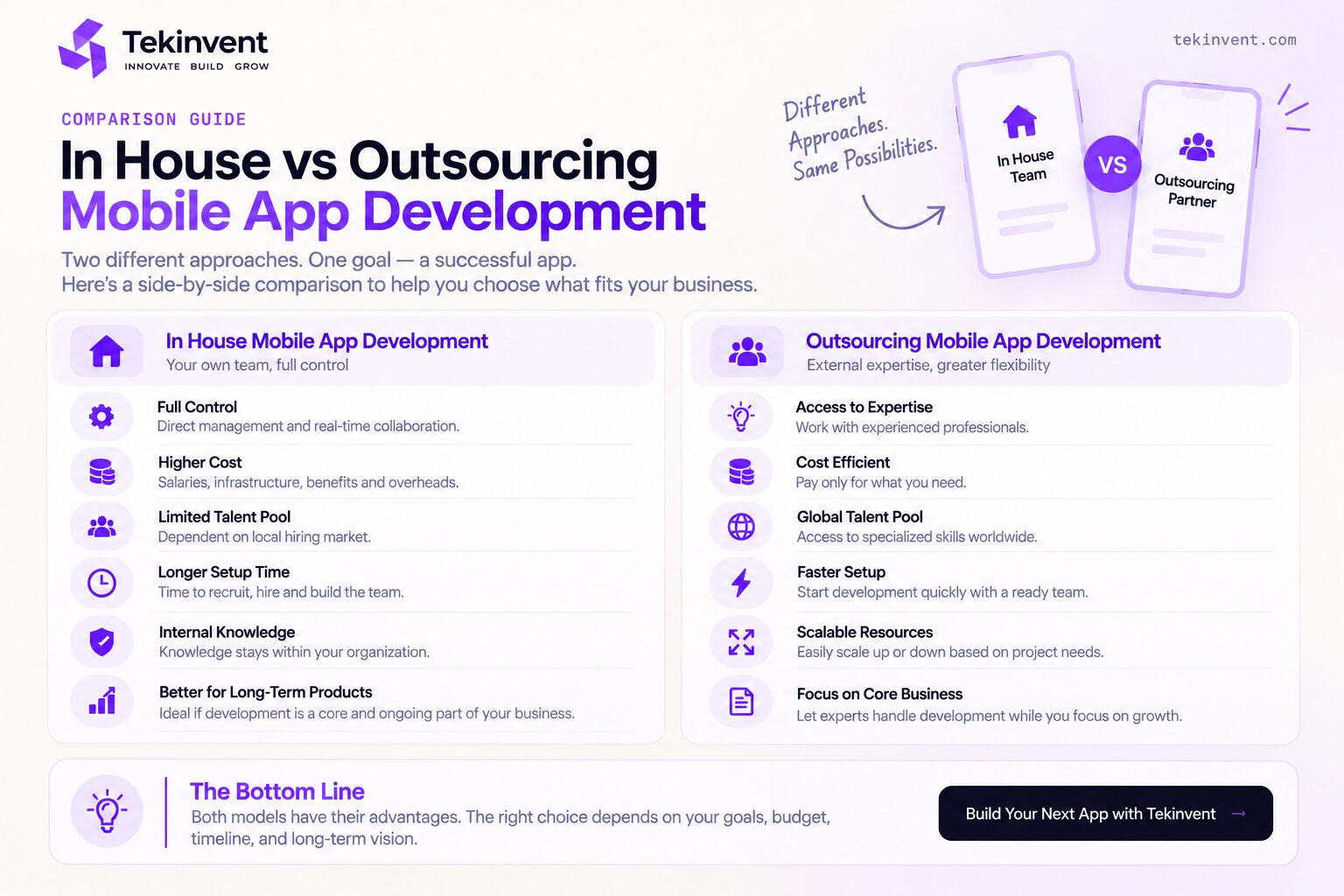
In House vs Outsourcing Mobile App Development
The biggest difference between these approaches is not simply where developers work. It is how the business obtains and manages technical resources.
With an internal team, the company hires employees and develops technical capabilities inside the organization. With mobile development outsourcing, the business gets access to an established external team for a particular project or ongoing development requirement.
An internal team provides direct organizational control. Priorities can often be changed quickly because developers are already part of the business.
Outsourcing provides greater resource flexibility. A business may be able to start with a complete team without spending months recruiting every required specialist.
Neither model is universally better. The appropriate approach depends on factors such as project duration, available internal expertise, budget, intellectual property requirements, development speed, and long term product plans.
Why Do Businesses Outsource Mobile App Development?
One of the biggest reasons businesses outsource app development is access to specialized skills without building every capability internally.
Mobile application development can require several technologies and disciplines. A project might need native iOS expertise, Android development, backend APIs, cloud infrastructure, UI/UX design, security testing, and quality assurance.
Finding separate employees for every requirement can take considerable time.
Through mobile application development outsourcing, businesses can access specialists according to the requirements of the project.
Speed is another consideration. Recruiting an internal development team can involve job advertisements, interviews, technical assessments, negotiations, onboarding, and training. An established outsourcing team may already have the required roles available.
Businesses can also adjust resources as project requirements change. More developers may be required during the main development phase, while fewer people may be necessary once the application moves into maintenance.
This flexibility can be particularly valuable for companies that do not need a permanent large engineering department.
When Does In House Development Make More Sense?
Outsourcing has advantages, but there are situations where an internal team may be more appropriate.
If the mobile application is the core product of the company and requires continuous daily development for many years, maintaining internal technical knowledge can be valuable.
An internal team may also make sense when developers need extremely close collaboration with proprietary systems, internal departments, or highly specialized business processes.
Companies with an established engineering department also face a different decision from businesses starting from zero. If the organization already has experienced developers, designers, testing infrastructure, and technical leadership, expanding the existing team may be practical.
The decision should therefore consider the capabilities the business already possesses rather than comparing outsourcing and internal development in isolation.
What Are the Costs of In House App Development?
The cost of internal development extends beyond developer salaries.
Businesses must consider recruitment, employee benefits, equipment, software subscriptions, development infrastructure, management, training, employee turnover, and the time required to assemble the team.
Specialized skills can create another challenge.
A project may require an expert for only one stage of development. For example, specialized security testing or a particular platform skill may be necessary temporarily. Employing every specialist permanently may not be financially efficient.
Internal development therefore tends to create a larger fixed operational commitment.
That does not necessarily make it more expensive in every situation. For companies with continuous development requirements and existing infrastructure, an internal team can provide long term value.
The correct comparison should be based on the total cost of building and operating the team rather than salary figures alone.
What Does Outsourcing App Development Cost?
There is no single price for application development outsourcing because applications vary significantly in complexity.
A simple application with limited screens and basic functionality requires substantially fewer resources than a marketplace, healthcare application, fintech platform, or application with real time functionality and complex third party integrations.
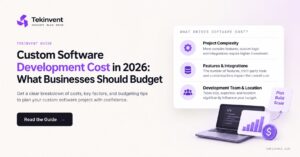
Outsourcing costs can also depend on the development model, team location, technology stack, platform selection, UI/UX requirements, backend architecture, security requirements, and testing scope.
Businesses should therefore avoid choosing an outsourcing partner purely because they offer the lowest quote.
A cheaper initial estimate can become expensive if unclear requirements, poor architecture, weak testing, or communication problems lead to extensive redevelopment.
A reliable estimate should explain what is included, what assumptions have been made, how changes will be handled, and what happens after launch.
What Can You Outsource in Mobile App Development?
Businesses do not necessarily have to outsource the complete project.
Application outsourcing services can cover individual stages or the complete development lifecycle.
A company might keep product strategy internally while outsourcing design and engineering. Another organization might already have backend developers but need specialized mobile developers.
Businesses developing specifically for Android can also work with specialists in Android app development rather than expanding their permanent engineering team. TekInvent’s Android service currently covers development, UI/UX, QA, integrations, migration, and related development requirements. Tekinvent
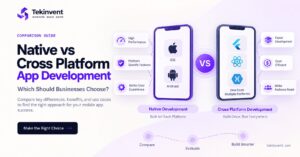
Similarly, businesses targeting multiple operating systems may consider cross platform app development when a shared development approach fits the product requirements. Tekinvent
This allows the outsourcing strategy to be shaped around the actual gaps in the internal team instead of treating outsourcing as an all or nothing decision.
How to Choose a Mobile App Development Outsourcing Partner
Selecting the right development partner requires more than reviewing a portfolio.
Start by defining exactly what you are trying to build. The clearer the product requirements are, the easier it becomes to compare development teams.
The potential partner should understand the business problem behind the application rather than immediately discussing frameworks and programming languages.
Communication is equally important. Businesses should understand who will manage the project, how frequently progress will be reported, what project management system will be used, and how technical decisions will be documented.
Technical capability should also match the actual product.
For example, an application requiring complex native functionality may need a different engineering approach from a relatively straightforward cross platform business application.
Before hiring a mobile app development company, businesses should also clarify source code ownership, intellectual property rights, confidentiality, testing responsibilities, deployment support, documentation, and post launch maintenance.
These details reduce misunderstandings later in the project.
What Are the Risks of Outsourcing Mobile App Development?
Poor communication is one of the most common outsourcing risks.
If requirements are vague or communication between the business and development team is inconsistent, the finished application may not match expectations.
Quality can also vary significantly between providers. Two companies offering similar services may have very different engineering standards, testing processes, security practices, and project management capabilities.
Another risk is becoming overly dependent on the external team.
Businesses can reduce this problem by ensuring they receive source code access, technical documentation, infrastructure credentials, design files, and other important project assets.
Outsourcing works best when transparency is established from the beginning.
Regular demonstrations, documented milestones, clear acceptance criteria, and access to project management systems can help the client remain involved without needing to manage every developer directly.
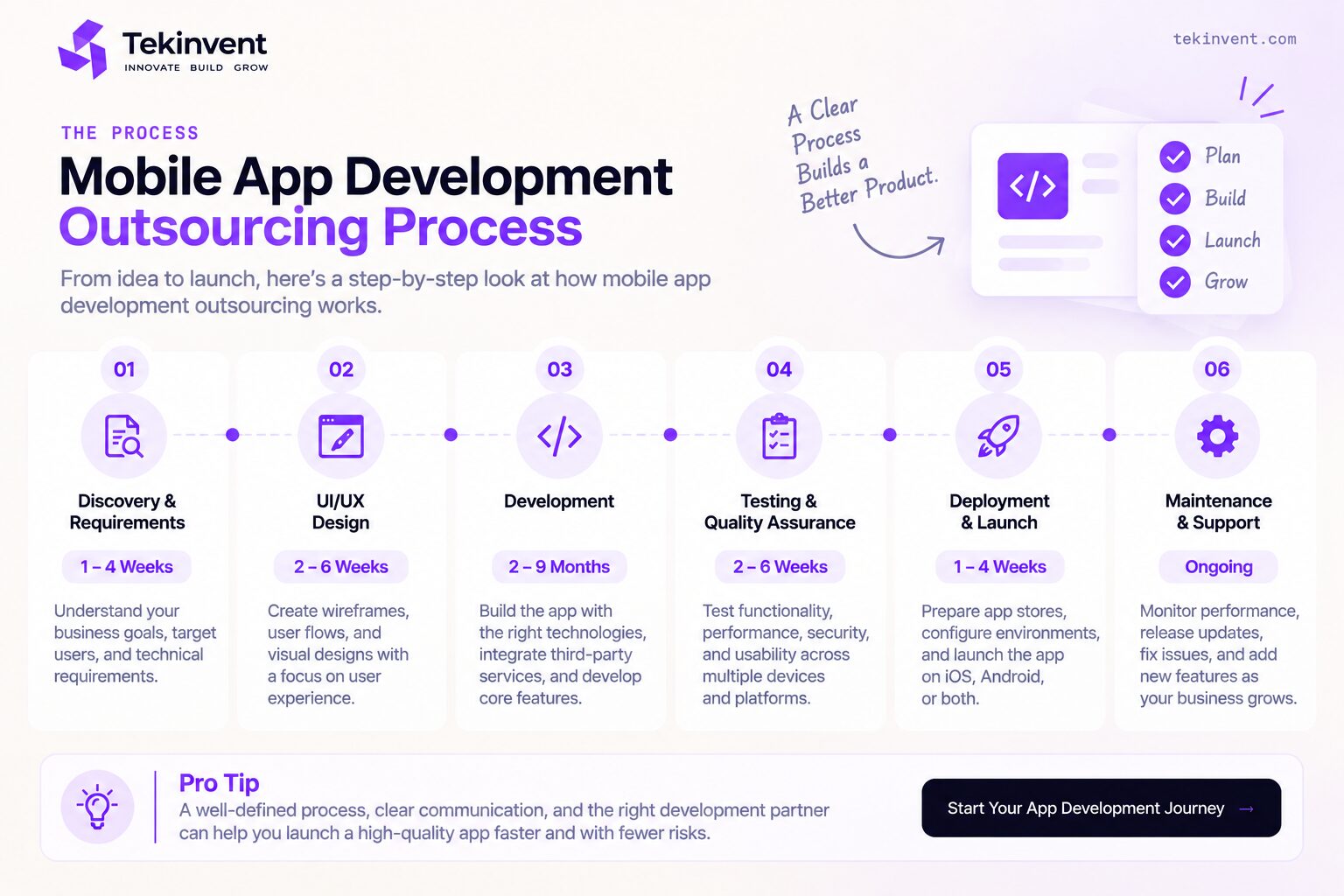
A Practical Mobile App Outsourcing Process
Successful outsourcing application development should begin before any code is written.
The first stage is discovery. The business and development team should define the problem, users, core functionality, platforms, integrations, technical requirements, and business objectives.
The next stage is project planning. Features are prioritized and the development roadmap is established.
Design then translates those requirements into user flows, wireframes, and interfaces.
Once the product direction is approved, development begins. Instead of waiting until the entire application is completed, businesses should review working builds throughout the project.
Testing should happen alongside development rather than being treated as the final step. Functional testing, device testing, performance checks, security considerations, and usability testing help identify issues before release.
After deployment, monitoring and maintenance become important because mobile operating systems, devices, APIs, and user expectations continue to change.
In House, Outsourced, or Hybrid: Which Model Fits Your Business?
The decision does not always need to be completely in house or completely outsourced.
A hybrid model can combine internal product knowledge with external development expertise.
For example, a company may retain its product manager and technical lead internally while using an external team for design, development, and testing.
This gives the business internal ownership of product strategy while allowing it to access additional technical capacity when required.
Startups that need to validate an idea quickly may prefer outsourcing because establishing an entire internal team before validating demand can create unnecessary overhead.
Larger organizations may use outsourcing when their internal developers are already occupied or when a project requires expertise they do not currently possess.
Businesses with continuous and highly specialized development requirements may prefer to build more capabilities internally.
The best model ultimately depends on what the business needs to control internally and what can be handled more efficiently by external specialists.
Final Thoughts
Mobile app development outsourcing can give businesses access to specialized developers, flexible resources, and an established development process without requiring them to build a complete technical department from scratch.
In house development, on the other hand, can provide stronger direct control and preserve technical knowledge within the organization.
The decision should not simply be based on which option appears cheaper.
Businesses should consider development speed, existing technical capabilities, project complexity, long term product plans, communication requirements, intellectual property, scalability, and the total cost of maintaining the development capability.
For some businesses, an internal team will make sense. For others, outsourcing the complete project will be more practical. In many cases, a hybrid model can provide a useful balance between internal product ownership and external technical expertise.
The objective is ultimately the same: choose a development structure that can deliver a reliable application while supporting the business after the initial launch.

Build Smart with The Right Team.
We bring expertise, technology, and trust you look for in your digital journey.