
Entrepreneurs and startup owners look for a process to hire a professional Android app developer at a budget-friendly package. Android is the top-trending technology, as it’s considered at the forefront of business automation, digital mobility, and transformation.
Android is a major mobile platform for businesses looking to reach customers through mobile apps. When choosing an Android app developer, businesses should evaluate technical expertise, relevant project experience, security practices, and long-term maintenance support. The right developer should understand the target audience and build an app around the business’s goals and requirements.
A mobile app development company opts for Android app developers who can understand their business vision and come up with an app solution that is perfect in terms of scalability, security, and features. If you are a solo entrepreneur looking for the development of an Android app, then this blog is the right piece for you!
This guide explains how to define your app requirements, assess developers, compare hiring models, and choose the right Android development partner for your business.
Let’s get started then…
How to hire an Android app developer? – Key Steps and Findings
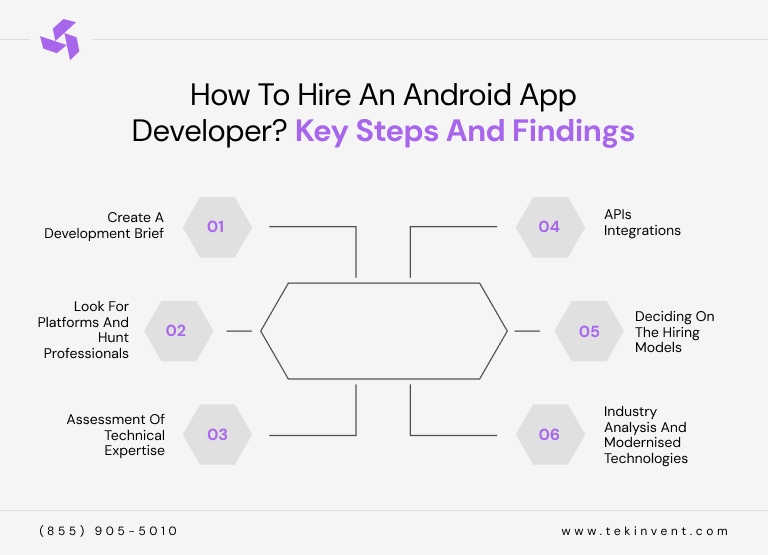
In this fold, we are going to learn about the steps involved in the seamless hiring of an Android app developer:
1. Create A Development Brief
You just can not wake up one day and make the need for an Android app developer in your firm and get started with the interviews. It all takes time…
Yes, you will have to create a questionnaire to analyse the need for an Android app developer, and once you have the queries listed, then you are good to go with the hiring process.
The top-most questions include:
- Why do I need an Android app developer?
- Who will be my target audience?
- What devices will my app support?
- On which platform will my app go live?
- Do I want any special, unique, or modern function in my app?
- Will my app collect personal information? How will I secure its back-end against data breaches?
- How will my app earn?
- How much budget have I allocated for Android development?
- Which 5 features do I want in my app?
- When do I want to complete the development of my app?
- When do I want to launch the app?
These are some of the major questions that should be answered beforehand. Once you get the answers to these questions, you are good to go with the hunting process. You can share these with the business analysts and other team members to conclude together.
2. Look for Platforms and Hunt Professionals
There are different platforms available, like LinkedIn, Fiverr, Upwork, and a lot more to search for your desired Android app developer. You can use keywords like “hire an Android app developer,” and based on these queries, you will get a list of app developers sharing their expertise and past excellence in projects.
3. Assessment of Technical Expertise
Mobile app development can involve native or cross-platform approaches. Native Android apps are built specifically for Android, while cross-platform development can support both Android and iOS from a shared codebase. If your business needs apps for multiple platforms, a cross platform app development company can help you evaluate the right approach based on your project requirements, budget, and target users. When hiring an Android app developer, check their experience with Android SDK, Android Studio, and the programming languages required for your project.
When evaluating an Android app developer, check their experience with Kotlin and Java, along with Android Studio and the Android SDK. Kotlin is widely used for modern native Android development, while Java remains relevant in many existing Android projects. The required skills depend on the app’s architecture, integrations, and technical requirements.
• Kotlin for Android Development
Kotlin is widely used for modern native Android development. When interviewing a developer, ask them to explain their Kotlin experience, how they structure code, handle errors, and test app functionality. Review a relevant project or code sample to assess whether they can build maintainable Android applications.
• Android Studio and Android SDK
Without any doubt, we can say that programming languages are important, but an Android app developer should know about Android Studio and SDKs as well.
Android Studio is the official integrated development environment for Android development. A qualified developer should know how to use its debugging tools, build system, emulator, and profiling features to develop, test, and troubleshoot an app. Ask candidates how they identify performance issues and verify app compatibility across supported devices.
• Databases Integration
Lastly, you will have to hire an Android app developer who has hands-on expertise in integrating databases with the mobile apps. Android apps may use local databases or cloud-based data services, depending on their requirements. Ask developers about their experience with options such as Room, SQLite, Firebase, and APIs, as well as how they handle data security, synchronization, and error recovery.
• Material Design for Android Apps
Assess whether the developer understands Android interface design, accessibility, responsive layouts, and platform conventions. A well-designed app should be easy to navigate, readable on supported screen sizes, and consistent across key user journeys. Ask candidates to explain how they turn user requirements into practical interface decisions.
• Android App Testing
Ask candidates how they test Android apps before release. Important areas include unit testing, integration testing, end-to-end testing, accessibility, performance, and compatibility across supported devices and Android versions. Developers should also be able to reproduce bugs, diagnose their causes, and verify fixes using emulators and physical devices.
4. APIs Integrations
API integration allows an Android app to connect with external services such as payment gateways, maps, authentication providers, and backend systems. Ask developers about their experience handling API errors, authentication, secure data transfer, and loading states. They should also explain how they test integrations and manage failures when an external service is unavailable.
• Analyzing the Portfolio
After the detailed technical assessment of the resources, the next most exciting step is to see the portfolios.
Review each candidate’s portfolio to understand the type of Android apps they have built, their role in each project, and the challenges they solved. Where possible, inspect published apps, read user feedback, and ask how the developer contributed to app performance, usability, and maintenance.
While analysing the portfolio of the resources, you need to look for the following factors:
- What is the type of app have they created in the past?
- What is the magnitude of the project?
- What are the visual aesthetics? Does it attract the audience?
- What is the overall user experience?
- What diversities are present in the individual domain?
- What are the clientele and target audience preferences?
- What are the possible monetization strategies for the mobile apps?
On top of these concerns, you may check the past testimonials that were posted by the clients to know if they meet their expectations or not. These concerns are really important because after this step, you are pretty much close to the hiring phase.
5. Deciding on the Hiring Models
The next step is to finalize the hiring model for the Android app development:
• Freelancers
The first and most frequently used hiring model is the freelancer, where the app development firm hires freelancers to work on the projects. Freelancers are independent individuals hired for specific skills or tasks.
Freelance Android app developers are best in terms of small, well-defined tasks, short-term needs, and tight budgets. The pros for freelance Android app developers include: flexible and fast to hire resources, usually lower cost, and good for niche skills. Whereas, the cons include limited availability, less accountability at scale, and knowledge walks out the door when they leave.
• Staff Augmentation
Staff augmentation services allow businesses to add external Android developers to their existing teams for a defined period or project. These services can be useful when a company needs specific technical skills or additional development capacity while retaining control over project priorities and day-to-day coordination.
Staff augmentation is useful when a business needs additional developers but wants to retain day-to-day control of the project. Costs depend on the developer’s experience, engagement length, and provider rates. Before choosing this model, clarify working hours, responsibilities, communication processes, and how performance will be measured.
- Project Base Development
Lastly, in this model, an external remote team takes full control of the projects, and they have a dedicated project manager taking complete care of the app. You are not linked with the teams, but you coordinate with the project managers to know about the status of the work.
Project-based development works well when the app’s scope, deliverables, and acceptance criteria can be defined in advance. Before signing, confirm the milestones, payment schedule, delivery timeline, testing responsibilities, intellectual property terms, and post-launch support. Costs and timelines may change if the project scope changes.
6. Industry Analysis and Modernised Technologies
The technologies an Android app needs depend on its purpose and target users. Some projects may require AI features, cloud services, location tracking, or augmented reality, while others need none of these. Prioritize developers who understand your actual requirements and can explain the benefits, costs, security implications, and maintenance needs of each proposed technology.
They should always keep an eye on the industry standard and the important insights that are driven by the Tech Leaders. This knowledge is really important as it impacts the entire working of the mobile apps.
The crucial app features include navigation, scope coverage, and features that overall impact the user experience, depending on the industry trends. For example, now we can see AR being used within e-commerce stores to allow virtual try-on features for users. This feature is seen in most of the apps like Alibaba, AliExpress, and more. Perhaps, only those Android app developers could integrate this feature within the Android app that knows about this trend. That is why it’s important to hire an Android app developer who keeps an eye on the trends and builds competitive applications.
7. Signing the NDA (Non-Disclosure Agreement)
NDA, also known as Non-Disclosure Agreement, is a legal contract that requires the entire development team to protect the information that is provided by the clients related to the application.
An NDA can help protect confidential business information shared during discussions and development. However, ownership of the source code, designs, documentation, and other deliverables should be clearly defined in the development agreement. Do not assume that an NDA automatically determines intellectual property ownership.
How Much Does It Cost to Hire an Android App Developer?
Android app development costs depend on the app’s complexity, design, backend requirements, integrations, testing, and ongoing maintenance. A reliable estimate requires a clear project scope, feature list, and technical requirements. You may follow all the key steps that are provided and discussed within this blog for a seamless hiring of a professional. From choosing the hiring model to the expertise assessment and other key standards, we covered it all for you.
Ready to Build Your Android App?
Before hiring a developer, define your app requirements, budget, timeline, and post-launch support needs. Compare candidates based on relevant experience, technical skills, communication, and their approach to testing and maintenance. Choosing a developer who understands your business goals can help you make a more informed decision about your app project.

Build Smart with The Right Team.
We bring expertise, technology, and trust you look for in your digital journey.