
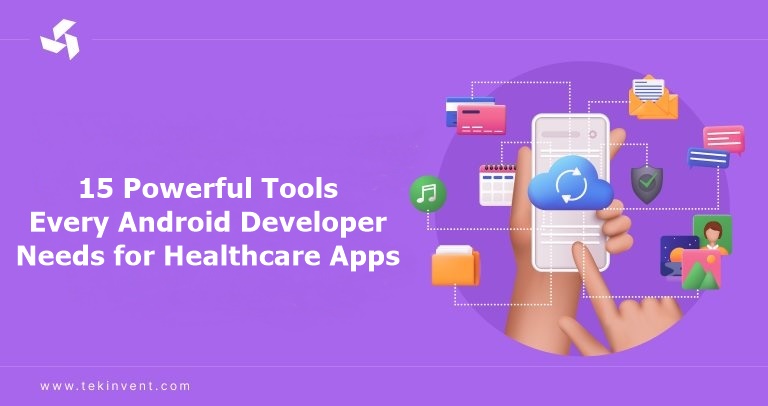
Android development today goes beyond writing clean code, demanding speed, collaboration, and precision, especially in healthcare app development, where security and compliance directly impact patient outcomes.
Modern teams at mobile app development companies rely on tools to streamline workflows, enable real-time collaboration, reduce errors, and ensure seamless deployment under constant pressure.
In 2026, the Android ecosystem has evolved with tools becoming inefficient while solutions transform productivity, helping developers build scalable, secure, and high-performing healthcare applications faster.
Choosing the right tools is essential because they improve efficiency, support compliance requirements, enhance integration capabilities, and help teams deliver reliable user-centric digital healthcare experiences.
If you’re considering Android development for the best tools to develop a healthcare app, then this blog is for you.
Essential Android Development Tools for Healthcare Apps in 2026
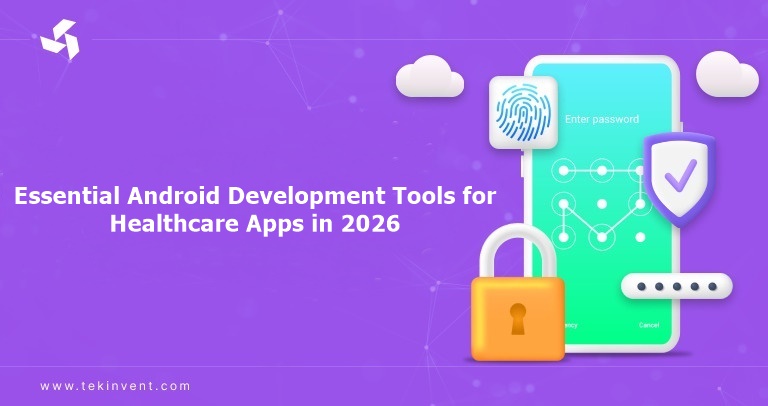
Building a healthcare app in 2026 requires precision, security, and performance. The right Android development tools empower developers to create scalable, compliant, and user-friendly applications efficiently and reliably.
1. Kotlin Programming Language

Kotlin is a modern programming language officially supported by Google for Android, improving code safety, readability, and maintainability, which is crucial for healthcare app development and seamless patient data handling.
Its concise syntax reduces the risk of bugs while enabling developers to implement complex functionality, ensuring high-quality performance and reliability for mobile healthcare solutions in hospital, clinic, or telemedicine environments.
2. Android Studio

Android Studio is the official integrated development environment for Android apps, providing advanced tools for coding, testing, debugging, and deployment, making it indispensable for healthcare app development projects.
The IDE offers real-time code suggestions, performance analysis, and device emulation, helping mobile app development companies ensure compliance, security, and smooth user experiences across various Android devices and patient-facing applications.
3. Firebase

Firebase is a comprehensive platform offering authentication, real-time databases, analytics, and cloud storage, enabling developers to build secure, scalable, and HIPAA-ready healthcare applications efficiently in 2026.
With its cloud messaging, performance monitoring, and user engagement tools, Firebase allows healthcare apps to maintain patient data confidentiality, facilitate communication, and track user interactions without compromising compliance or app responsiveness.
4. Jetpack Compose

Jetpack Compose is Google’s modern UI toolkit for building native interfaces with less boilerplate code and more intuitive workflows, helping developers design responsive and accessible healthcare applications.
Using Compose, mobile app development companies can create smooth animations, adaptive layouts, and consistent experiences, ensuring patient-facing interfaces are user-friendly, visually appealing, and compliant with accessibility standards.
5. React Native

React Native allows developers to build cross-platform apps using a single codebase, making it ideal for healthcare startups and companies aiming to launch Android applications simultaneously.
Its component-based architecture simplifies UI creation, speeds up development cycles, and ensures consistent performance across devices, while supporting critical healthcare features such as telemedicine, patient monitoring, and secure messaging systems.
6. Genymotion

Genymotion is a high-performance Android emulator that allows testing applications on various devices, resolutions, and operating system versions, ensuring healthcare apps work reliably across different environments.
Healthcare applications require rigorous testing due to sensitive patient data, complex integrations, and regulatory compliance, and Genymotion helps developers simulate real-world scenarios without risking live systems or data security.
7. TensorFlow Lite

TensorFlow Lite is a lightweight machine learning framework designed for mobile devices, enabling healthcare apps to implement AI-powered features like predictive diagnostics, image analysis, and personalized health recommendations.
Using TensorFlow Lite, developers can enhance patient experiences by integrating intelligent algorithms directly into apps, supporting remote monitoring, symptom tracking, and advanced medical decision-making with minimal performance overhead.
8. Postman

Postman is a powerful API testing and development tool that helps developers design, test, and document APIs, ensuring smooth communication between healthcare apps and external services or EMR systems.
It allows developers to simulate multiple API requests, validate responses, and automate testing workflows, which is critical for maintaining security, performance, and regulatory compliance in sensitive healthcare applications.
9. GitHub

GitHub is a version control and collaboration platform that enables healthcare development teams to track changes, manage code, and collaborate effectively on Android projects in a secure environment.
By using GitHub, developers can implement branching strategies, conduct code reviews, and set up CI/CD pipelines, thereby minimizing errors, ensuring auditability, and maintaining compliance with healthcare data privacy regulations.
10. Dagger Hilt

Dagger Hilt is a dependency injection framework for Android that simplifies object creation, reduces boilerplate code, and ensures efficient memory management in healthcare applications.
Its integration supports a modular app architecture, testability, and scalability, enabling mobile app development companies to maintain high performance and reduce runtime errors in patient-focused software.
11. IntelliJ IDEA

IntelliJ IDEA is a versatile IDE that supports Kotlin, Java, and other Android development tools, providing advanced refactoring, debugging, and testing capabilities for healthcare applications.
It helps developers streamline coding, reduce errors, and maintain high-quality standards, which is essential for apps handling sensitive patient data and integrating with multiple healthcare systems.
12. Espresso
Espresso is a testing framework for Android applications, allowing developers to create automated UI tests that simulate user interactions, ensuring a seamless and reliable healthcare app experience.
Automated testing with Espresso ensures that complex workflows like appointment scheduling, prescription tracking, and medical record access function correctly without errors before the app reaches patients or care teams.
13. Coil

Coil is a fast, lightweight image loading library for Android, designed for Kotlin, helping healthcare apps manage images like X-rays, scans, or patient avatars efficiently without affecting performance.
Its asynchronous image loading improves app responsiveness and supports caching, ensuring high-quality visual content is displayed seamlessly in mobile healthcare applications for improved patient engagement.
14. LeakCanary

LeakCanary is a memory leak detection tool for Android that helps developers identify and fix resource leaks, improving healthcare app stability and preventing performance issues in real-world use.
For apps managing sensitive patient data, LeakCanary ensures efficient memory use, reduces crashes, and supports long-term reliability, which is crucial for hospitals, clinics, and telehealth services.
15. Google Stitch (AI Development Tool)
Google Stitch leverages AI to help developers generate code, UI components, and logic, accelerating healthcare app development while reducing errors and improving productivity for mobile app development companies.
Its AI-assisted workflows allow teams to prototype, integrate, and optimize features faster, supporting patient monitoring, scheduling, and interactive healthcare tools with enhanced accuracy and efficiency.
Key Healthcare App Categories for 2026
Understanding the types of healthcare apps in 2026 is essential for planning and building successful digital solutions that serve patients, providers, and administrators effectively.
1. Apps Designed for Patients
Patient-facing healthcare apps help users manage appointments, track vital signs, access mental health support, or consult doctors remotely, requiring trust, reliability, and secure data handling at all times.
Success depends on clarity, consistent engagement, and smooth usability, since patients share personal health information and rely on these apps for urgent medical decisions and daily health monitoring.
2. Tools for Healthcare Providers
Provider-focused apps allow doctors, nurses, and specialists to access electronic health records, review imaging, dictate notes, or communicate securely with colleagues while moving through hospitals or clinics.
Field healthcare staff can document visits, collect signatures, and synchronize records efficiently, reducing paperwork and improving coordination of care while maintaining compliance with regulations and internal workflows.
3. Administrative and Enterprise Solutions
Operational apps assist healthcare administrators in managing staff schedules, bed occupancy, medical devices, pharmacy stock, and billing, streamlining operations while maintaining accurate data and regulatory compliance.
Insurer-focused apps enable claims processing, benefit tracking, authorizations, and member communications, while research apps capture trial data, manage consent, and ensure study quality under strict regulatory oversight in 2026.
4. Hybrid and Integrated Healthcare Platforms
Some apps combine patient, provider, and administrative features into a single platform, enhancing care coordination, data sharing, and operational efficiency for hospitals, clinics, and healthcare networks.
Integration supports seamless workflows across departments, allows real-time updates, and strengthens trust in digital healthcare services by ensuring accurate data flow, enhanced usability, and regulatory adherence throughout the system.
Essential Features Every Healthcare App Must Include in 2026
Creating a modern healthcare app in 2026 requires careful planning to integrate features that enhance usability, ensure security, and improve care delivery across patients and providers.
1. Advanced User Authentication
Secure login options with multi-factor authentication, including biometric scans, SMS codes, or authenticator apps, are essential for protecting sensitive patient information in healthcare applications safely and reliably.
Role-based access controls ensure clinicians, administrators, and patients see only relevant screens and data, preventing unauthorized access while maintaining compliance with healthcare regulations and privacy requirements across platforms.
2. Reliable Communication Tools
Healthcare apps must offer HD video calls, secure chat, and asynchronous messaging, enabling remote consultations, follow-ups, and patient engagement efficiently and with full privacy protection.
These communication tools support telemedicine visits and continuous interaction, allowing providers to monitor patient conditions, answer questions, and respond quickly to emerging health issues in real time.
3. Intelligent Appointment Scheduling
Scheduling modules allow patients to search providers by specialty, insurance coverage, or preferred language, then book, reschedule, or cancel appointments instantly through the mobile application.
Automated notifications via push, SMS, or email reduce no-shows while improving patient adherence, ensuring efficient clinic operations and a smooth user experience for both patients and healthcare staff.
4. Comprehensive Care Planning
For chronic disease management or post-surgical recovery, apps must include daily task lists, checklists, and personalized educational content within care plan dashboards to guide patient routines effectively.
This functionality helps patients follow treatment protocols accurately, ensures timely interventions, and increases engagement by combining instructions, reminders, and educational resources in one interactive interface.
5. Safe E-Prescribing and Medication Management
E-prescribing features allow doctors to create prescriptions securely, with automated checks for drug interactions and pharmacy integration, improving medication safety and adherence for patients.
Patients can track dosage schedules, receive refill reminders, and maintain a complete medication history, while AI alerts highlight missed doses or concerning patterns, enabling timely provider intervention.
6. Health Data Visualization and AI Monitoring
Charts, graphs, and trend lines for vitals, lab results, and other health metrics help users understand their conditions while allowing providers to track patient progress effectively.
AI algorithms analyze patterns, flagging anomalies like elevated blood pressure or irregular glucose readings, empowering healthcare staff to act promptly and prevent complications through early intervention.
How TekInvent Develops High-Quality Healthcare Apps in 2026?
At TekInvent, we focus on combining innovation, security, and usability to deliver healthcare applications that meet both patient needs and provider expectations efficiently and reliably.
1. Thorough Requirement Analysis
Our development process begins with a detailed analysis of client goals, workflows, and user needs, ensuring the app’s features align perfectly with healthcare standards, patient safety, and organizational objectives.
Understanding patient demographics, provider routines, and administrative workflows allows us to design apps that are intuitive, compliant, and capable of scaling with growing healthcare demands over time.
2. Secure Architecture and Compliance
We build apps with robust security architecture, incorporating encryption, secure authentication, and role-based access while maintaining strict compliance with healthcare regulations such as HIPAA and local data privacy laws.
This ensures sensitive patient data is protected from breaches, giving both providers and patients confidence while allowing apps to operate reliably across various clinical and remote care scenarios.
3. User-Centric Interface Design
TekInvent emphasizes user experience by designing interfaces that are intuitive, visually clear, and accessible for patients, doctors, and administrators, reducing errors and improving engagement across all healthcare app functions.
By applying responsive design principles, we ensure the app works seamlessly on smartphones, tablets, and wearable devices, making patient interaction and provider workflows more efficient and enjoyable.
4. Advanced Feature Integration
We integrate advanced features such as telemedicine, e-prescribing, appointment scheduling, AI-powered health monitoring, and real-time analytics to meet modern healthcare demands effectively and reliably.
Each feature is carefully designed to interact smoothly with others, ensuring that data flows securely, processes remain efficient, and users can complete tasks quickly without technical frustrations.
5. Rigorous Testing and Quality Assurance
Every TekInvent app undergoes thorough testing, including automated and manual quality assurance processes, functional testing, security audits, and performance checks to ensure reliability in real-world healthcare environments.
This reduces the risk of errors, crashes, or security vulnerabilities, guaranteeing that patients, providers, and administrators experience seamless operation without interruptions in their critical workflows.
6. Continuous Support and Future-Proofing
Post-launch, we provide ongoing maintenance, feature updates, and optimization to adapt apps to changing healthcare standards, technology trends, and user feedback for sustainable long-term performance.
Future-proofing includes integrating new devices, analytics, and compliance updates, ensuring apps remain modern, efficient, and valuable tools for both patient care and provider management over time.
Final Thoughts
Building healthcare apps in 2026 requires secure, user-friendly, and compliant solutions. The right Android development tools help mobile app development companies create scalable, reliable, and patient-focused applications efficiently.
By combining advanced features, rigorous testing, and continuous updates, these apps improve care delivery, enhance patient engagement, and streamline provider workflows across clinics, hospitals, and telemedicine platforms. Contact TekInvent!

Build Smart with The Right Team.
We bring expertise, technology, and trust you look for in your digital journey.