
Let’s be honest, after the pandemic, prioritizing health became non-negotiable, driving demand for healthcare app development and pushing every mobile app development company to innovate faster.
In 2026, the digital healthcare sector is projected to reach US$660 billion, reflecting massive adoption and creating opportunities for scalable, secure, and user-focused health solutions worldwide.
Additionally, 43 percent of the US population uses health apps to track nutrition, symptoms, or medication, highlighting how digital tools are now deeply integrated into everyday wellness habits.
In 2026, healthcare app development costs range from US$40,000 for MVP-level solutions to over US$300,000 for complex, compliance-heavy platforms, driven by integrations, security, and regulatory requirements.
Building a healthcare app is not just about coding; it requires user-focused design, strict compliance, secure infrastructure, and strategic planning to ensure long-term value, patient trust, and sustainable growth.
Understanding Healthcare App Development Costs in 2026
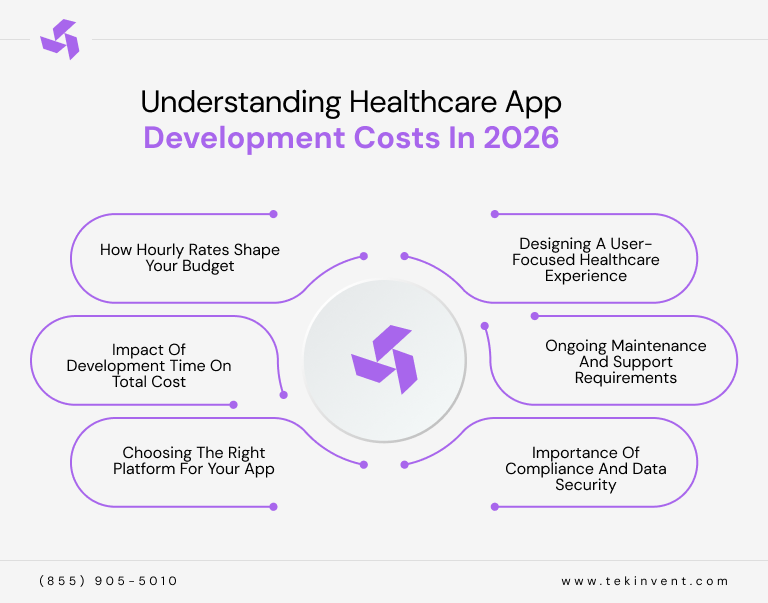
Building a healthcare application in 2026 requires careful planning, as multiple cost-driving factors significantly influence the overall budget, performance, scalability, and long-term success of your solution.
1. How Hourly Rates Shape Your Budget
Hourly rates play a major role in healthcare app development costs, as they vary based on developer expertise, experience level, and geographic location of the development team. Teams with advanced technical skills and healthcare domain knowledge often charge higher rates, but they also deliver secure, scalable, and user-focused solutions efficiently.
Choosing between offshore and local teams can impact pricing, so balancing cost-effectiveness with quality ensures your healthcare app meets performance expectations without compromising security or compliance standards.
2. Impact of Development Time on Total Cost
The total cost of healthcare app development is directly linked to the number of hours required to design, develop, test, and launch a fully functional application successfully. Projects with advanced features, integrations, and real-time capabilities require longer development timelines, increasing the overall investment needed for building a reliable healthcare solution.
Efficient project planning, clear requirements, and experienced developers can help optimize timelines, ensuring your healthcare app development process remains cost-effective while delivering high-quality and secure results.
3. Choosing the Right Platform for Your App
Selecting the right platform significantly affects healthcare app development costs, as native iOS and Android applications require separate development processes, increasing time, effort, and overall budget. Cross-platform development offers a cost-effective alternative by using a single codebase, but it may compromise performance, scalability, and seamless user-focused experiences compared to fully native applications.
In 2026, businesses must evaluate their target audience, performance expectations, and long-term goals before deciding on a platform strategy that balances cost, efficiency, and user satisfaction.
4. Designing a User-Focused Healthcare Experience
App design plays a critical role in healthcare app development, as a user-focused interface improves engagement, accessibility, and overall satisfaction while ensuring patients can easily navigate complex features and functionalities.
High-quality UI-UX design, responsive layouts, and interactive elements require skilled designers, which can increase development costs but significantly enhance the overall user experience and retention rates.
A minimalistic and well-structured design approach can reduce costs while still delivering a clean, efficient, and user-focused interface that meets healthcare industry standards.
5. Ongoing Maintenance and Support Requirements
Healthcare app development does not end after launch, as ongoing maintenance, updates, and support services are essential to ensure performance, security, and compatibility across devices and platforms over time.
Regular updates help fix bugs, improve functionality, and adapt to changing user needs, which adds to the long-term cost of maintaining a healthcare application. Partnering with a reliable mobile app development company ensures consistent monitoring, timely updates, and cost optimization while keeping your healthcare app secure, efficient, and user-focused.
6. Importance of Compliance and Data Security
Compliance and regulations are critical in healthcare app development, as protecting patient data and ensuring privacy require strict adherence to industry standards and secure data-handling practices at all times.
Implementing advanced security measures like encryption, access controls, and secure storage increases development costs but is essential for building trust and maintaining legal compliance in healthcare applications.
In 2026, regulatory requirements continue evolving, making it necessary to prioritize compliance-driven development approaches that safeguard sensitive information while ensuring your healthcare app remains reliable, secure, and user-focused.
Healthcare App Development Costs by Product Type in 2026
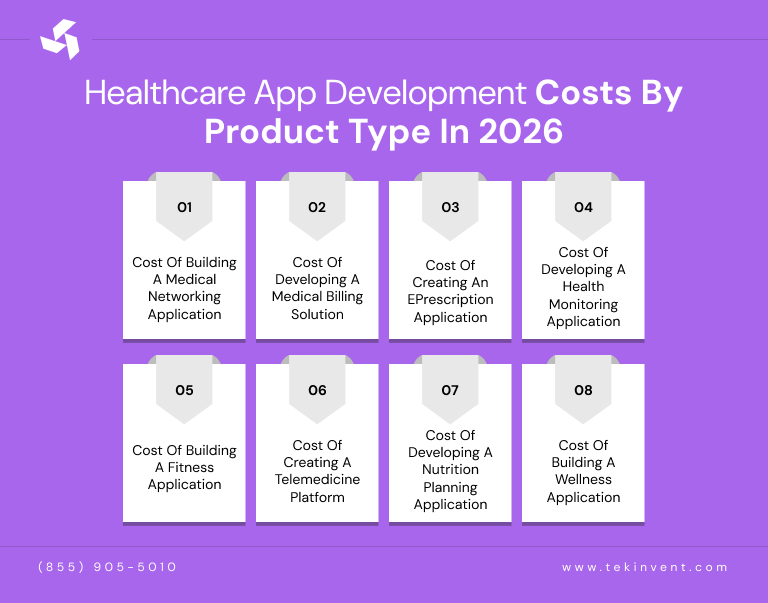
Understanding the cost of healthcare app development becomes easier when you explore different product types, as each app category includes unique features, complexity levels, and budget requirements.
1. Cost of Building a Medical Networking Application
Medical networking applications enable secure peer-to-peer communication among healthcare professionals, allowing them to share case studies, discuss guidelines, and collaborate through user-focused digital environments effectively.
These applications typically include features like journals, forums, news updates, and professional networking tools, which enhance knowledge sharing and improve patient care through better collaboration among healthcare providers.
In 2026, developing a medical networking application can cost between US$30,000 and US$60,000, depending on the level of interactivity, scalability, and user-focused features required for long-term engagement.
2. Cost of Developing a Medical Billing Solution
Medical billing applications simplify financial processes by allowing users to manage payments, generate invoices, and maintain digital records, ensuring efficient and transparent billing systems within healthcare environments.
Common features include automated billing, audit support, custom bill generation, discount adjustments, and credit billing options, which improve accuracy and reduce manual errors in financial transactions.
In 2026, the cost of developing a medical billing application typically ranges from US$40,000 to US$90,000, depending on integration requirements, automation level, and overall system complexity.
3. Cost of Creating an ePrescription Application
ePrescription applications streamline communication between healthcare providers and pharmacies by enabling digital prescription sharing, reducing errors, and improving the efficiency of patient treatment processes significantly.
Key features include integrated drug databases, customized interfaces, patient-specific reports, and detailed prescription visibility, which enhance accuracy and provide a seamless experience for both doctors and patients.
In 2026, developing an ePrescription application may cost between US$40,000 and US$80,000, depending on data integration, compliance requirements, and the level of customization required for healthcare providers.
4. Cost of Developing a Health Monitoring Application
Health monitoring applications allow users to track health metrics using wearable devices, providing real-time insights into fitness, activity levels, and overall well-being via user-focused dashboards and analytics tools.
These apps typically include features like geolocation tracking, notifications, secure data handling, interactive interfaces, and easy navigation, ensuring a seamless and user-focused experience for daily health tracking.
In 2026, the cost of developing a health monitoring application ranges from US$50,000 to US$100,000, depending on sensor integration, real-time capabilities, and data-processing requirements.
5. Cost of Building a Fitness Application
Fitness applications help users manage daily routines, track activities, and receive personalized training guidance, making them essential tools for effectively improving health, productivity, and overall lifestyle.
Core features include activity tracking, personalized workouts, direct messaging, self-care tools, notifications, and multi-option logins, which enhance engagement and create a more interactive user-focused experience.
In 2026, developing a fitness application can cost between US$60,000 and US$300,000, depending on the level of personalization, real-time tracking, and scalability required for a growing user base.
6. Cost of Creating a Telemedicine Platform
Telemedicine applications enable remote healthcare access by connecting patients with healthcare providers through digital platforms, combining online consultations with offline services for a seamless healthcare delivery experience.
These applications include features like video consultations, appointment scheduling, patient dashboards, secure payment gateways, electronic health records, and geolocation, ensuring efficient communication and service delivery.
In 2026, the cost of developing a telemedicine application ranges from US$50,000 to US$200,000, depending on integrations, compliance requirements, and the complexity of real-time communication features.
7. Cost of Developing a Nutrition Planning Application
Nutrition planning applications help users maintain healthy eating habits by providing personalized diet plans, reminders, and insights based on user-entered data and lifestyle preferences for better health outcomes.
Common features include alerts, analytics, user dashboards, diet planners, and wearable-device integration, which create a user-focused experience that supports consistent and informed nutrition management.
In 2026, the estimated cost of developing a nutrition planning application ranges from US$30,000 to US$60,000, depending on customization, integration, and user-experience requirements.
8. Cost of Building a Wellness Application
Wellness applications focus on improving overall well-being by combining features related to fitness, mindfulness, productivity, and nutrition, helping users maintain a balanced and healthy lifestyle effectively over time.
These apps often include meditation tools, wellness tracking, nutrition planning, and productivity features, creating a holistic and user-focused experience that supports long-term health and personal development goals.
In 2026, developing a wellness application can cost between US$60,000 and US$160,000, depending on feature depth, integrations, and scalability requirements for diverse user needs.
Expanding Healthcare Apps Beyond Mobile in 2026
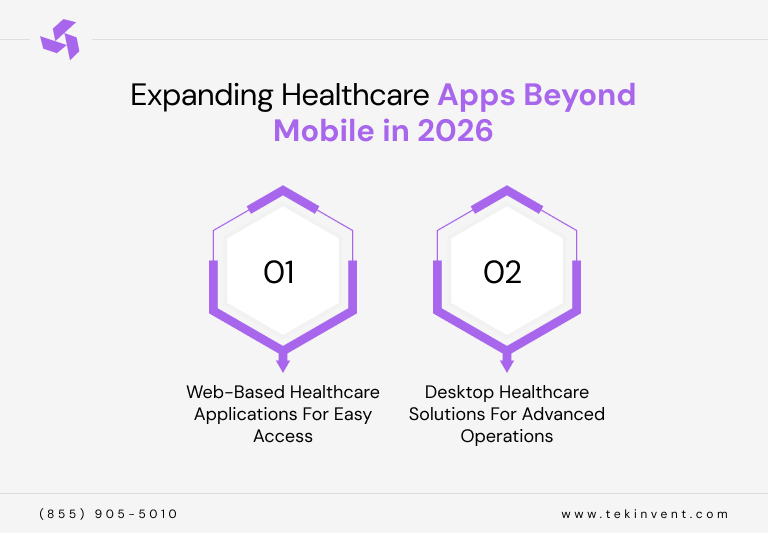
Healthcare applications in 2026 are no longer limited to smartphones, as web and desktop solutions provide flexibility, accessibility, and efficiency for healthcare professionals, administrators, and patients daily.
1. Web-Based Healthcare Applications for Easy Access
Web-based healthcare applications allow users to access platforms directly through modern browsers, making them highly convenient, easy to update, and accessible across multiple devices without installation requirements.
These applications are ideal for healthcare professionals and administrators who need quick access to patient data, reports, and dashboards, ensuring smooth workflows and improved decision-making across healthcare environments.
Since updates can be deployed instantly without app store approvals, web-based solutions reduce maintenance delays and improve scalability, making them a cost-effective and user-focused option for healthcare app development.
2. Desktop Healthcare Solutions for Advanced Operations
Desktop healthcare applications are designed for complex tasks such as hospital management systems and clinic dashboards, offering robust performance, advanced features, and reliable access for professionals working in structured environments.
These applications support cross-platform functionality, allowing businesses to create software that works seamlessly across different operating systems without requiring separate development processes for each platform.
By using efficient development approaches, desktop applications can reduce overall costs and development time while still delivering secure, scalable, and user-focused healthcare solutions for operational efficiency.
Why Multi-Platform Access Improves Healthcare Efficiency?
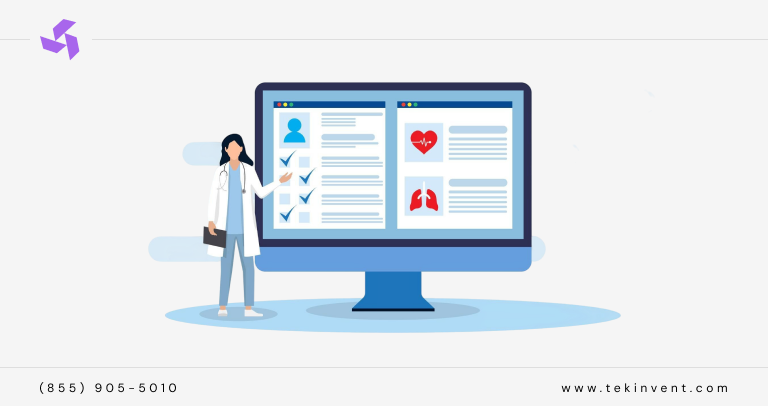
Providing both web and desktop versions ensures that healthcare applications meet the needs of users who spend significant time on computers, improving productivity, accessibility, and overall user experience significantly.
This multi-platform approach allows seamless data synchronization, better workflow management, and enhanced collaboration between healthcare providers, leading to more efficient and reliable healthcare services overall.
In 2026, adopting web and desktop solutions alongside mobile applications is a practical and cost-effective strategy for building scalable, user-focused healthcare platforms that support long-term growth and performance.
Hidden Healthcare App Costs You Should Plan for in 2026
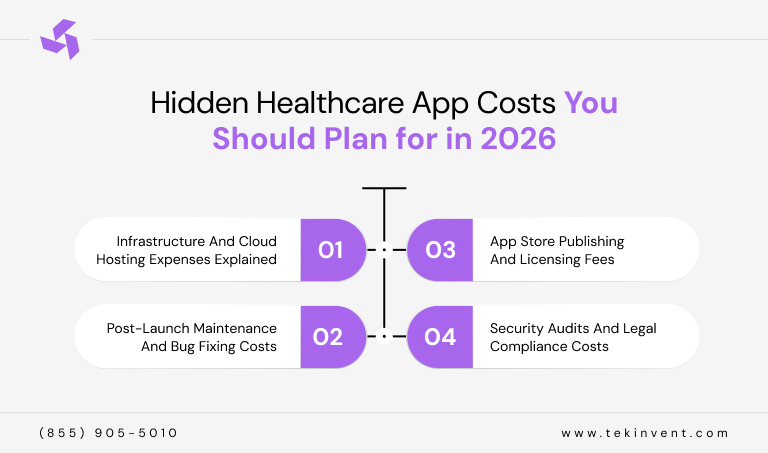
Planning a healthcare application budget requires understanding hidden costs beyond development, as overlooked expenses can impact timelines, scalability, and long-term performance of your healthcare solution significantly.
1. Infrastructure and Cloud Hosting Expenses Explained
Infrastructure and cloud-hosting costs are essential for running healthcare applications, as servers, storage, and computing power ensure smooth performance, data access, and reliable system availability for users.
In 2026, small healthcare apps may cost between US$50 and US$200 monthly, while medium projects can range from US$200 to US$1,000, and large applications exceed US$1,000 monthly.
Additional expenses include scaling resources, backups, monitoring tools, and performance optimization, making cloud infrastructure a continuous investment that directly impacts application reliability, speed, and user-focused experience.
2. Post-Launch Maintenance and Bug Fixing Costs
After launching a healthcare application, ongoing monitoring, updates, and bug-fixing become essential to maintain performance, fix unexpected issues, and ensure a smooth user-focused experience across devices.
Users often encounter real-world issues not detected during testing, requiring continuous improvements, updates, and feature enhancements to keep the application functional, secure, and aligned with user expectations.
In 2026, allocating around 15 to 25 percent of the initial healthcare app development cost for maintenance ensures long-term stability, improved performance, and better user satisfaction over time.
3. App Store Publishing and Licensing Fees
Publishing a healthcare application on major platforms involves certain fees, including developer account charges, licensing requirements, and renewal costs that contribute to the overall project budget.
For example, Apple charges approximately US$99 annually, while Google Play requires a one-time fee of US$25, making these costs relatively small compared to development investments.
However, additional expenses such as certificates, compliance licenses, and renewal fees should be considered, ensuring your healthcare application remains accessible, compliant, and available across platforms without interruptions.
4. Security Audits and Legal Compliance Costs
Security audits and legal reviews are critical in healthcare app development, as they ensure data protection, regulatory compliance, and risk mitigation when handling sensitive patient information and medical records.
In 2026, basic security audits for small to medium projects may cost between US$5,000 and US$15,000, while complex applications can exceed US$50,000 depending on scope and infrastructure requirements.
Legal reviews, including privacy policies, terms, and regulatory compliance checks, can range from US$3,000 to over US$20,000, making them essential investments for building secure, trustworthy, and compliant healthcare applications.
Final Thoughts
In 2026, healthcare app development is a strategic investment that goes beyond basic coding, requiring careful planning, user-focused design, strong security, and compliance-driven development to ensure long-term success.
From understanding cost-driving factors to choosing the right product type, platform, and features, every decision directly impacts your overall budget, scalability, and performance in a competitive healthcare market.
Whether you are building a simple MVP or a complex, feature-rich platform, working with the right mobile app development approach helps you balance cost, quality, and long-term growth effectively.
By accounting for both visible and hidden costs, including infrastructure, maintenance, and compliance, businesses can avoid unexpected expenses and build reliable, secure, and user-focused healthcare solutions that deliver real value.
Ultimately, investing in healthcare app development in 2026 is not just about cost; it is about creating impactful digital experiences that improve patient care, streamline operations, and support sustainable business growth.

Build Smart with The Right Team.
We bring expertise, technology, and trust you look for in your digital journey.