
Let us face it, what is the reason any entrepreneur invests in e-commerce mobile app development? To make money, of course! However, making your mobile app profitable is not a piece of cake; in fact, you have to identify the top revenue-generating strategies and choose the best ones for your e-commerce mobile app.
Now, why is it important to consider a few strategies instead of using all of them for your mobile app? Well, because all of them will not work together. For example, imagine you’re making pasta, and you add macaroni along with spaghetti. The dish will not work because these two pasta shapes are completely different from one another; not only will it look unappealing, but it will also be difficult to eat.
Did you know there are over 2 million iOS apps and over 3 million Android apps on the mobile stores? That must make you wonder, how can a mobile app development company help you create an app that is unique and gets you more users? The answer is simple: with very good profit making strategies!
In this blog, we will share the nine best monetization strategies that will help you increase your profit. So let’s begin!
The 9 Successful Revenue-Generating Models for Your E-commerce App
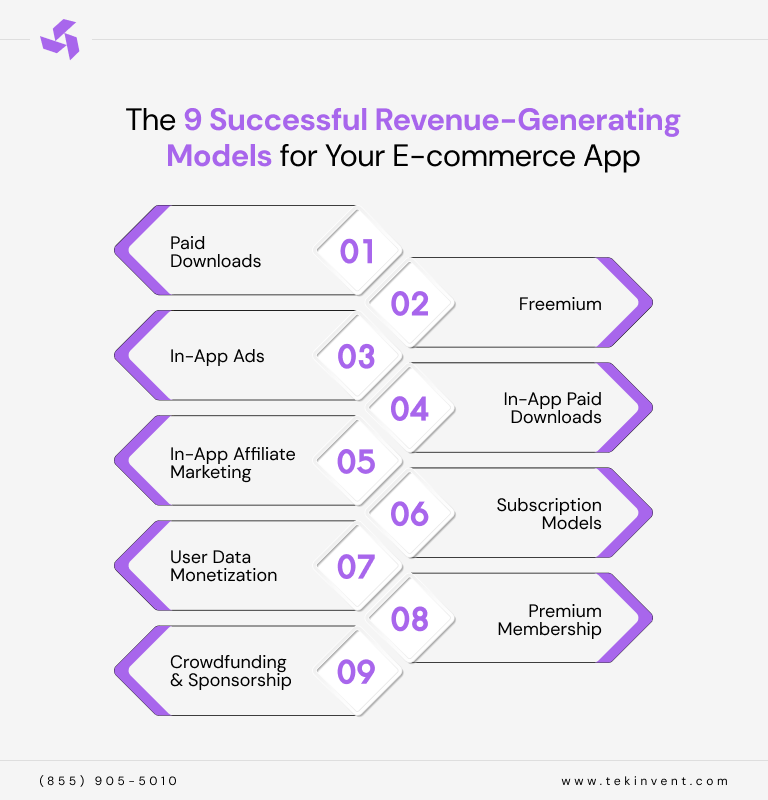
Choosing the right revenue model helps your ecommerce app grow faster, improve user experience, and generate steady income while staying competitive in the evolving digital marketplace of 2026.
1. Paid Downloads
You can charge the users for downloading your ecommerce app to get immediate revenue. This will work best if your app offers strong value, unique features, and focuses on user experience.
Before you charge the users for the download of your app, make sure your brand is well-known and highly trustworthy, because otherwise, no users will pay and download the app. If you still want to charge for downloads, then you will need high-performing marketing strategies to gain the trust of the users in the competitive market.
Eventually, if you want your app to succeed in the market, then make sure that your app is truly amazing! The app will need great performance, regular updates to remove the errors and bugs, and a very smooth shopping experience without the lags and delays.
2. Freemium
The freemium model allows users to access basic features for free while offering advanced tools and premium benefits through paid upgrades within the ecommerce app experience. This approach attracts a larger audience because users can explore your platform without risk, making it easier to build trust and demonstrate value through real interactions.
Once users are engaged, you can introduce premium features like personalized recommendations, faster checkout options, or exclusive deals that enhance their overall shopping experience significantly. Remember, a well-balanced freemium strategy focuses on delivering meaningful free value while clearly showing the benefits of upgrading to encourage higher conversions.
3. In-App Ads
In-app advertising is a popular revenue model where businesses earn income by displaying relevant ads to users while they browse products or interact within the ecommerce platform. This method works best when ads are carefully placed and aligned with user interests, ensuring they enhance rather than disrupt the overall experience and engagement.
By using smart targeting strategies, your app can show personalized ads that feel useful, increasing click-through rates and generating higher revenue without negatively affecting user satisfaction. All successful apps focus on non-intrusive, well-timed advertising that blends naturally into the user journey while maintaining a clean and user-friendly interface.
At TekInvent, we created an e-commerce grocery app for our client that uses in-app ads as one of the top monetization strategies. The app, FreshCart Go, shows related ads about ongoing deals on fresh produce that are engaging and generate revenue.
4. In-App Paid Downloads
Offering in-app purchases for digital products allows ecommerce apps to generate additional revenue by selling items like exclusive content, features, or virtual goods directly to users. This model works effectively when the purchases add clear value, such as unlocking premium tools, accessing limited-time offers, or enhancing the shopping experience with personalized options.
Users are more likely to spend when the process is simple, secure, and seamlessly integrated into their browsing or checkout journey within the app environment. Focusing on user-focused design and smooth payment flows ensures higher conversions and builds trust, encouraging repeat purchases over time.
5. In-App Affiliate Marketing
Affiliate marketing allows your ecommerce app to earn commissions by promoting third-party products or services and directing users to make purchases through referral links within your platform. This model works well when recommendations are relevant, trustworthy, and aligned with user preferences, creating a helpful experience rather than feeling overly promotional or forced.
By integrating affiliate offers naturally into product listings or suggestions, you can increase revenue without needing to manage inventory or logistics yourself. The app’s success depends on maintaining transparency, delivering genuine value, and ensuring that affiliate promotions enhance the overall shopping journey for users.
6. Subscription Models
Subscription models provide a steady and predictable income stream by offering users ongoing access to exclusive features, benefits, or services in exchange for recurring payments within the app. This approach works best when your ecommerce platform delivers continuous value, such as special discounts, early access to products, or personalized shopping experiences tailored to user preferences.
Users are more likely to subscribe when they clearly understand the benefits and feel that the service improves convenience, saves time, or enhances their overall experience. Successful subscription strategies focus on flexibility, transparent pricing, and consistent value delivery to retain long-term users effectively.
7. User Data Monetization
User data monetization involves analyzing customer behavior, preferences, and interactions within the app to generate insights that can be used for targeted marketing or strategic partnerships. This model must always prioritize privacy, security, and transparency to maintain user trust while leveraging valuable data to improve services and create new revenue opportunities.
By understanding shopping patterns, your app can offer personalized experiences and share aggregated insights with partners in a responsible and ethical manner. Businesses that succeed with this model focus on compliance, user consent, and delivering meaningful improvements that benefit both users and stakeholders.
8. Premium Membership
Premium membership models provide users with exclusive perks, such as faster delivery, special discounts, or early access to new products, in exchange for a one-time or recurring fee. This approach builds customer loyalty by creating a sense of exclusivity and rewarding frequent shoppers with added value that enhances their overall ecommerce experience significantly.
Users are more likely to invest in memberships when the benefits are clear, practical, and tailored to their shopping habits and preferences within the app. A strong premium strategy focuses on delivering consistent advantages that make members feel valued and encourage long-term engagement.
9. Crowdfunding & Sponsorship
Crowdfunding and sponsorships allow ecommerce apps to generate revenue by collaborating with brands or gathering financial support from users to launch new features, products, or initiatives. This model works best when there is a strong community that believes in your platform and is willing to contribute to its growth and innovation.
Sponsorships can also provide additional income by partnering with brands that align with your audience and enhance the overall value offered within the app. Success depends on authenticity, clear communication, and building a loyal user base that actively supports your vision and long-term goals.
Looking for inspiration to build your e-commerce app? Check out our FreshCart Go case study – the e-commerce grocery app we built for our client!
Monetization Challenges You Might Face With Your App
As an app owner, you will definitely face challenges when it comes to app monetization. The first strategy might work wonderfully, but it doesn’t guarantee that it will keep working the same way. For example, your new app might show related ads, and you’ll generate profit from those, but you never know, at one point, your users might get irritated by the ads. Eventually, this strategy will stop working.
In this blog section, we will discuss the problems you might face with monetization and their simple solutions:
Issue 1: Poorly Integrated Apps
One major issue in app monetization arises when advertisements or revenue features are placed in a way that disrupts the user-focused experience and reduces overall usability significantly.
Poor placement can interrupt browsing or shopping flows, causing frustration, lower engagement, and decreased retention rates among users who expect smooth and seamless interactions. This often leads to lower click-through rates and reduced revenue potential, making it difficult to achieve consistent monetization success within the app environment.
Solution
To resolve this issue, businesses should prioritize user experience by integrating monetization elements in a natural and non-intrusive way that complements the app journey effectively. Carefully placed advertisements and relevant promotional content can enhance engagement when aligned with user intent rather than interrupting important actions.
Continuous testing, performance tracking, and design optimization will help identify the best placement strategies that balance revenue generation with a smooth and enjoyable user experience.
Issue 2: High User Acquisition Costs
Acquiring new users for an ecommerce app can be costly, especially when marketing efforts are not aligned with user behavior, preferences, and engagement patterns in competitive digital markets.
Without proper targeting and understanding of the audience, businesses may spend heavily on campaigns that fail to attract high-quality users who convert or remain active. This increases overall expenses while limiting the effectiveness of monetization strategies and long-term profitability.
Solution
Businesses can address this challenge by investing in user-focused research to better understand customer needs, expectations, and interaction patterns within the app environment. By improving onboarding experiences and delivering personalized content, apps can increase engagement and encourage organic growth through word-of-mouth referrals.
Your data-driven marketing strategies and continuous optimization will help reduce acquisition costs while improving retention rates and maximizing the lifetime value of each user.
Issue 3: Ineffective Premium Membership Strategies
Premium membership models often face challenges when they fail to provide meaningful value beyond basic benefits, leading to low user interest and reduced subscription conversions over time.
When users believe that memberships only remove advertisements without adding real advantages, they may hesitate to invest in the offering. This creates a gap between user expectations and the perceived value of the premium experience within the ecommerce app.
Solution
To overcome this issue, businesses should design premium memberships that deliver clear and valuable benefits, enhancing the overall user-focused experience significantly for subscribers. Features such as personalized recommendations, exclusive offers, faster services, and priority support can make memberships more appealing and justify their cost effectively.
Focusing on added value and continuous improvement ensures higher user satisfaction, stronger loyalty, and better long-term monetization outcomes.
Issue 4: Investment Challenges if You Don’t Own the App
Businesses without a mobile app often face challenges in monetization due to the high costs associated with developing a fully functional and scalable ecommerce application from scratch.
This financial barrier can prevent companies with limited budgets from entering the mobile space and leveraging digital revenue opportunities effectively. As a result, they may miss out on user engagement, personalization, and multiple monetization channels that drive growth.
Solution
To address this challenge, businesses can adopt cost-effective development strategies that focus on essential features while allowing room for future scalability and improvements over time. By prioritizing user-focused functionality and gradual investment, companies can reduce initial expenses while still creating a strong mobile presence.
Flexible development approaches and smart planning enable businesses to enter the app market efficiently and take advantage of monetization opportunities without excessive financial risk.
Final Thoughts
Choosing the right monetization strategy for your ecommerce app is not about using every available option, but about selecting the ones that align with your business goals and user expectations. Each revenue model offers unique advantages, and when implemented correctly, it can significantly improve your app’s performance, engagement, and profitability over time.
A successful approach focuses on balancing revenue generation with a smooth, user-focused experience that keeps customers engaged and satisfied. From freemium models to subscriptions and affiliate marketing, the key is to continuously test, optimize, and adapt your strategies based on user behavior and market trends.
Partnering with a reliable mobile app development company like TekInvent can help you identify the most effective monetization techniques while ensuring your app remains scalable, secure, and high-performing. With the right strategy and execution, your E-commerce App Development journey can turn your mobile app into a powerful and sustainable revenue-generating asset.

Build Smart with The Right Team.
We bring expertise, technology, and trust you look for in your digital journey.