
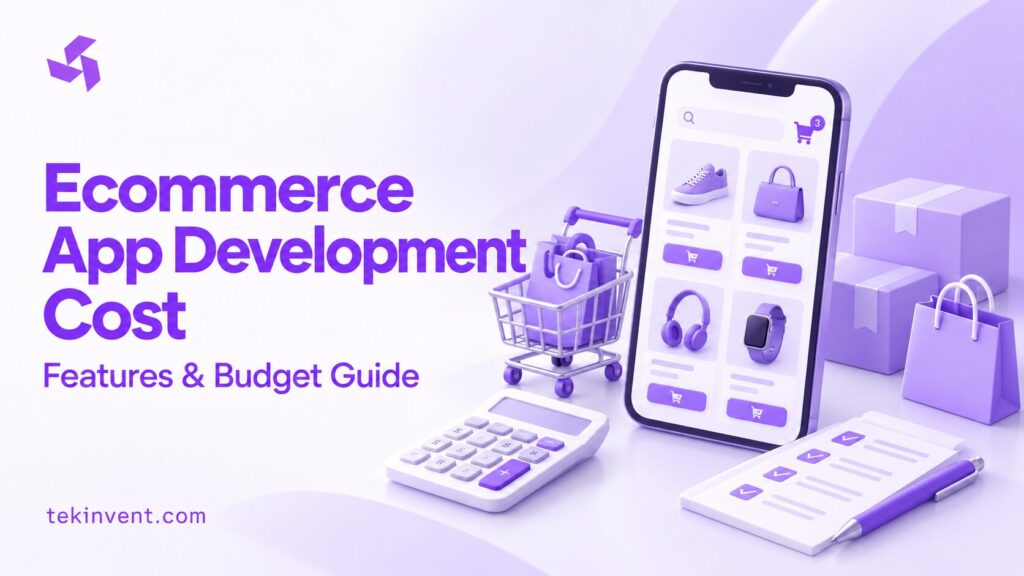
Ecommerce app development cost is driven by the work behind the shopping experience: the customer features, commerce rules, data connections, platforms, and ongoing support the business needs. A catalog and checkout connected to an existing store are a different project from a custom marketplace with seller tools, inventory across locations, and order routing.
There is no dependable price that applies to every ecommerce app. To plan a realistic budget, define what the first release must do, identify systems it depends on, and ask developers to estimate the same scope. The sections below explain where the effort goes and how to compare proposals without relying on generic price tiers.
First define what you mean by an ecommerce app
“Ecommerce app” can describe several different products. A business may want a native mobile app for iOS or Android, a cross-platform app, a mobile-friendly web storefront, or an app that extends its current ecommerce platform. These options share some shopping tasks, but they do not require identical design, engineering, testing, or integrations.
For example, a retailer with an established online store may need a mobile interface that reuses its product catalog and order services. Another business may need a custom commerce system because its pricing, approval, or fulfillment rules do not fit its current platform. The first project centers on connecting and presenting existing capabilities; the second may also involve building the commerce foundation.
This distinction matters when comparing ecommerce mobile app development cost estimates. Ask each provider to state whether the proposal covers a storefront interface only, the backend and data layer, or both. Also clarify whether the app is expected to share data and account access with an existing website.
That scope difference affects an e-commerce app development cost estimate as much as the visible features do.
Which features affect ecommerce app cost?
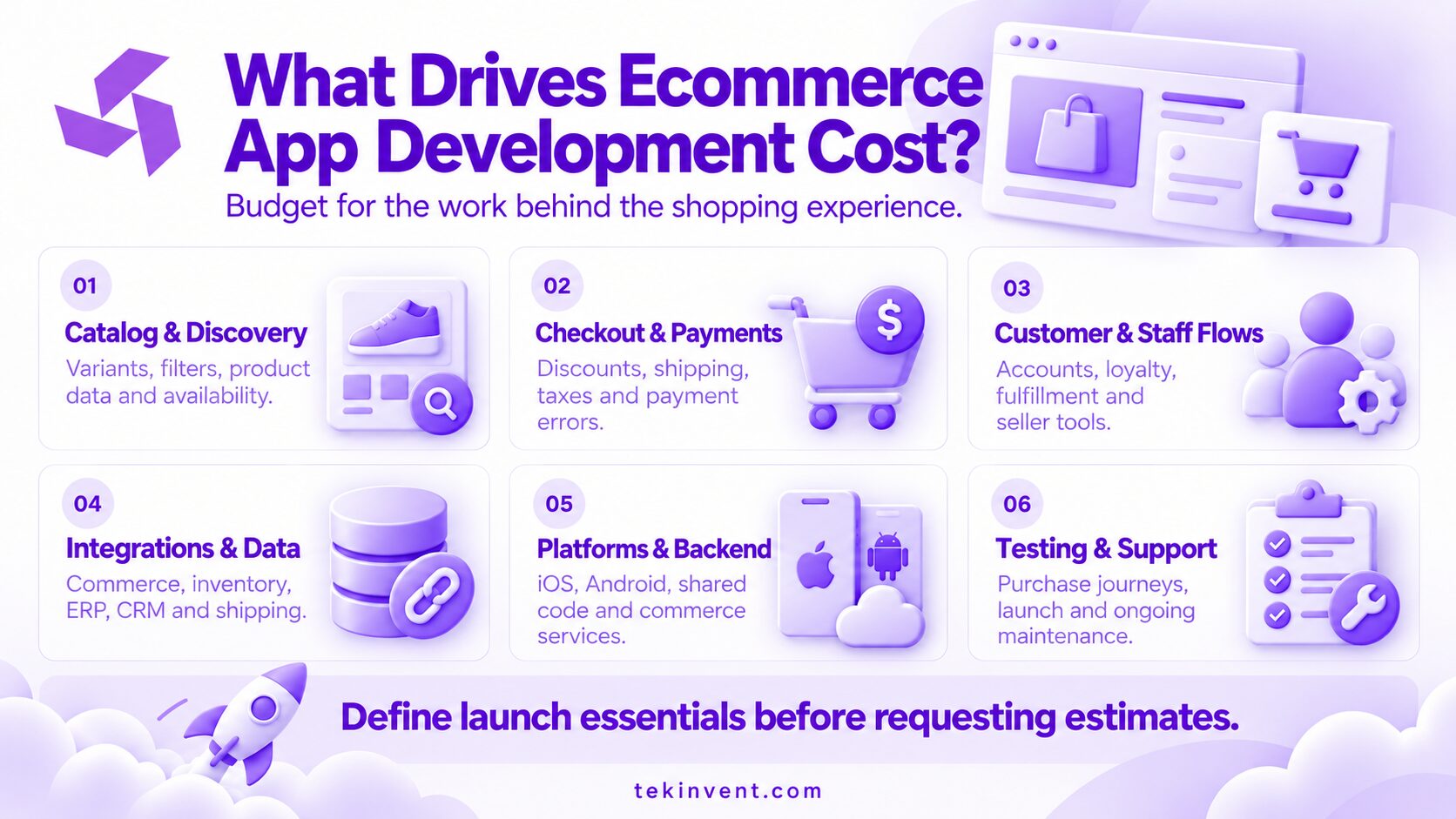
Features add development effort when they introduce additional customer journeys, business rules, data states, or administration work. A product card is straightforward compared with a configurable item whose price, stock, shipping, and delivery options depend on user selections.
Product discovery and catalog management
A basic catalog may display categories, product details, images, and availability. More involved shopping experiences may require filters, saved searches, product variants, recommendations, bundles, comparison tools, or catalogs that differ by customer group. The business also needs a way to create, update, and retire products without asking a developer to edit app code for routine changes.
The estimate should explain where catalog information comes from and which system owns it. If prices and product descriptions already live in a commerce platform or product information system, the app may need data mapping and synchronization rather than a separate catalog management tool. If there is no reliable source of product data, building one can become a distinct part of the work.
Cart, checkout, and payments
Checkout requires decisions about more than a payment screen. A developer needs to understand discounts, shipping choices, taxes, saved addresses, payment errors, order confirmation, and what happens when stock changes while a customer is checking out. Each rule affects the customer experience and the logic that must be tested.
Using an existing payment provider can avoid creating payment infrastructure from scratch, but it still takes work to configure the provider, handle its responses, and reconcile payment status with orders. If customers can use multiple payment methods, split payments, store credit, or subscriptions, describe those paths before estimating. Third-party transaction and service fees belong in the operating budget, even if they are separate from development charges.
Accounts, loyalty, and personalization
Guest checkout, customer accounts, saved carts, order history, loyalty points, and personalized offers each affect scope. Some depend on existing customer records; others need new rules for earning rewards, applying promotions, or sharing preferences across channels. Decide which capabilities are needed at launch and which can wait until the basic purchase journey works reliably.
Personalization also depends on data quality and consent. A recommendation feature is not just a screen element: the team needs to know which data it can use, how results should be presented, and what the experience should show when there is not enough customer history.
Seller, staff, and administrative workflows
For a single-brand store, employees may only need order lookup and fulfillment tools. A marketplace can require seller onboarding, product submissions, commission rules, payout records, dispute handling, and moderation. Business-to-business commerce may add company accounts, negotiated pricing, purchase approvals, and repeat-order tools.
These workflows are easy to overlook when the initial brief focuses on what shoppers see. Include staff and seller tasks in the requirements. Otherwise, a quote may cover a polished storefront while leaving the business without a practical way to run it.
Integrations: where estimates often differ
Integrations change ecommerce app development cost because systems must exchange accurate information and recover from errors. The effort depends on what the systems expose, how their data is structured, how quickly updates must appear, and who resolves conflicts.
Map every system the app needs to use. Common examples include:
- Commerce platform: products, customers, carts, discounts, and order records.
- Inventory or order management: available quantities, reservations, fulfillment status, and cancellations.
- Enterprise resource planning (ERP): product, pricing, financial, and operational records.
- Customer relationship management (CRM): customer profiles, service history, and marketing preferences.
- Shipping and fulfillment: rates, delivery options, labels, tracking, and returns.
- Analytics and marketing tools: consent-aware events, campaign attribution, and audience data.
For each connection, document which system is authoritative, what information moves, when it moves, and what users or staff see if the exchange fails. “Integrate inventory” is not enough detail to price. A useful requirement might say that the app reads stock from a named system, refreshes it at a defined point in the purchase flow, and prevents checkout when the system reports that an item is unavailable.
Legacy systems can add discovery and integration work if their documentation is incomplete or their data is inconsistent. Ask vendors what access, test accounts, sample records, and technical contacts they need before they can give a firm estimate. These dependencies should appear in the proposal rather than emerge after the schedule has started.
Scope Your Ecommerce App Around the Buying Journey
TekInvent can help you connect customer needs with the commerce features your business must support.
Platform and architecture choices
Building for iOS and Android separately can require platform-specific implementation and testing. A cross-platform framework may allow teams to share parts of the code, but custom behaviors or device capabilities can still require platform-specific work. Ask vendors to identify what will be shared, what will be built separately, and how they will test the finished experience.
The decision should reflect your customers, product requirements, and roadmap. A business that needs specific device functions may have reasons to choose native development. A product with similar shopping flows on both platforms may be a candidate for a shared-code approach. Neither option is automatically cheaper once the full build and maintenance plan are considered. TekInvent’s cross-platform app development page explains one of the available approaches.
Architecture affects cost too. If the app connects to an existing commerce backend, confirm that it supports the required operations and expected data flow. If the product needs custom backend services, the team must scope authentication, product and order data, permissions, integrations, and monitoring. Avoid paying to build unnecessary infrastructure before the business can explain what launch requires, while making sure the chosen design does not block ordinary future changes.
What a complete budget should include
A development quote should show the work required to take the app from an agreed brief to a supported release. The exact distribution varies by product, but these responsibilities should be visible:
- Discovery and technical planning: clarify the target customers, user flows, business rules, systems, constraints, and first-release boundary.
- UX and interface design: design the navigation and shopping steps, including empty states, unavailable items, payment errors, returns, and confirmation screens.
- Mobile app development: implement the customer-facing features for the selected platforms and devices.
- Backend and integration work: connect data and services, apply business rules, and support staff or seller workflows where required.
- Quality assurance: test the major purchase journeys, device behavior, permissions, data exchange, and failure cases before release.
- Launch preparation: coordinate release assets, configuration, store submissions, and the team’s response to review or deployment issues.
- Post-launch support: plan for bug fixes, security updates, operating-system changes, vendor API changes, monitoring, and future feature work.
Some proposals combine these activities into one total. Ask for enough detail to understand what is included and who is responsible. For instance, a vendor may build the app but expect your internal team to configure the commerce platform or validate product data. Those tasks still require time and ownership even when they are not part of the vendor’s fee.
How to calculate an ecommerce app budget
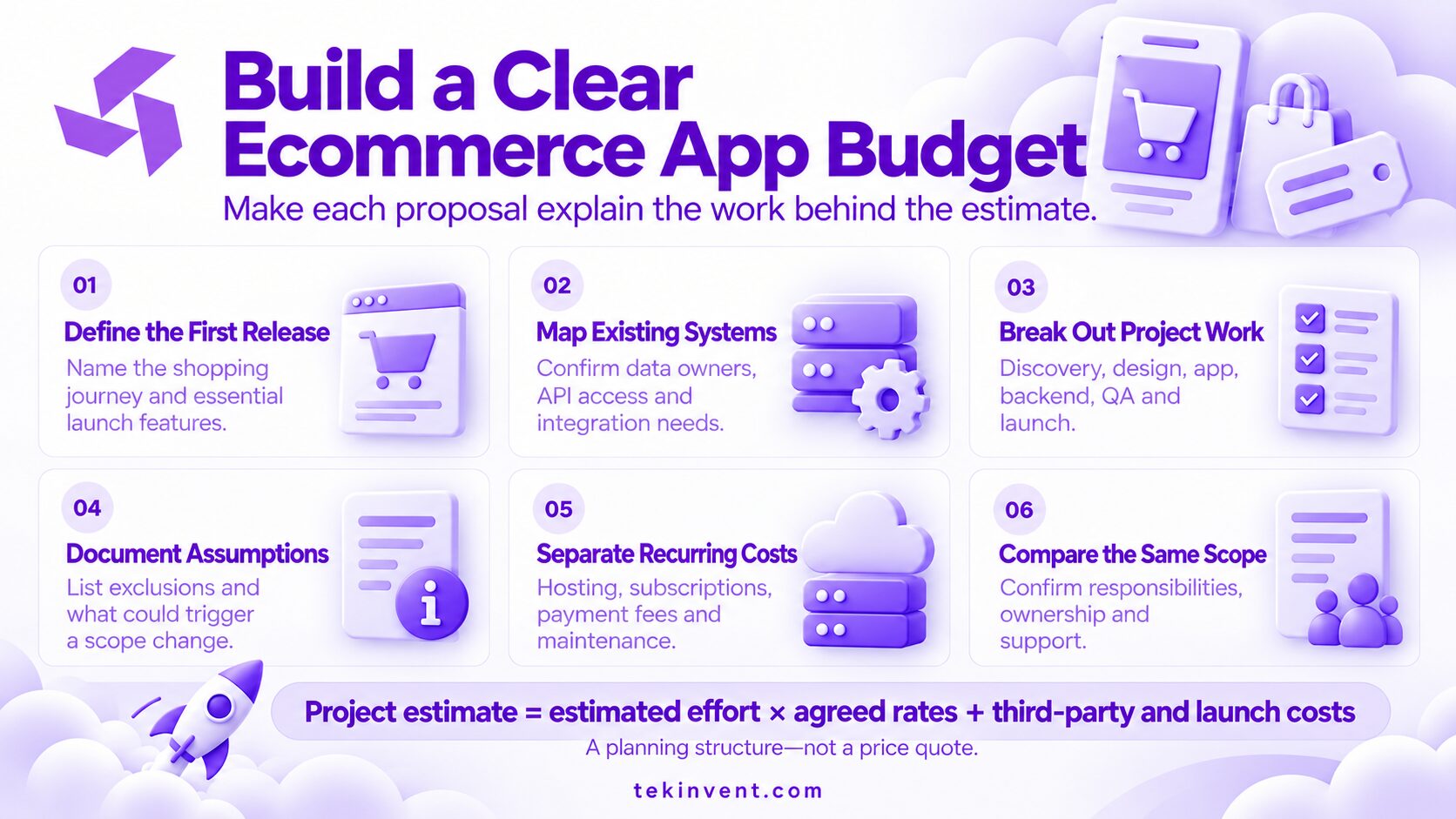
The simplest estimate model is:
Project estimate = estimated effort × the team’s agreed rates + third-party and launch costs
That formula is a planning structure, not a price quote. The effort estimate should be based on named deliverables and assumptions. Break the project into work such as product discovery, design, app development, backend changes, each integration, testing, and launch. Ask what has been excluded and what could trigger a change request.
For example, a store that already has clean product, customer, and order data may need less foundation work than one whose systems need new APIs or data cleanup. If the second project includes customer accounts, personalized pricing, several fulfillment options, and staff approvals, estimate those workflows separately. This makes the source of added effort visible without inventing a generic “basic,” “mid-level,” or “enterprise” price band.
Keep non-development expenses separate. They can include payment processing, software subscriptions, hosting, analytics, security reviews, marketing, customer service, and ongoing maintenance. Which items apply depends on the product and its operating model. Ask providers to distinguish one-time project work from costs that recur after launch.
Ways to keep the scope and budget under control
The best cost control is deciding what the first release must prove or improve. Write down the primary shopping task and the business result it supports. A direct-to-consumer store might prioritize discovery through checkout; a wholesale portal might need account-specific pricing and purchase approvals first. Features that do not support the first release can move to a later phase.
Use existing services where they fit. A payment provider, commerce platform, or shipping service may already solve a well-defined need. Replacing one with custom software only makes sense when the business requirement justifies the additional design, engineering, testing, and support.
Avoid vague requirements such as “personalized shopping” or “real-time inventory.” Convert them into behaviors a team can estimate: what data drives the feature, when it updates, who can see it, and what the app does when the data is missing. Clear examples reduce misunderstandings and make trade-offs easier.
Finally, agree how the team will handle new ideas. A backlog can capture useful requests without adding every one to the current release. Review the cost, user benefit, and dependencies before changing the plan. This protects launch priorities while leaving room for the product to evolve.
What to ask before accepting a quote
When comparing ecommerce application development services, ask each provider to respond to the same requirements. Useful questions include:
- Which platforms and user roles are included?
- What storefront, backend, and administrative work is part of the estimate?
- Which integrations are confirmed, and which depend on third-party access?
- What are the assumptions about product data, inventory, orders, and fulfillment?
- What testing, launch preparation, and post-launch support are included?
- Who owns code, designs, app-store accounts, and technical documentation?
- How are scope changes estimated, approved, and scheduled?
Look for answers tied to your workflows, not a generic feature list. A quote should help you see what your team will receive, what it needs to provide, and what costs continue after release. If a vendor cannot yet estimate an integration, ask what information or discovery work would make it possible.
Plan around the commerce system you need
Ecommerce app development cost becomes easier to manage once the customer experience, business rules, integrations, and launch responsibilities are explicit. Begin with the shopping journey that matters most, then make each proposal explain the technical work behind it. That gives you a fair basis for deciding what to build now and what can wait.
If you are evaluating ecommerce app development company options, bring a short brief with target customers, launch platforms, required integrations, and your current commerce setup. TekInvent’s ecommerce development team can use those details to discuss the scope and next steps.

Build Smart with The Right Team.
We bring expertise, technology, and trust you look for in your digital journey.