
Healthcare remains a critical global industry delivering value-based care while driving economic growth, with increasing demand pushing innovation through healthcare app development and advanced technologies.
Modern providers rely on machine learning to analyze complex data, improve diagnostics, and enable every mobile app development company to build smarter, scalable digital health solutions.
From predictive analytics to intelligent automation, machine learning enhances patient care, reduces operational costs, and helps healthcare systems manage growing populations with greater efficiency and accuracy.
As the industry evolves in 2026, data-driven technologies transform clinical workflows, enabling early disease detection, personalized treatments, and better decision-making across modern healthcare ecosystems.
Understanding Machine Learning in Modern Healthcare
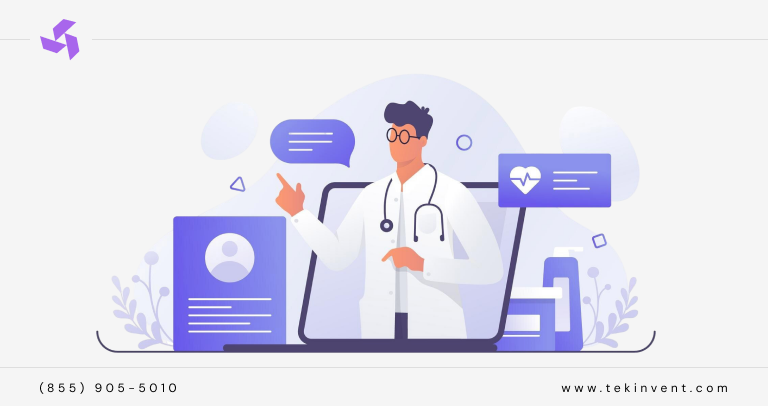
Machine learning in healthcare refers to advanced algorithms analyzing patient data, identifying patterns, and supporting decision-making to improve care quality, efficiency, and outcomes significantly.
Machine learning in healthcare enables systems to process large volumes of patient data, including records, lab results, and imaging, helping professionals uncover patterns and insights efficiently. By using intelligent algorithms, healthcare providers can improve diagnosis accuracy, streamline operations, and enhance patient care delivery across multiple touchpoints.
For companies like TekInvent, integrating such capabilities into digital solutions allows healthcare organizations to adopt smarter technologies that improve both clinical and administrative performance while ensuring scalable and future-ready systems.
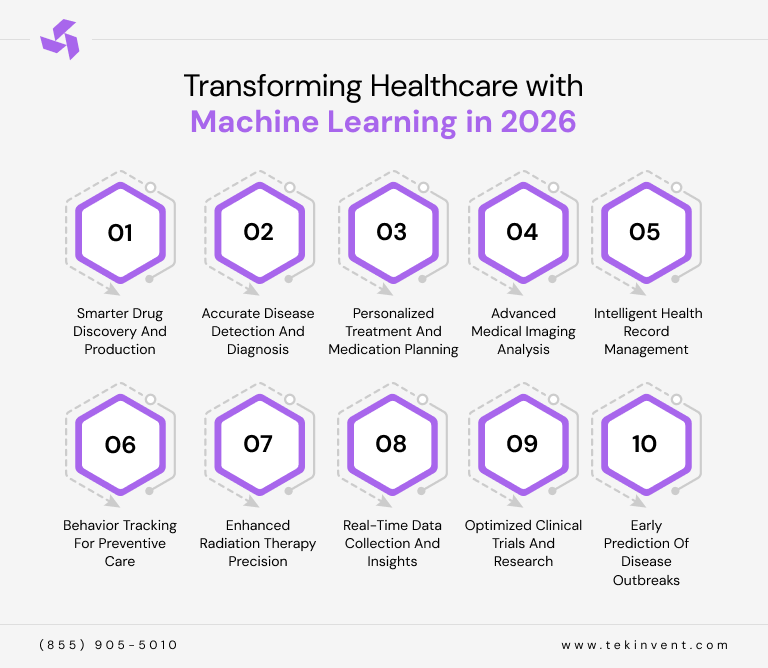
Transforming Healthcare with Machine Learning in 2026
Healthcare is rapidly evolving as machine learning reshapes how data is used, decisions are made, and care is delivered across modern medical systems worldwide today.
1. Smarter Drug Discovery and Production
Machine learning is accelerating drug discovery by analyzing complex biological data, identifying potential compounds faster, and improving manufacturing processes to deliver safe and effective medicines efficiently.
Pros: Faster drug discovery reduces development timelines and costs while improving accuracy in identifying viable compounds and minimizing trial and error in pharmaceutical research processes.
Cons: High implementation costs and dependency on large datasets can limit accessibility, while regulatory challenges may slow down approvals and adoption in real-world healthcare environments.
2. Accurate Disease Detection and Diagnosis
Machine learning helps doctors detect diseases earlier by analyzing patient data, improving diagnostic accuracy, and enabling timely treatments that significantly enhance patient outcomes across various healthcare conditions.
Pros: Early detection improves survival rates and reduces treatment costs while supporting doctors with data-driven insights that enhance accuracy and reduce human diagnostic errors significantly.
Cons: Over-reliance on algorithms may reduce human judgment, while biased datasets can lead to inaccurate predictions and unequal healthcare outcomes for diverse patient populations globally.
3. Personalized Treatment and Medication Planning
Machine learning enables personalized treatments by analyzing individual patient data, predicting responses to medications, and helping healthcare providers design therapies that are more effective and tailored to patients.
Pros: Personalized care improves treatment effectiveness and patient satisfaction while reducing adverse drug reactions and enabling more precise medical decisions based on individual health data.
Cons: Data privacy concerns and complex implementation processes can hinder adoption, while inconsistent data quality may impact the reliability of personalized treatment recommendations in healthcare systems.
4. Advanced Medical Imaging Analysis
Machine learning improves medical imaging by analyzing scans with higher precision, helping doctors identify abnormalities faster, and enhancing diagnosis accuracy for conditions like cancer and neurological disorders.
Pros: Faster image analysis improves diagnosis speed and accuracy while reducing workload for radiologists and enabling early detection of critical conditions through enhanced imaging insights.
Cons: High dependency on quality imaging data and expensive infrastructure can limit accessibility, while incorrect interpretations may occur if algorithms are not properly trained or validated.
5. Intelligent Health Record Management
Machine learning simplifies health record management by organizing patient data efficiently, reducing administrative workload, improving accessibility, and ensuring healthcare professionals can make informed decisions quickly and accurately.
Pros: Improved data organization enhances efficiency and reduces manual errors while enabling faster access to patient information and better coordination across healthcare providers and systems.
Cons: Data security risks and integration challenges with existing systems can create barriers, while maintaining data accuracy and compliance requires continuous monitoring and updates.
6. Behavior Tracking for Preventive Care
Machine learning supports preventive healthcare by tracking patient behavior, identifying unhealthy patterns, and encouraging positive lifestyle changes that reduce risks and improve long-term health outcomes effectively.
Pros: Promotes proactive healthcare and reduces disease risks while encouraging healthier lifestyles and enabling early intervention through continuous monitoring of patient behavior and habits.
Cons: Privacy concerns and user data tracking issues may reduce trust, while inaccurate data inputs can lead to misleading insights and ineffective preventive healthcare recommendations.
7. Enhanced Radiation Therapy Precision
Machine learning improves radiation therapy by distinguishing between healthy and affected tissues, helping doctors deliver targeted treatments that minimize side effects and improve recovery rates for patients undergoing cancer care.
Pros: Increased precision reduces damage to healthy tissues and improves treatment outcomes while enabling more effective cancer care and reducing complications during radiation therapy procedures.
Cons: High costs of implementation and reliance on accurate data can limit accessibility, while technical errors may impact treatment planning and patient safety if systems are not properly managed.
8. Real-Time Data Collection and Insights
Machine learning enables real-time data collection from patients, helping researchers analyze health trends, improve treatments, and develop better solutions using continuously updated and reliable medical information.
Pros: Real-time insights improve decision-making and patient monitoring while enabling faster responses to health changes and supporting continuous improvement in treatment strategies and outcomes.
Cons: Continuous data collection raises privacy and security concerns, while managing large volumes of data requires advanced infrastructure and may increase operational complexity for healthcare providers.
9. Optimized Clinical Trials and Research
Machine learning enhances clinical trials by identifying suitable participants, predicting outcomes, and improving research efficiency, allowing faster development of new treatments and reducing overall trial costs significantly.
Pros: Faster trials improve innovation and reduce costs while enabling better participant selection and increasing success rates through predictive analytics and data-driven research processes.
Cons: Regulatory complexities and data dependency may slow adoption, while biased datasets can impact trial outcomes and reduce the reliability of research findings in diverse populations.
10. Early Prediction of Disease Outbreaks
Machine learning helps predict disease outbreaks by analyzing global health data, identifying patterns, and enabling healthcare systems to prepare and respond quickly to potential public health emergencies effectively.
Pros: Early warnings improve preparedness and response while reducing the spread of diseases and supporting public health planning through accurate forecasting and timely interventions.
Cons: Data accuracy and availability challenges may affect predictions, while over-reliance on models can lead to misjudgments if real-world conditions change unexpectedly or rapidly.
Role of Artificial Intelligence and Deep Learning in Healthcare
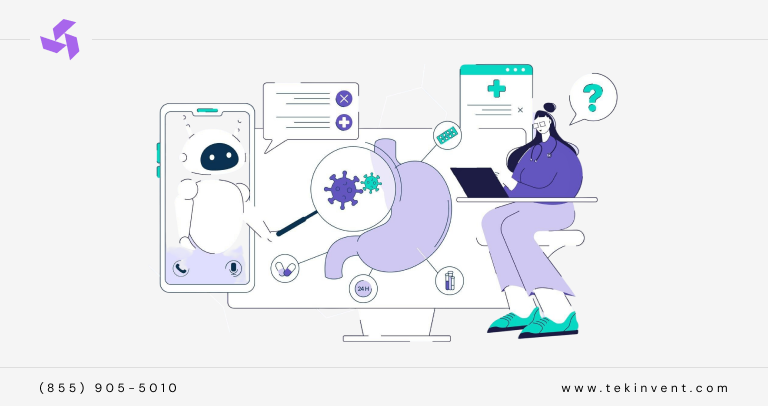
Machine learning and artificial intelligence work together in healthcare systems, using deep learning to analyze complex data like images and language for accurate predictions and insights.
Deep learning models are especially useful in handling complex healthcare tasks such as medical imaging analysis, patient monitoring, and natural language processing from clinical notes and reports. These systems can detect abnormalities in scans, monitor vital signs in real time, and support faster medical responses.
By leveraging such technologies, healthcare platforms can deliver more reliable insights and assist professionals in making informed decisions. This also enables better patient engagement through smart applications designed to improve accessibility and efficiency in healthcare services.
Advancing Personalized and Precision-Based Treatments
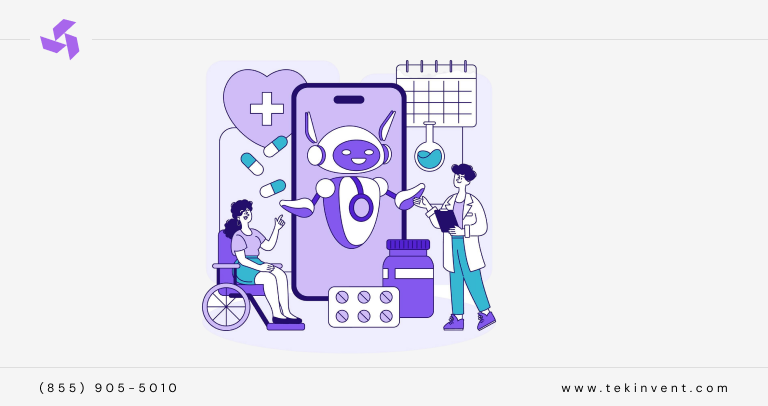
Machine learning enables personalized healthcare by analyzing patient-specific data, allowing doctors to create tailored treatment plans that improve effectiveness and reduce risks significantly.
Personalized treatment is becoming a key focus in modern healthcare, where machine learning models analyze genetic information, lifestyle data, and medical history to recommend targeted therapies. This approach increases the chances of successful outcomes, especially for chronic conditions such as heart disease and diabetes.
By using predictive analytics, healthcare providers can anticipate patient needs and adjust treatments accordingly. This shift toward precision-based care helps reduce unnecessary treatments while improving overall patient satisfaction and long-term health outcomes.
Transforming Drug Discovery and Clinical Innovation
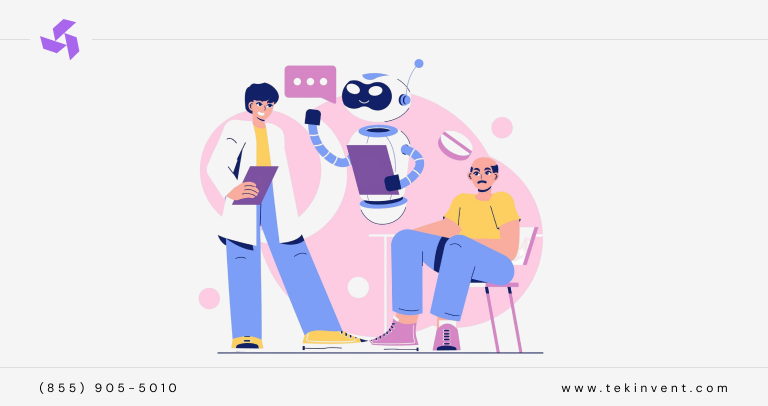
Machine learning improves drug discovery by analyzing large datasets quickly, identifying potential compounds, and reducing the time and costs involved in developing new treatments effectively.
In drug discovery, machine learning accelerates research by identifying patterns in biological data and predicting which compounds may be effective for treatment. This significantly reduces the time required for testing and development while lowering overall costs.
Healthcare organizations can also use these insights to improve clinical trials and research processes. By integrating machine learning into innovation strategies, the healthcare industry can bring new treatments to market faster while maintaining safety, accuracy, and effectiveness in medical advancements.
Final Thoughts
Machine learning is reshaping healthcare by improving diagnostics, treatment planning, and operational efficiency, enabling providers to deliver faster, more accurate, and patient-focused care in 2026.
As the demand for digital transformation grows, healthcare app development plays a critical role in integrating machine learning capabilities into modern systems, making healthcare more accessible and efficient. A reliable mobile app development company can help healthcare organizations build scalable solutions that support real-time data analysis, personalized treatments, and seamless patient engagement.
While challenges such as data privacy, implementation costs, and system integration still exist, the benefits of machine learning far outweigh the limitations when applied strategically. With continuous innovation and adoption, machine learning will remain a key driver in transforming healthcare systems, improving patient outcomes, and shaping the future of global healthcare delivery.
Contact TekInvent to create the best healthcare apps using ML!

Build Smart with The Right Team.
We bring expertise, technology, and trust you look for in your digital journey.