


Small businesses in Houston face tough competition from large, well-established companies. Big brands have bigger budgets, bigger teams, and stronger market presence. But today, technology is helping small businesses compete on a more equal level. With the support of a reliable mobile app development company Houston, small businesses can use mobile apps as powerful tools to grow, stand out, and attract loyal customers.
Mobile apps help small businesses increase visibility, connect directly with customers, and create personalized experiences. They make it easier for customers to browse products, book services, make purchases, and interact with businesses anytime and anywhere. Features like push notifications allow businesses to send offers, updates, and promotions directly to customer phones, which boosts engagement and builds loyalty.
Today’s world is mobile-first. People spend most of their digital time on smartphones, using apps for shopping, payments, communication, entertainment, and daily tasks. Customers now expect fast, easy, and convenient mobile experiences. If a business is not investing in mobile apps, it risks losing attention, customers, and growth opportunities.
For startups and small businesses, mobile apps are no longer optional. They are essential for growth and long-term success. A well-designed app helps build brand trust, improves customer relationships, and creates new revenue opportunities through sales, promotions, subscriptions, and in-app offers. Mobile apps also give businesses valuable customer data, helping them understand behavior, preferences, and buying patterns.
In a competitive market, mobile apps give small businesses the chance to compete with big players through better service, smarter marketing, and stronger customer engagement. With the right strategy and the right development partner, mobile apps become a growth engine that helps Houston’s small businesses scale, stay relevant, and succeed in the digital economy.
How Mobile Apps Give Leverage to Small Business Over Big Players?

If you run a business today, you already know how important mobile has become. Most customer actions now happen on smartphones, and the numbers clearly show this shift. Over the years, people have moved from spending just a few minutes on their phones to spending several hours every day using mobile apps and digital services.
Mobile usage has already surpassed desktop use and continues to grow every year. Customers now rely on their phones throughout the buying journey, from searching for products to making final purchase decisions. Mobile devices are now the main tool people use to discover, compare, and buy services and products.
Customers also expect instant information. They want quick answers, nearby options, and easy access to services. Features like location-based services help businesses understand customer needs and deliver relevant offers at the right time, which increases the chances of conversion.
Mobile marketing also creates highly personalized shopping experiences that encourage quick decisions and impulse buying. Businesses can connect with customers in a more direct and personal way through mobile platforms.
Websites are still important for online presence, but they come with ongoing costs such as hosting, traffic management, and database maintenance. Mobile apps reduce many of these challenges while offering businesses better performance, easier communication, and stronger customer engagement.
Mobile apps give businesses a simpler, more powerful way to connect with customers, grow faster, and compete more effectively in today’s digital world.
1. Stronger Customer Engagement and Loyalty

Mobile apps help businesses stay connected with customers every day. Features like notifications, in-app messages, and easy access to services keep users engaged. When customers feel connected to a brand and enjoy smooth experiences, they are more likely to stay loyal and return again and again.
2. Competing with Big Brands Through Smart Data

Mobile apps collect useful customer data such as behavior, preferences, and buying patterns. This helps small businesses understand their customers better and make smarter decisions. By using this data wisely, small businesses can offer experiences that feel just as professional and personalized as big brands.
3. Affordable and High-Impact Marketing

Mobile apps provide low-cost marketing opportunities through notifications, in-app promotions, and targeted messages. Businesses can reach customers directly without spending large budgets on ads. This makes marketing more effective and more affordable for small businesses.
4. Better Customer Support and Satisfaction

Apps make it easy for customers to get help through chat, FAQs, and support tickets. Faster responses and easy communication improve customer satisfaction. When customers feel supported, they trust the business more and are more likely to stay loyal.
5. Simplified Business Operations with Mobile Apps

Mobile apps help manage orders, bookings, payments, and customer communication in one place. This reduces manual work and saves time. Simple systems improve efficiency and allow businesses to focus on growth.
6. Building Trust and Brand Recognition

A professional and easy-to-use app builds trust with customers. When people have a smooth and reliable experience, they remember the brand and feel confident using its services again. Consistent experiences strengthen brand recognition.
7. Reaching Customers Beyond Local Markets

Mobile apps allow businesses to connect with customers outside their local area. Online access, digital services, and app-based selling make it possible to reach regional, national, and even global markets.
8. Using New and Smart Technologies

Mobile apps allow businesses to use modern technologies such as AI, chatbots, automation, and smart analytics. These tools improve service quality and business performance, helping small businesses stay competitive.
9. Greater Brand Visibility

Having a mobile app increases brand presence on customer devices. Regular interaction through the app keeps the brand visible and top of mind, making it easier for customers to remember and choose the business.
10. Personalized Customer Communication

Apps help businesses send messages based on customer behavior and preferences. Personalized communication feels more relevant and builds stronger relationships with customers.
11. Faster Conversions and Sales

Easy navigation, quick checkout, and simple purchasing processes help customers make decisions faster. Mobile apps reduce friction and turn interest into action more quickly.
12. Always-Available Business Access

Mobile apps give customers access to businesses at any time. People can browse, order, book, or contact support whenever they want, which increases convenience and customer satisfaction.
Real-World Examples for Houston Small Businesses
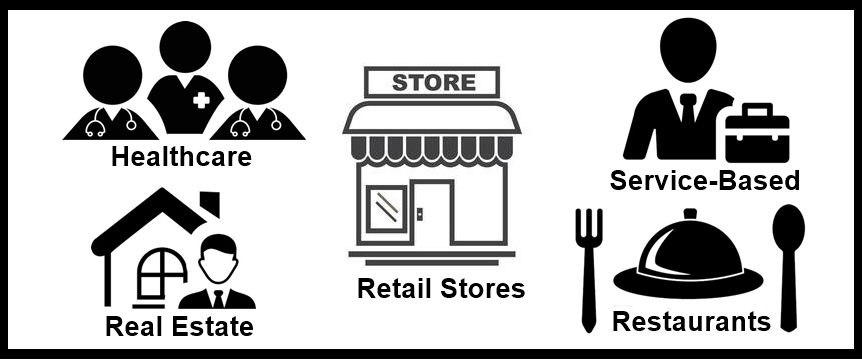
Mobile apps are not just for big brands. Small businesses across Houston can use mobile apps in practical and powerful ways to grow and compete. Here’s how different industries can benefit:
1. Restaurants can use mobile apps for online ordering, table reservations, loyalty programs, and delivery tracking. Customers can place orders easily, earn rewards, receive special offers, and track deliveries in real time. This improves convenience, increases repeat orders, and builds long-term customer loyalty.
2. Clinics and healthcare providers can use apps for appointment scheduling, reminders, digital prescriptions, and patient communication. Patients can book visits, receive notifications, and access information easily, while clinics improve efficiency and reduce missed appointments.
3. Retail stores can offer personalized discounts, product recommendations, and app-only deals. Customers can browse products, receive tailored offers, and enjoy smooth checkout experiences. This increases repeat purchases and improves customer engagement.
4. Real estate agencies can use apps for property listings, virtual tours, booking visits, and client communication. Buyers and renters can explore properties easily, contact agents directly, and receive updates, which improves engagement and speeds up decision-making.
5. Service-based businesses such as salons, cleaning services, fitness trainers, and repair services can use apps for bookings, payments, customer support, and service tracking. Customers enjoy easy scheduling and communication, while businesses save time and improve service quality.
These real-world examples show how mobile apps turn everyday business operations into smooth digital experiences that attract customers, improve service, and drive growth.
Small Business Growth Roadmap with Mobile Apps
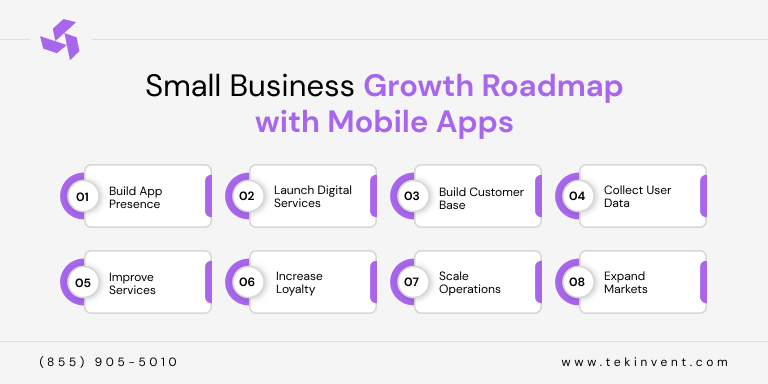
Mobile apps help small businesses grow step by step. They are not just tools, they are long-term growth systems. Here is a simple roadmap showing how mobile apps support business growth:
Step 1: Build app presence
Start by creating a strong mobile app that represents your brand and services. This becomes your digital foundation.
Step 2: Launch digital services
Offer online ordering, bookings, payments, and customer support through the app to make your business more accessible.
Step 3: Build customer base
Attract new users through app promotions, marketing campaigns, and digital visibility.
Step 4: Collect user data
Understand customer behavior, preferences, and buying patterns through app analytics.
Step 5: Improve services
Use customer data and feedback to improve features, services, and user experience.
Step 6: Increase loyalty
Build loyalty programs, rewards, and personalized experiences to keep customers engaged.
Step 7: Scale operations
Automate processes, improve efficiency, and manage growth smoothly through digital systems.
Step 8: Expand markets
Reach new locations, regions, and customer segments using your app as a growth platform.
This roadmap shows how mobile apps support long-term business growth. From building your digital presence to expanding into new markets, mobile apps help small businesses grow in a structured, sustainable, and competitive way.
Final Thoughts
Mobile apps have become one of the most powerful tools for small businesses in Houston to compete with big brands. They help businesses connect with customers, improve service quality, increase visibility, and build strong relationships. From marketing and sales to customer support and operations, mobile apps support every part of business growth.
For small businesses, success today is not about having the biggest budget. It is about having the smartest strategy. Mobile apps allow small businesses to offer fast service, personalized experiences, and easy access, just like big companies. When used correctly, they create trust, loyalty, and long-term customer relationships that fuel sustainable growth.
With the right development partner and a clear digital strategy, mobile apps become more than just technology. They become growth engines that help businesses scale, stay competitive, and expand into new markets.
For Houston’s small businesses, investing in mobile apps is no longer optional. It is a strategic move that builds stronger brands, happier customers, and a more successful future in the digital economy.

Build Smart with The Right Team.
We bring expertise, technology, and trust you look for in your digital journey.