
What does 2026 hold for iOS app development? The mobile app industry is growing faster than ever, and businesses need to keep up with the latest trends and technologies to create innovative, high-performing apps. For companies in Houston and beyond, partnering with a trusted mobile app development company Houston is essential to stay competitive and deliver apps that truly engage users.
From artificial intelligence and augmented reality to 5G connectivity, the possibilities for iOS apps are expanding rapidly. Mobile apps are no longer just simple tools—they have become an essential part of daily life. They help businesses connect with users, increase engagement, and drive growth in a highly digital world.
In this blog, we will explore the top mobile app development trends for 2026, including key tools, technologies, and strategies businesses should know. Whether you are a startup or an established company, understanding these trends is crucial for building apps that stand out, provide real value, and are ready for the future.
The 2026 Mobile App Industry
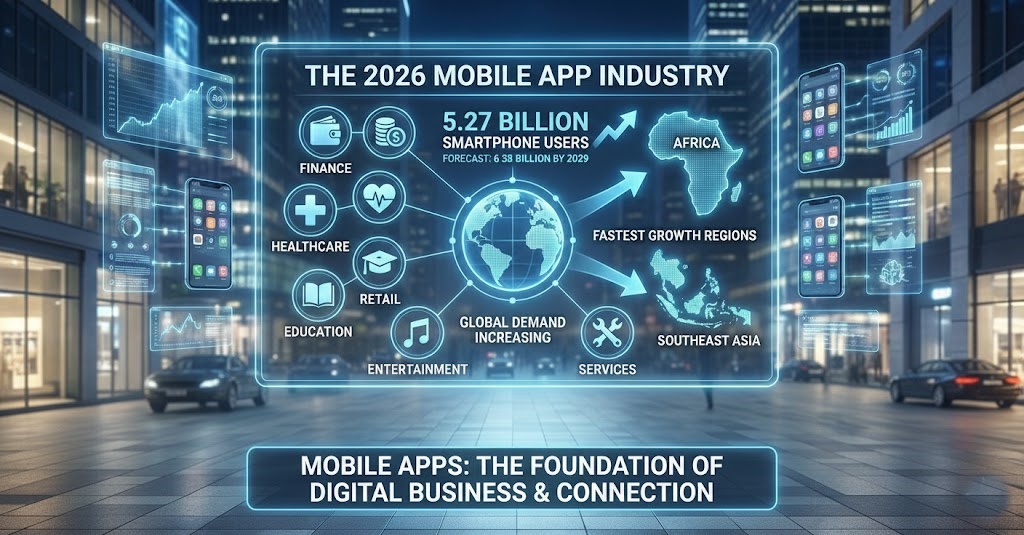
In 2026, there are more than 5.27 billion smartphone users across the world, and this number is expected to grow to 6.38 billion by 2029. This fast growth is especially strong in regions like Africa and Southeast Asia, where more people are getting access to smartphones and the internet every year.
Because of this, the demand for mobile apps is increasing in almost every industry. Businesses in finance, healthcare, education, entertainment, retail, and services are using mobile apps to reach customers, offer services, and grow their digital presence.
Mobile apps are no longer just tools for convenience. They have become the main way businesses connect with users, deliver services, and build relationships. As mobile usage continues to grow, apps are becoming the foundation of digital business across the world.
The Top 15 Trends of Mobile App Industry to Follow in 2026
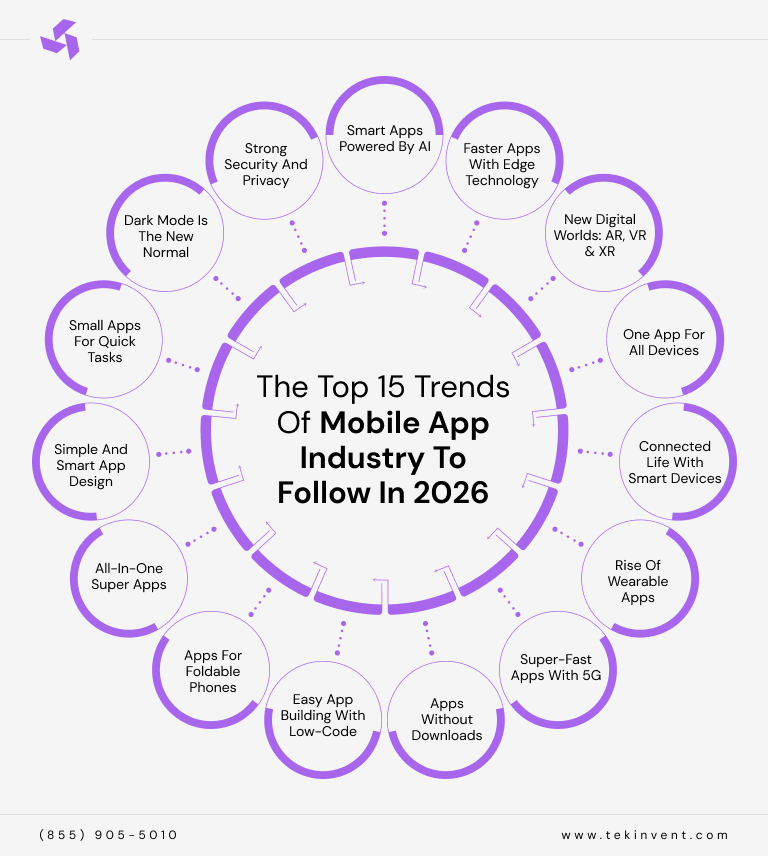
The mobile app industry is changing faster than ever in 2026. New technologies, changing user needs, and smarter digital tools are transforming how mobile apps are built and used. Businesses are no longer creating apps just to stay online. They are building apps to grow, compete, and connect better with users.
From artificial intelligence and smart devices to faster networks and better design, modern mobile apps are becoming more powerful, more personal, and more useful in everyday life. Understanding these trends helps startups and businesses make better decisions, build stronger apps, and stay ahead in a competitive digital world.
1. Smart Apps Powered by AI
Artificial Intelligence (AI) and Machine Learning (ML) are already used in many mobile apps, but in 2026 they are becoming even more powerful. Apps can now learn from how people use them, where they are, and what they like. This helps apps give more personal and useful experiences to every user.
For example, apps can suggest products, services, or content even before users search for them. AI chatbots also provide 24/7 customer support, so users can get help anytime without waiting. Businesses use AI to understand customer behavior, improve their products, make smarter decisions, and automate daily tasks. This saves time, reduces costs, and improves overall efficiency.
2. Faster Apps with Edge Technology
Edge computing makes mobile apps faster and more efficient. Instead of sending data to far-away servers, apps now process data directly on the user’s device. This reduces delays and improves speed.
Because of this, apps load faster, use less internet data, and work better even on slow connections. It also improves privacy, since less personal data is sent to central servers. Users enjoy smoother performance, and businesses can deliver better app experiences.
3. New Digital Worlds: AR, VR & XR
Augmented Reality (AR), Virtual Reality (VR), and Extended Reality (XR) are changing how people use mobile apps. These technologies make apps more interactive and immersive.
Users can shop in virtual stores, learn through 3D lessons, play realistic games, and attend virtual meetings. Apps now mix digital content with the real world, making learning, shopping, and daily tasks more fun and engaging.
4. One App for All Devices
Cross-platform development allows developers to build one app that works on both Android and iOS. Tools like Flutter and React Native make this possible.
This saves time, reduces development costs, and helps businesses launch apps faster. Updates and new features can also be added easily, making app management simpler and more efficient.
5. Connected Life with Smart Devices
The Internet of Things (IoT) connects mobile apps to smart devices like homes, cars, wearables, and city systems. People can control lights, doors, cameras, temperature, and security systems using their phones.
Apps also help track energy use, improve safety, and manage daily life more easily. This creates a smarter, more connected lifestyle for users.
6. Rise of Wearable Apps
Wearable devices like smartwatches, fitness bands, and health trackers are growing fast. These apps track heart rate, steps, sleep, fitness, and daily activity in real time.
They are now widely used in healthcare, fitness, and personal wellness. Wearable apps help people live healthier lives and stay informed about their health every day.
7. Super-Fast Apps with 5G
5G technology brings very fast internet speeds to mobile apps. This means faster loading, no buffering, and smoother video streaming.
Developers can now build high-quality games, live video apps, and real-time services with better graphics and performance. 5G also improves smart device connections and IoT systems.
8. Apps Without Downloads
Progressive Web Apps (PWAs) work like normal apps but do not need to be downloaded. Users can access them through a browser.
They load quickly, work offline, and give an app-like experience. PWAs are cheaper to build and easier to maintain, making them a great choice for businesses.
9. Easy App Building with Low-Code
Low-code platforms allow people to build apps using simple drag-and-drop tools. Even people with no coding skills can create apps.
This helps startups and small businesses build apps quickly and at low cost. Apps can be developed, tested, and launched faster than ever before.
10. Apps for Foldable Phones
Foldable phones are changing how apps are designed. Apps now need to work smoothly on different screen sizes.
Developers create flexible designs that adjust when the screen opens or folds. This ensures a smooth user experience on all device types.
11. All-in-One Super Apps
Super apps combine many services into one single app. Users can shop, pay bills, book services, chat, and manage daily tasks in one place.
This keeps users active in one app and reduces the need to download many different apps. Super apps create strong user engagement and loyalty.
12. Simple and Smart App Design
Good design is very important for app success. In 2026, apps focus on simple layouts, voice control, and gesture navigation like swiping and dragging.
Apps also adjust automatically to screen size, user habits, and preferences. This makes apps easier to use and more user-friendly.
13. Small Apps for Quick Tasks
App Clips (iOS) and Instant Apps (Android) allow users to use apps without installing them.
They are perfect for quick actions like payments, viewing menus, buying tickets, and scanning QR codes. Users can access services instantly without filling their phone storage.
14. Dark Mode is the New Normal
Dark mode is very popular because it reduces eye strain, saves battery, and looks modern.
Most apps now offer dark mode as a standard feature, and users expect it in modern mobile apps.
15. Strong Security and Privacy
App security is more important than ever. Modern apps use AI to detect threats and prevent attacks.
Features like face recognition, fingerprints, secure logins, encryption, and data protection systems are now common. Protecting user data and privacy is a top priority in mobile app development.
What These App Trends Mean for Builders in 2026?
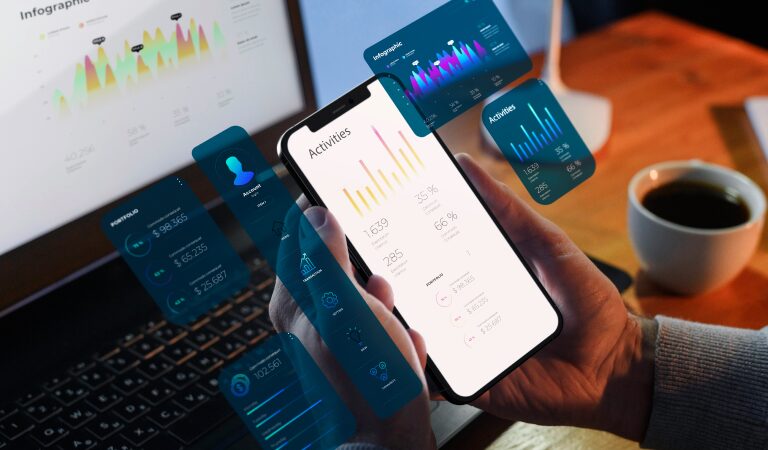
The mobile app trends of 2026 clearly show one important strategy: start small, move fast, and focus on real user needs. Before building a full app, it is important to test your idea with real people. Talk to potential users, understand their problems, and make sure there is real demand before investing time and money into development.
Start With Validation Instead of Development
One of the biggest reasons apps fail is not technology. It is building something people do not need. Before writing any code, you should confirm that users actually want your solution.
A smart approach is to speak with 10 to 20 potential users and understand their problems. Try simple testing with a small prototype and see if users can complete the main task easily. If people struggle to understand your idea, it means the product needs improvement before development begins.
Always validate your idea first. Build only when there is real interest and willingness to pay.
Build Fast and Focus on What Matters
In 2026, speed is more important than perfection. Use AI tools and low-code platforms to build faster and launch sooner. Successful apps focus on solving one problem really well instead of trying to do everything at once.
Avoid adding extra features that your early users do not need. Things like advanced design, multiple languages, complex onboarding, and extra integrations can wait. Start with one platform, either iOS or Android, and grow later.
The goal is not to build a perfect app. The goal is to launch, learn from users, and improve. A simple app that is live and being used is more valuable than a perfect app that never gets released.
App Monetization Strategies
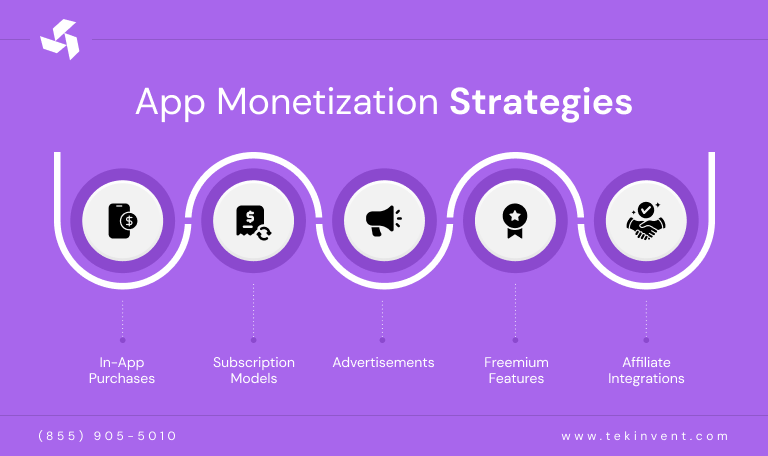
Startups need to think about revenue from day one. Some popular strategies include:
- In-app purchases
- Subscription models
- Advertisements
- Freemium features
- Affiliate integrations
Choosing the right monetization strategy ensures the app is sustainable while delivering value to users.
Cost and Timeline Insights
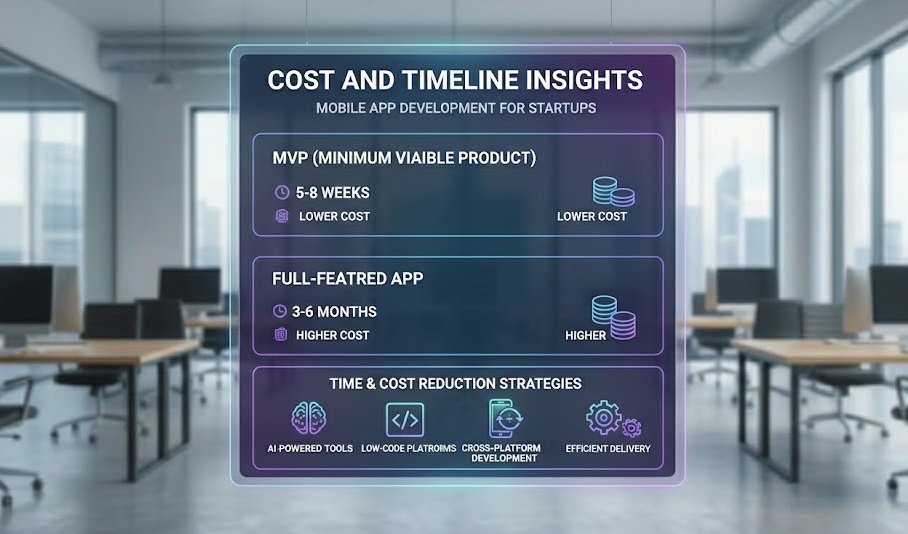
Building a mobile app can vary depending on complexity. For startups:
- MVP (Minimum Viable Product): 5-8 weeks, lower cost
- Full-featured app: 3-6 months, higher cost
Cross-platform development, low-code platforms, and AI-powered tools can reduce time and costs while delivering quality apps.
Tools and Platforms for Startups
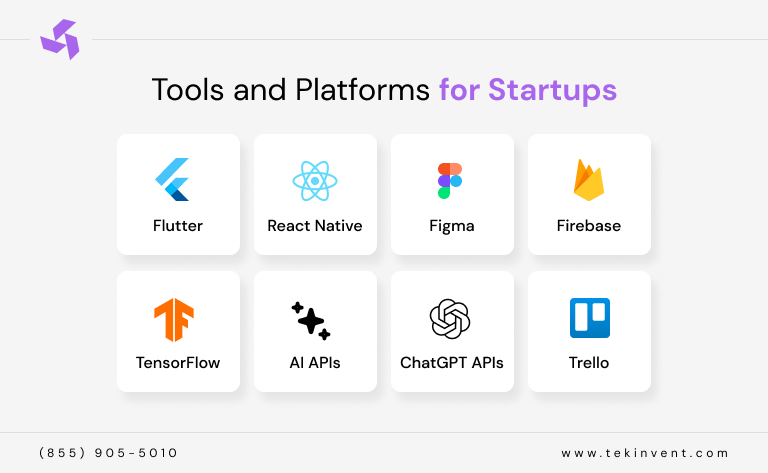
Some recommended tools and frameworks for 2026 include:
- Flutter, React Native for cross-platform apps
- Figma for UI design
- Firebase for backend and analytics
- TensorFlow and AI APIs for machine learning
- ChatGPT APIs for smart features
- Trello for project management
These tools help Houston startups build faster, smarter, and more scalable apps.
Tips for Launching a Successful App
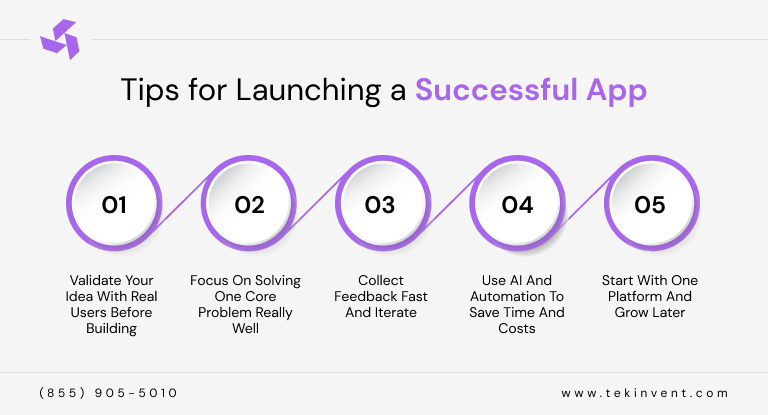
- Validate your idea with real users before building
- Focus on solving one core problem really well
- Collect feedback fast and iterate
- Use AI and automation to save time and costs
- Start with one platform and grow later
Future Outlook Beyond 2026
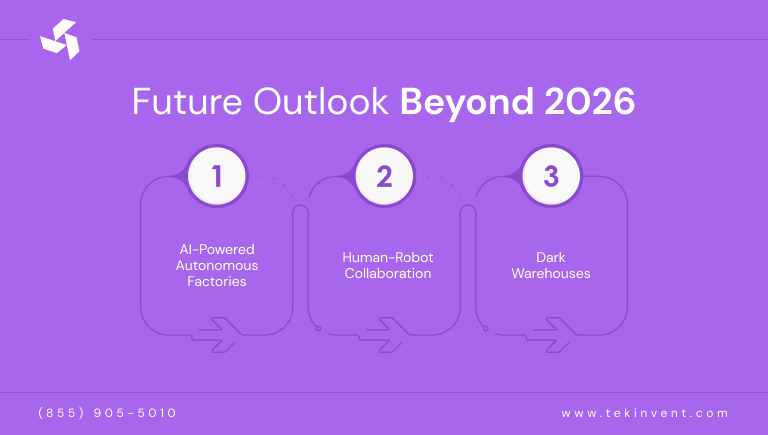
Mobile apps will continue to evolve beyond 2026. Expect more AI-driven personalization, wearable device integration, and deeper IoT connections. Startups that adopt these trends early will have a competitive advantage. We will see:
- AI-Powered Autonomous Factories
- Human-Robot Collaboration
- Dark Warehouses
Key Challenges in Modern App Development

While mobile app technology is growing fast in 2026, developers and companies still face many challenges. One major issue is device variety. There are many screen sizes, operating systems, and hardware types, which makes testing and app performance more difficult.
Another challenge is the shortage of skilled mobile developers. Good developers are in high demand, making it hard for companies to find and keep the right talent.
Security is also a serious concern. Apps must be protected from hacking, data leaks, and system attacks. Developers must secure APIs, code, and user data at all times.
On top of this, data privacy laws are becoming stricter across different countries. Companies must follow complex rules for data use, storage, and user privacy, making compliance an important part of app development.
Final Thoughts
The mobile app industry in 2026 is full of opportunities and challenges. With over 5 billion smartphone users worldwide, mobile apps have become the main way businesses connect with customers, deliver services, and grow in a digital-first world. From AI and machine learning to AR, 5G, and wearable devices, the possibilities for creating innovative, high-performing apps are greater than ever.
For businesses in Houston and beyond, working with a trusted mobile app development company Houston can make all the difference. Experienced developers help companies understand trends, build apps quickly, and focus on solving real user problems while keeping apps secure and easy to use.
By learning the latest trends, testing ideas before development, and focusing on speed and usability, startups and established businesses can create apps that stand out, engage users, and stay competitive in 2026 and beyond.
Mobile apps are no longer optional. They are essential tools for growth, innovation, and strong connections with customers.

Build Smart with The Right Team.
We bring expertise, technology, and trust you look for in your digital journey.