
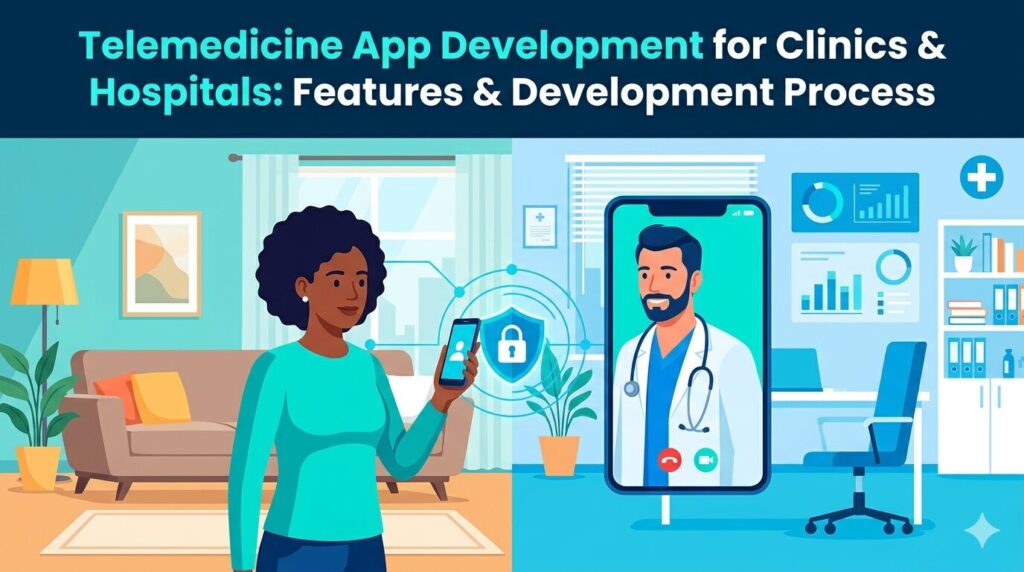
Telemedicine is one of the best and preferred channels for patients that helps them with on-time virtual consultation and medication from the doctors. More than 80% of consumers have now used telemedicine apps for consulting with doctors.
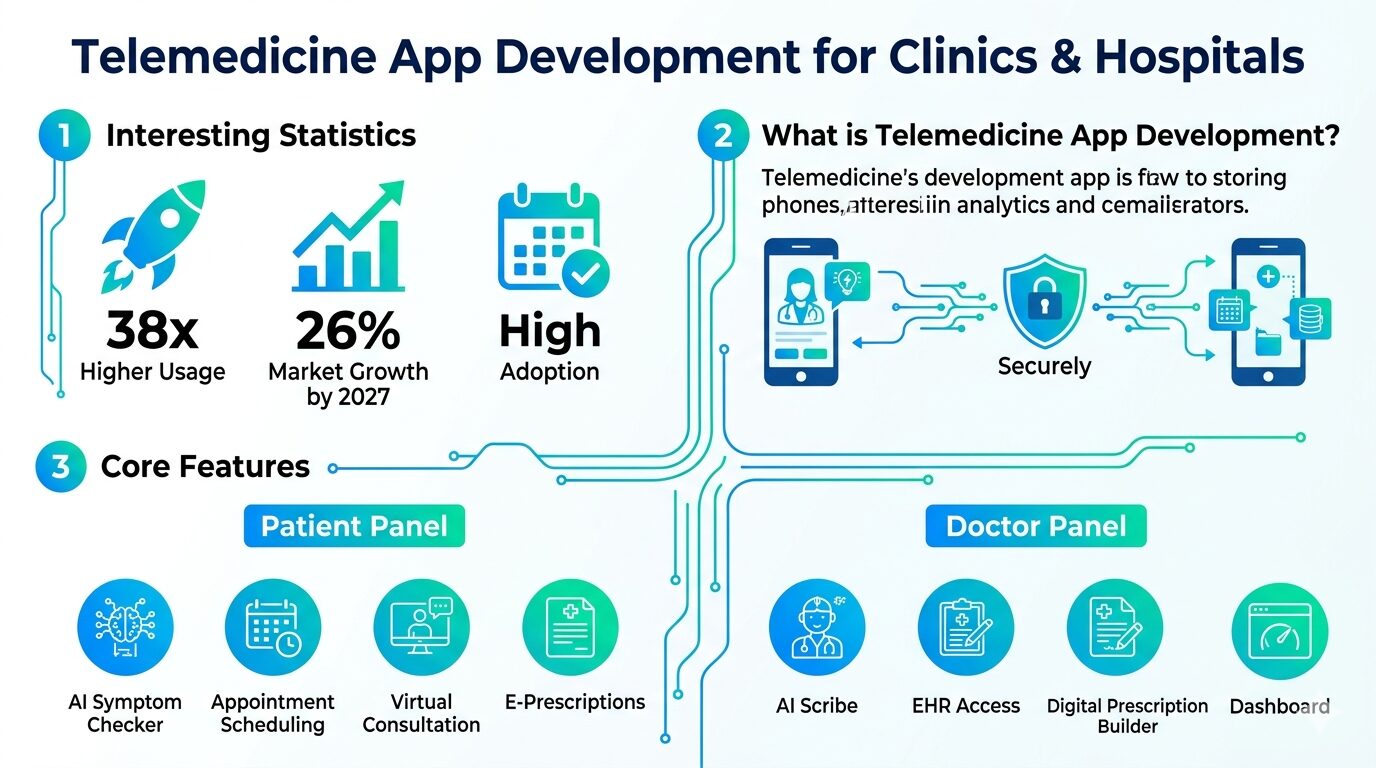
As per the research conducted by McKinsey, the telemedicine app usage is around 38 times higher than the pre-COVID pandemic usage. People are now realizing the benefits of healthcare apps and
People are now understanding the importance of virtual healthcare apps, and it’s expected that the telemedicine market will grow by 26% by the end of the year 2027.
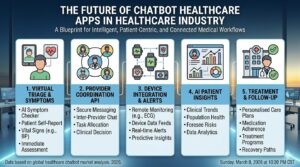
Telemedicine apps are now enabling customers with a seamless digital bridge between the patients and the providers. Modernised platforms are now enabling change with a video consultation, secure chat, and real-time reports with remote monitoring with instant accessibility to the medical records.
With global healthcare moving towards hybrid and digital-first models, businesses need robust, feature-rich telemedicine solutions built keeping the user experience, compliance, and scalability.
According to a report by the American Hospital Association, around 76% of U.S hospitals use apps to diagnose and treat patients.
In this blog, we are going to explore everything related to telemedicine features, key benefits and step-by-step process for developing high-performing telemedicine apps.
Interesting Statistics about Telemedicine Apps
Here are the interesting findings related to telemedicine apps:
- Widespread Adoption: The COVID-19 pandemic served as a major turning point, leading to a massive increase in telehealth adoption.
- High Usage Rates: A significant number of hospitals and clinics continue to use telehealth as a “new normal” part of their care delivery, with millions of virtual doctor appointments held annually.
- Convenience Factor: Telemedicine apps provide 24/7 access to general practitioners (GPs) and specialists, reducing the need for long, in-person travel.
- Key Platforms: Popular platforms, such as Teladoc Health, exemplify the capability to provide comprehensive virtual care and expert medical support to large user bases.
What is Telemedicine App Development?
Telemedicine mobile app development is a creative process of building digital healthcare platforms that allow medical professionals to deliver their core services to patients on time. With highly secure video calling and real-time chat options, patients enjoy a seamless experience.
Basically, these apps are removing the unnecessary barriers between the patients and the healthcare providers, giving them instant access to medical expertise.
For healthcare organisations, telemedicine apps are now becoming a powerful blend of accessibility and efficiency for the customers. They offer support to the patients outcomes, and reduce the operational load and standardize care delivery across the urban clinics and the remote locations.
Features to be included in Telemedicine Mobile App
Here are the top features that should be possible within the telemedicine mobile app:
Patient Panel Features
Here are the necessary features that should be present within the patient panel features:
-
AI-Powered Symptom Checker & Smart Triage
An AI-powered assistant within the healthcare mobile app would help the patients with instant symptom analysis, evaluation of the patient’s disease, and instant medication.
It will reduce the waiting time, lower the admin overload for manual work, and ensure patients receive the appropriate care path.
-
Appointment Scheduling
Patients can view the real-time doctor availability based on the schedule through the telemedicine mobile app. You can book the appointment without any delays and get automated reminders as well to reduce the no-show ratio.
-
Virtual Consultation
The telemedicine mobile app comes with a virtual consultation feature that has secure chat and empowers patients to chat with specialists. It does come with routine check-ins and urgent medical advice; if any emergency condition arises, it provides a seamless experience.
-
E-Prescriptions with Medication Tracking
Healthcare mobile apps come with auto-generated prescriptions, sending reminders, and connecting with the pharmacist with quick refill requests. It keeps the patient’s complaints and reduces the prescription related to the errors.
-
Personal Health Dashboard
Telemedicine apps come with a visual dashboard that includes vitals, medical history, lab reports, and consultation summaries made available in a single platform. It helps the patients to stay informed about all the care journeys, with the doctors in the loop.
-
Insurance & Payment Integration
Lastly, we have a telemedicine mobile app with insurance and payment integration features for maintaining a smooth billion-dollar business. Patients can easily do the transaction online and upload the important documents to track invoices as well.
Doctor / Healthcare Provider Panel Features
Here are the necessary features that should be present within the healthcare provider panel:
-
Virtual Consultation with AI Scribe
Telemedicine mobile app enables doctors to conduct consultations with AI-powered scribes. It helps in eliminating the documentation and makes the provider available to focus on other patient care areas.
-
Integrated Patient History & EHR Access
The telemedicine mobile app allows full access to medical records, lab results, and past diagnoses, which improves the accuracy rate and reduces the need for switching between multiple systems.
-
Digital Prescription Builder
The telemedicine mobile app comes with customised templates with intelligent suggestions that help doctors quickly generate medication and share it with the families.
-
Smart Appointment Management Dashboard
A color-coded dashboard displays daily appointments, cancellations, and follow-ups in real time. Automated reminders help doctors manage time efficiently.
-
Earnings & Analytics Panel
Doctors get a transparent financial overview, including consultation counts, revenue, pending payouts, and performance insights, helping them optimize schedules for better productivity.
How to Develop a Telemedicine App?
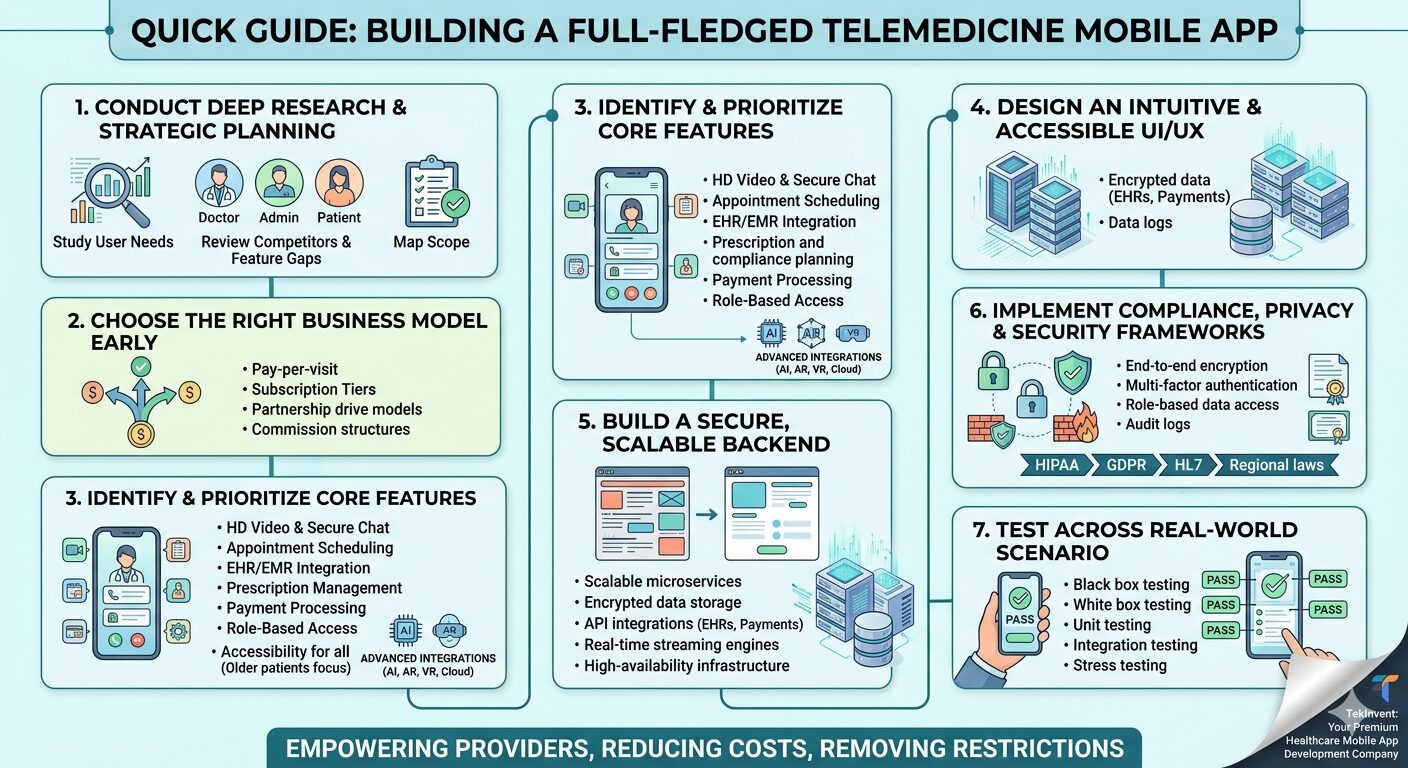
Here is a quick guide explaining to you the core steps involved in building a full-fledged telemedicine mobile app:
-
Conduct Deep Research & Strategic Planning
Before creating a single screen for the telemedicine mobile app, it’s necessary to do in-depth research for planning the further steps involved in the healthcare mobile app.
These steps would involve strategic planning enabling you to:
- Studying the user needs across doctors, admins and patients.
- Reviewing the competitors and identification of features gaps.
- Aligning with the compliance frameworks like HIPAA, GDPR and local health standards.
- Mapping the scope of the telemedicine software development plan.
-
Choose the Right Business Model Early
Your monetization strategies affect the features mixed with target audience, and long-term growth. The popular approach includes:
- Pay-per-visit consultations.
- Subscription tiers for individuals, clinics and enterprises.
- Partnership drive models with hotspots, insurers and pharmacies.
- Commission based structures for specialists.
-
Identify & Prioritize Core Features
The third step is to identify the crucial features that should be present within the telemedicine mobile app:
- HD video consultations & secure chat
- Appointment scheduling with reminders
- EHR/EMR integration
- Prescription management & digital pharmacy tie-ins
- Payment processing
- Role-based access for patients, providers & admins
For an advanced experience, you may integrate modernised technologies like:
- AI
- AR
- VR
- Cloud-based servers
-
Design an Intuitive and Accessible UI/UX
You should design a seamless and intuitive user experience for the telemedicine mobile app.
The UI/UX should focus on:
- Clear navigation paths
- Minimal steps to book and conduct the conulsation
- Accessbilities for older patients.
-
Build a Secure, Scalable Backend
Ensure that you develop the backend of the telemedicine mobile app that can handle the load of patients’ data and workload for data storage and load distribution.
The backend development would include:
- Scalable microservices architecture
- Encrypted data storage
- API integrations with EHRs, payment systems & third-party tools
- Real-time streaming engines for video calls
- High-availability infrastructure to support peak loads
-
Implement Compliance, Privacy & Security Frameworks
The telemedicine mobile app must operate under strict security control:
- End-to-end encryption
- Multi-factor authentication
- Role-based data access
- Compliance with HIPAA, GDPR, HL7 & other regional laws
- Automated audit logs
These are the necessary steps that should be implemented because the telemedicine mobile app has private data that should be kept secured from unauthorized access.
-
Test Across Real-World Scenario
Lastly, you should test the telemedicine mobile app with all the test cases to ensure transparency.
Here are some test cases:
- Black box testing
- White box testing
- Unit testing
- Integration testing
- Stress testing
Conclusion
We hope you enjoyed learning about the telemedicine mobile app features and the process that led to the exceptional development of the app. It empowers the providers with seamless delivery of the core functionalities through the mobile app, reducing the costs and removing geographic restrictions.
You can collaborate with TekInvent, your premium healthcare mobile app development company, helping you with seamless, scalable, and secure healthcare mobile app development. If you think we have missed anything within the blog, then feel free to share your thoughts in the comments. We would love to hear back from you. Happy Reading.

Build Smart with The Right Team.
We bring expertise, technology, and trust you look for in your digital journey.