
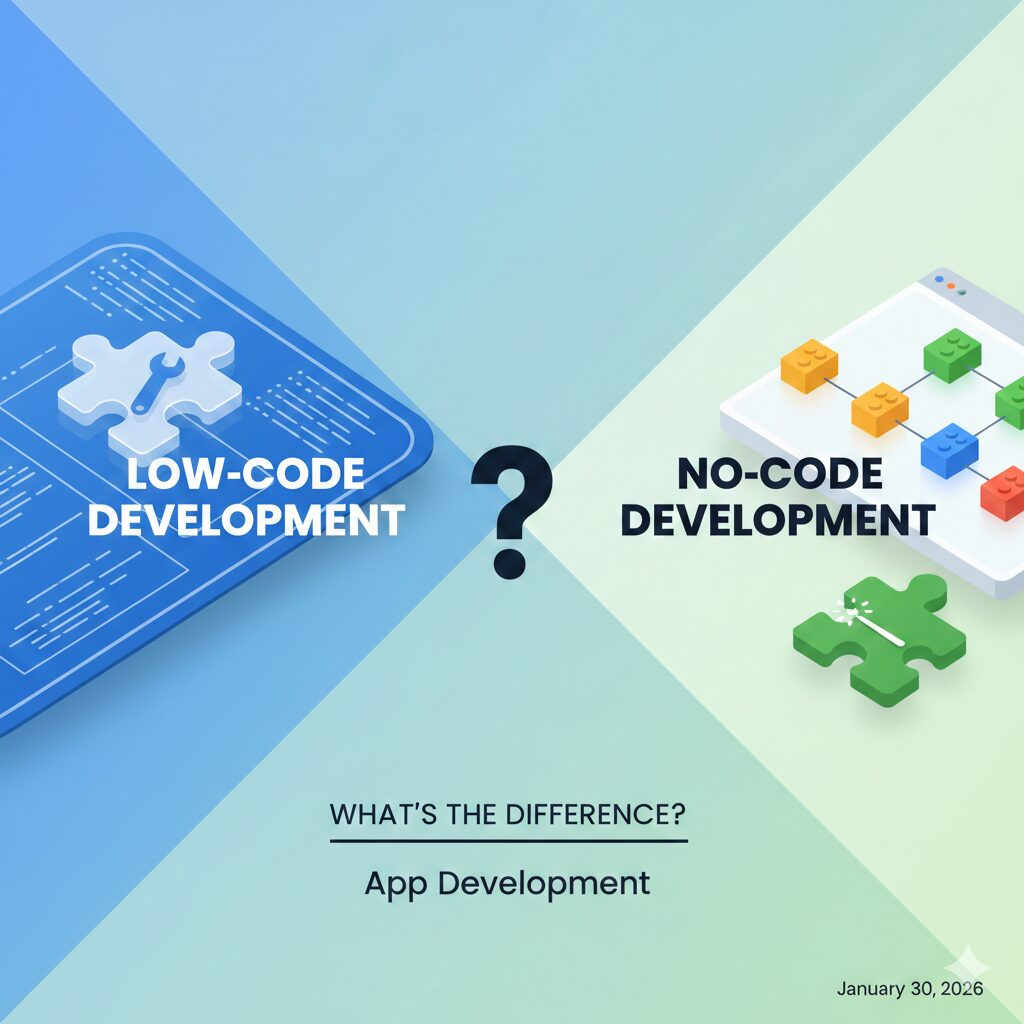
Still a lot of people, especially developers, struggle with the key differentiator between low-code and no-code app development. Whereas, it’s not that tough to learn the core dynamics and understand its features and activities.
Low-code and no-code platforms both utilise visual drag and drop interface to make it easier for the app developers to develop and accelerate the app development process instead of following the traditional coding practices.
Many app developers are now shifting to no-code or low-code platforms because they are sick of coding again and again. Fixing the bugs, reading the long lines of code and then, ending up fixing a small bug for straight two days.
In this blog, we are going to learn about the difference between the two, benefits, and other interesting examples to be better aware of it.
Keep in mind, low-code app development requires manual coding for customisation and complex integrations making it easier for the IT professionals while no-code app development allows non-technical businesses users to easily code and build a versatile mobile app without facing any coding issues.
So, are you excited to explore it with us? Let’s get started then…
What is Low-Code Development?
The literal meaning behind low-code developers overcome the traditional software development practices where the developers have to write each line of the code themselves. Professional app developers are used to coding whereas, they are also using low-code platforms and approaches to build complex apps in minutes. These platforms are best when the deadline is near and the organization has to deliver the app timely.
Low-code development reduces the time and efforts by 2X as compared to the traditional coding practices. Low-code development has been an amazing and desirable option for businesses that are hunting for modernised ways to meet the changing demands of the businesses and automate the entire process for digital transformation.So, if you are a non-technical person then low-code development is the best option for you.
You would be surprised to know that low code software development comes with simple interfaces and drag and drop features that are necessary. Whereas, such platforms are intuitive, lowcode tools and allow the app developers with minimal knowledge of software design and programming languages for building a wide range of web and mobile apps. Low-code apps are faster and easier to build and have a lower maintenance burden than traditionally coded apps.
Now let’s hear about the differences between low-code development platforms:
Low-Code Development Platforms – What’s It All About?
We have already discussed the low-code development and now we are going to learn about the platforms and its usability. Basically, low-code platforms are an amazing way for individuals with basic coding knowledge for creating custom mobile apps without having prior knowledge of technical aspects. You will not have to write the code yourself, instead with few lines codes, edits, customization – everything can be done easily.
Even if we talk about the user interfaces then, low-code development platforms make it easy for the individuals to build mobile apps like custom-projects without eliminating the attractive elements.
Low-code platforms are a great way for creation of mobile apps using visual appealing tools instead of doing everything from scratch or hiring professional designers with coding skills. Whereas, we all know that the user interface for the mobile app should be made up of high-end components enabling the users to use drag and drop platforms and design the frontend of the mobile app.
With the low-code platforms, the frontend and backend of the mobile app can be done easily without any issue. Perhaps, the user interface for low-code platforms are made up of platforms that enable the users to design the frontend easily. So, it’s a quick and easy approach for the target audience.
And if you are hunting for tutorials related to low-code app development and platform usability then, a lot of videos are made available on YouTube for quick understanding. A mobile app development company works on the design and development of such platforms for the clients.
Benefits of low-code development platforms
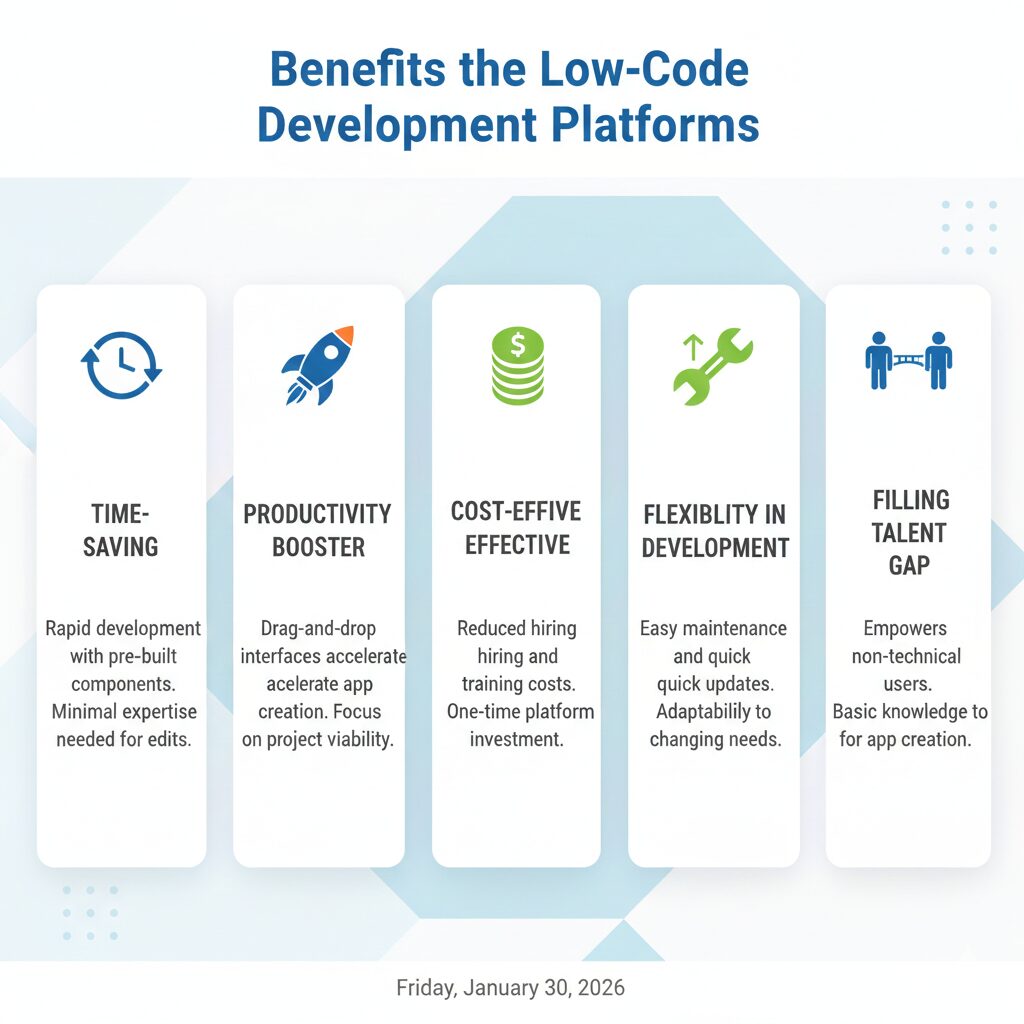
In this section, we are going to learn about the key benefits associated with the low-code development platforms:
| Attributes | Key Benefits |
| Time-Saving | Almost all the low-code platforms enable the app developers to do few edits, and customize the code, perhaps, it’s time-saving. With minimal expertise in coding, you can do coding. |
| Productivity Booster | If you have read about drag and drop platforms then, low-code platforms boost the productivity as the developers spend less time on coding and get the app developed in less time as compared to writing the code in days. They focus on the project’s viability, and require less knowledge of coding too. |
| Cost-Effective | Hiring a resource full-time who has to work on the development of the software from scratch and might have to get themselves trained with different platforms requires time and cost both. Whereas, low-code platforms are cost-effective as you only have to buy the premium version once, and start with the development with simple drag and drop and edits. |
| Flexibility in Development | You know, maintenance and updates come with the app development process, and you can not deny it. Whereas, low-code development platforms enable you to make the changes quickly. |
| Filling the Talent Ga | Low code platforms play a key role in evolving the business landscape as they allow the non technical people to get hired for app development as they need basic knowledge for drag and drop practices. |
What is No-Code Development?
There are tons of ways through which one can launch the mobile app. From start to the launch, the process actually takes time. A no-code development basically allows the non-developers or non-technical people to get the details quickly within minimal time, and resources. No-code development enables you to get your web or mobile app in front of the customers quickly. Without spending hours coding for the backend and frontend of the mobile app, instead you can easily get the mobile app created with simple drag and drop.
The best part is you need no prior knowledge related to coding as with no-code development, only your technical skills are acquired. It helps in making the digital solution amazing, utilising the best of the technical aspects, in-house talent for simple web and app development.
Now let’s hear about the differences between no-code development platforms:
No-Code Development Platforms – What’s It All About?
Can you expect anyone in your team from marketing to build mobile apps? No, right? But with no-code development platforms, anyone with a non-technical background can build mobile apps. By using visual building blocks and simple, intuitive user interfaces rather than coding the entire mobile app. A no-code app builder often uses drag-and-drop functionalities to create alluring mobile apps.
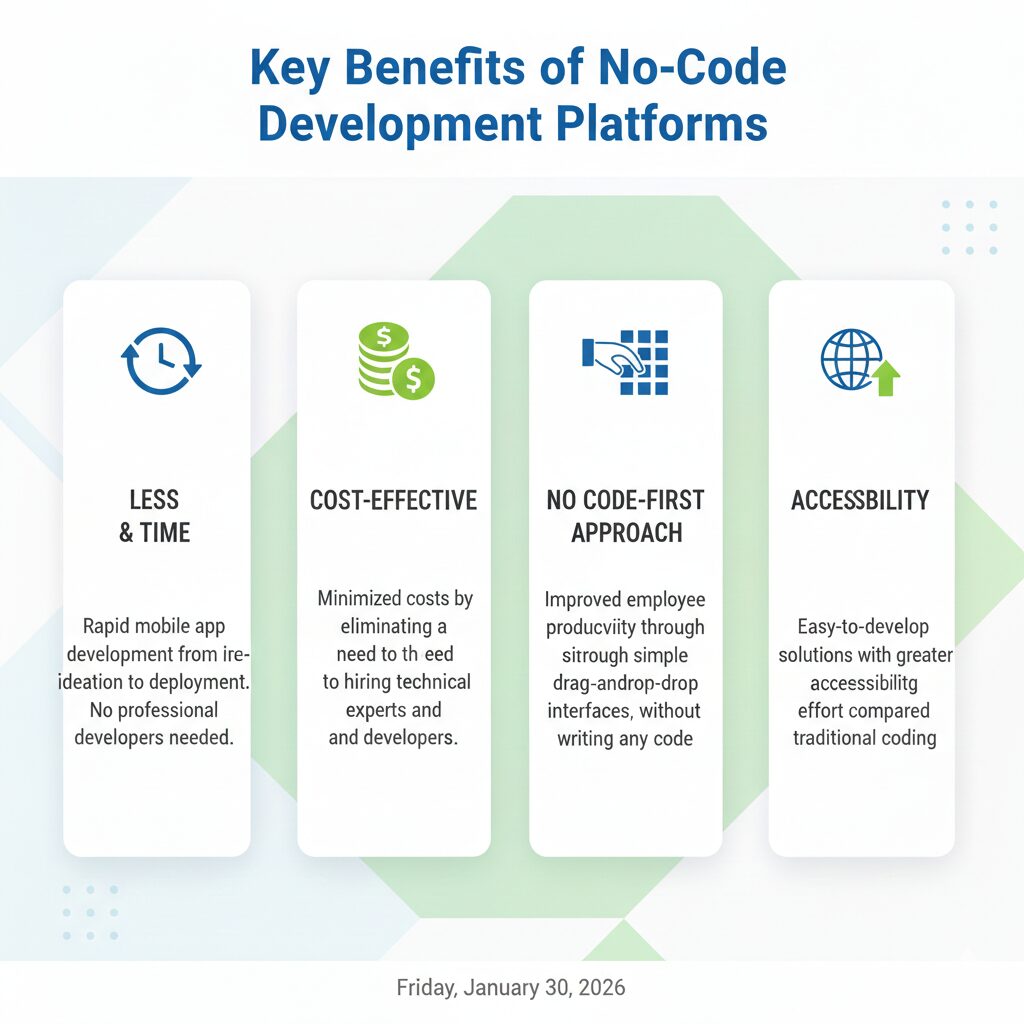
Benefits of no-code development platforms
In this section, we are going to learn about the key benefits associated with the no-code development platforms:
| Less Effort, and Time | You can build a mobile app from ideation to the deployment through no-code platforms in less time and effort. Perhaps, there is no need for professional developers. |
| Cost Effective | Just like low-code platforms, no-code platforms minimize the costing as you need to have the urge to hire professional developers with technical expertise. |
| No Code-First Approach | It actually improves the productivity level of the employees as they don’t have to write the codes themselves, instead it can be done easily through simple drag and drop. |
| Accessibility | No-code solutions are easy to be developed with more accessibility whereas, where one has to develop the app entirely themselves, then, the efforts are increased. |
Low-Code Development vs No-Code Development – What’s the Disadvantage for Both?
Now we are going to discuss about the core disadvantages related to low-code and no-code development:
| Drawbacks of Low-Code Development | Drawbacks of No-Code Development |
| When it comes to low-code development then, we require someone who actually has prior information related to coding to develop web or mobile apps because you still require some basic knowledge. | The customisation and flexibility attributes are limited as the templates are not available in variations. You will have to select from the pool of templates made available for everyone. |
| Security can be a great concern as less advanced platforms like low-code could hurt the security practices. | Just like low-code platforms, security can be a concern for no-code platforms as they are newly built and come with different vulnerabilities. |
| Costing can be greater than no-code development because again, a person with coding knowledge is required to do customisation. | App builders without professional development experience could overlook some major issues necessary for a seamless user experience. |
Examples of Low-Code Development Platforms
Here is a quick example of low-code development platforms:
- Outsystems
- Mendix
- Microsoft Power Apps
- Zoho Creator
Examples of No-Code Development Platforms
Here is a quick example of low-code development platforms:
- Bubble
- Zapier
- Airtable
- Google App AppSheet
What can you build with low-code and no-code tools?
With Low-Code and No-Code platforms you may build:
- A great custom experience that is easy to use, and well performing.
- Productive mobile app that helps in reducing the manual tasks, automate the processes and streamline the workflows.
- Quick in enabling centralised scheduling of the management, payroll and benefits of administration along with workplace communications.
- With low-code platforms, you may easily migrate from a legacy system to a new one in less time and effort.
Key Takeaway
And we are done for the day. Both low-code and no-code platforms allow the businesses to modernize their existing workflows and strategic pathways for mobile app creations quickly without any hassle. Perhaps, if you are considering this approach, there are chances that many companies will offer platforms that are ideal for building web and mobile apps without extensive research or coding expertise.

Build Smart with The Right Team.
We bring expertise, technology, and trust you look for in your digital journey.