

Mobile apps are changing the way education works, and every mobile app development company Houston is playing a key role in this transformation. Today, apps are not just support tools but essential platforms that help students learn better, faster, and smarter. Schools, colleges, training centers, and businesses now use mobile and web apps to improve learning experiences, personalize education, and support students at every stage of their journey.
With technologies like artificial intelligence, augmented reality, and smart automation, mobile apps are reshaping traditional classrooms and training systems. Learning is no longer limited to books or physical classrooms. Students can now access lessons, assignments, tests, and learning resources anytime and anywhere through their devices.
From schools and universities to corporate training programs, educational apps are helping institutions reach learners of all ages and backgrounds. These apps offer better engagement, flexible learning, easy communication, and stronger student participation. Compared to traditional learning methods, mobile education platforms provide more interactive, accessible, and personalized learning experiences.
Even though technology is widely used in education, many institutions still struggle to clearly understand how student apps truly add value. Questions like how a student app helps learners, how it supports institutions, and how it improves learning outcomes are often difficult to answer clearly.
This is why mobile education platforms are becoming a powerful solution. Student-focused mobile applications now act as complete digital learning systems that improve communication, learning access, engagement, and academic management. In this blog, we explore how mobile apps are transforming education, solving real challenges, and creating better learning experiences for students, teachers, and institutions alike.
How Do Mobile Apps Improve the Education System & Student Experience?
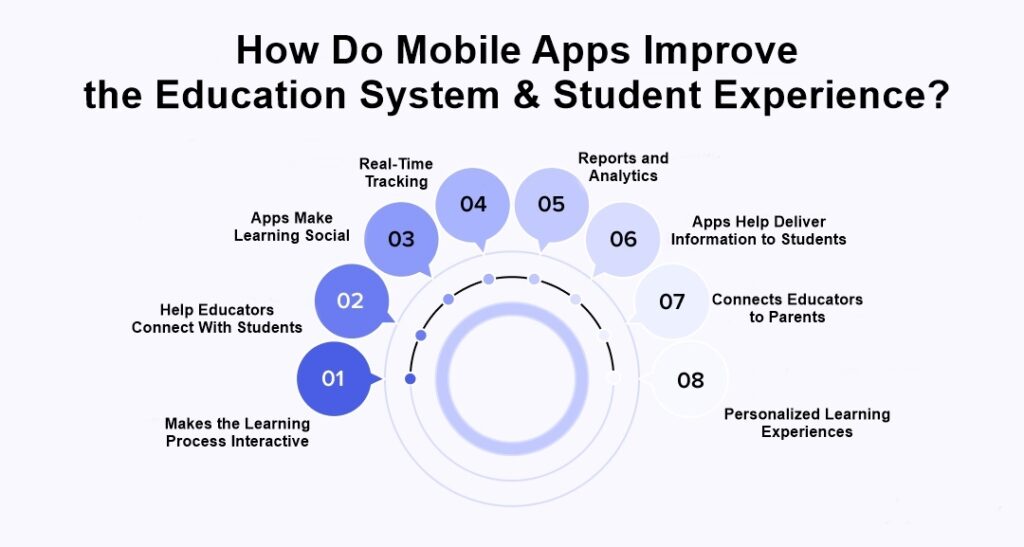
Mobile apps are transforming education by making learning more accessible, engaging, and efficient for students, teachers, and parents. They simplify communication, improve knowledge delivery, and create better learning environments. With smart features and digital tools, education apps support modern learning needs while helping institutions improve academic outcomes and student satisfaction.
1. Makes the Learning Process Interactive
Mobile apps use videos, quizzes, animations, games, and visual content to make learning more engaging. Instead of passive reading, students actively participate in lessons, which improves understanding, focus, and memory. Interactive learning keeps students motivated and makes complex topics easier to understand.
2. Help Educators Connect With Students
Apps create direct communication channels between teachers and students. Educators can share lessons, assignments, announcements, and feedback instantly. Students can ask questions, seek help, and stay connected to teachers beyond classroom hours, improving learning support and academic guidance.
3. Apps Make Learning Social
Learning apps allow students to interact through group chats, discussion boards, and collaborative projects. Peer learning encourages idea sharing, teamwork, and problem solving. This social learning environment builds confidence, improves communication skills, and creates stronger learning communities.
4. Apps Help Deliver Information to Students
Important updates, schedules, assignments, notices, and study material are delivered instantly through apps. Students no longer miss key information due to delays or miscommunication. Centralized access to academic content improves organization and learning efficiency.
5. Real-Time Tracking
Mobile apps allow schools and institutions to track attendance, participation, performance, and engagement in real time. Teachers can identify learning gaps early, while students can monitor their progress. This helps improve academic planning and learning outcomes.
6. Reports and Analytics
Educational apps generate detailed performance reports and learning data. Institutions can analyze student behavior, subject performance, and learning patterns. These insights help educators improve teaching strategies and make data-driven academic decisions.
7. Connects Educators to Parents
Apps create a direct link between schools and parents. Parents receive updates about attendance, grades, assignments, and school activities. This improves transparency, trust, and involvement, helping parents support their children’s learning more effectively.
8. Personalized Learning Experiences
Mobile apps adapt learning content based on student performance, pace, and needs. Personalized lessons, recommendations, and learning paths help students learn better at their own speed. This improves confidence, understanding, and long-term academic success.
Reasons to Invest in an Educational App
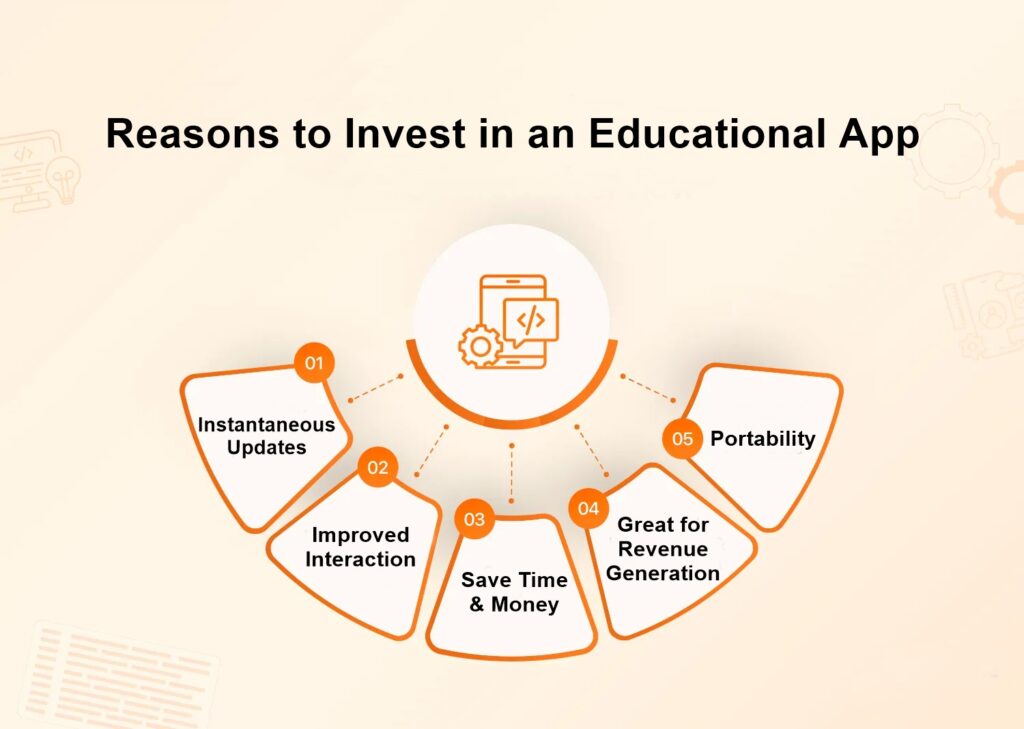
Educational apps are becoming an important part of modern learning. They make education more accessible, flexible, and affordable for students, parents, and institutions. With smartphones in almost every home, mobile learning is now a daily habit. Investing in an educational app helps institutions improve learning delivery, connect better with users, and create long-term value for both education and business growth.
1. Save Time & Money
Educational apps reduce paperwork, travel, and administrative workload. Parents and students get updates, learning material, and information in one place without delays. Schools save costs on printing, communication, and manual processes, while families save time managing learning activities and schedules.
2. Improved Interaction
Mobile apps improve communication between students, teachers, and parents. Learning becomes more engaging through videos, quizzes, and interactive content. Students participate more, parents stay involved, and teachers can support learners more easily, creating a stronger learning environment.
3. Instantaneous Updates
Important notices, schedules, announcements, and learning content are shared instantly. Students and parents stay informed in real time without waiting for emails or paper notices. This keeps everyone connected and ensures smooth communication across the education system.
4. Great for Revenue Generation
Educational apps create new income opportunities through subscriptions, premium content, paid courses, certifications, and digital learning programs. Institutions can offer advanced learning features and premium experiences that users are willing to pay for, supporting long-term growth.
5. Portability
Learning is no longer limited to classrooms. Educational apps allow students to learn anytime and anywhere. With mobile access, students can study at home, while traveling, or in free time, making learning more flexible and convenient for all age groups.
How to Improve Your Existing Educational App?
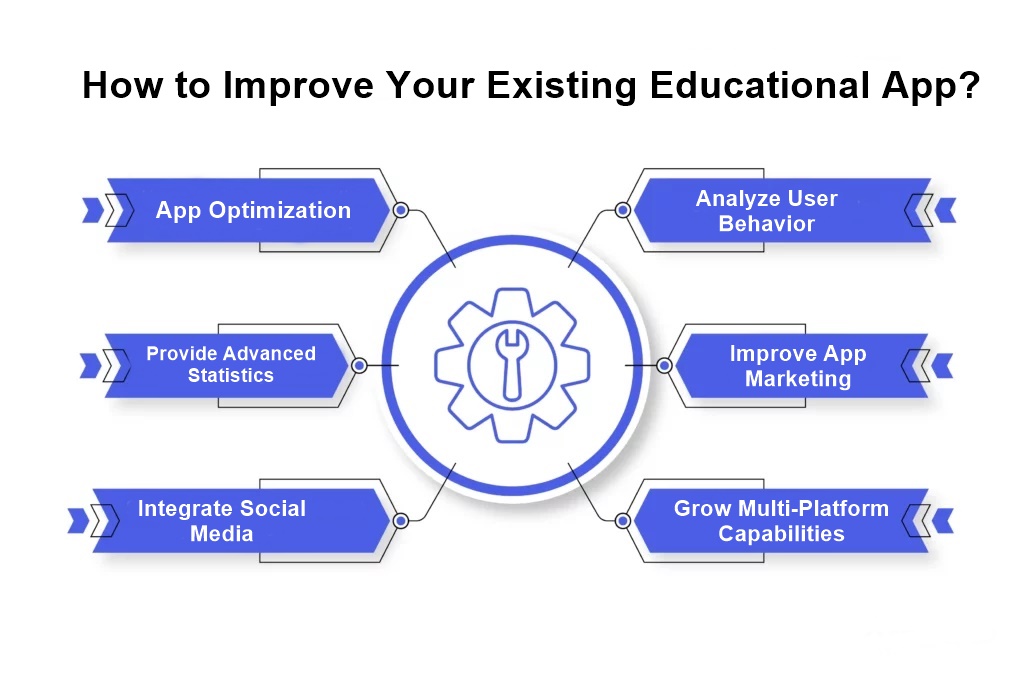
Improving an educational app is not only about fixing problems. It is also about adding value, making learning easier, and creating a better experience for students, teachers, and parents. Small improvements over time can make a big difference in user satisfaction, engagement, and long term success.
1. App Optimization
A fast and smooth app keeps users happy. Improving loading speed, reducing memory usage, and making the app work well on all screen sizes helps create a better learning experience. When an app runs smoothly, users are more likely to stay active and loyal.
2. Provide Advanced Statistics
Clear learning data motivates students and helps teachers. Showing progress, learning streaks, performance levels, and subject progress encourages students to keep learning. Teachers benefit by seeing class performance and identifying students who need extra support.
3. Integrate Social Media
Social media can be used in a positive way for learning. Students can share achievements, invite friends, and stay connected to the app community. Educational platforms can also use social channels to share updates, events, and learning content.
4. Analyze User Behavior
Understanding how users interact with the app helps improve it. Tracking user activity shows where users struggle, what features they use most, and where they stop using the app. This helps fix problem areas and improve the overall user experience.
5. Improve App Marketing
A good app still needs strong promotion. Digital marketing, app store visibility, social media promotion, and user engagement campaigns help grow downloads and keep existing users active. Re-engaged old users and building trust through positive feedback strengthens long term growth.
6. Grow Multi-Platform Capabilities
Users expect access on multiple devices. Supporting mobile, tablet, and web platforms makes learning more flexible. Multi platform access allows students to learn anytime and anywhere, which improves accessibility, convenience, and long term app usage.
Examples of Educational Apps
Educational apps come in many forms. Some focus on language learning, some on productivity, and others on making learning fun through games and challenges. These apps show how technology can support learning, habit building, and skill development in simple and practical ways.
1. EpicWin

EpicWin turns daily tasks into a game. Users complete real life goals and earn rewards inside the app. This makes learning discipline, responsibility, and time management more fun and engaging, especially for students who enjoy gamified experiences.
2. RescueTime

RescueTime helps users understand how they spend their time. It tracks app usage and activities to improve focus and productivity. Students and learners use it to build better study habits and manage screen time more effectively.
3. Sosh

Sosh focuses on community learning and skill sharing. It allows users to learn through social interaction, shared experiences, and peer engagement. This helps make learning more collaborative and interactive.
4. Todo Math

Todo Math is designed for young learners. It teaches basic math skills through simple games and activities. The app helps children build number sense, counting skills, and problem solving abilities in a fun and friendly way.
5. Duolingo

Duolingo is one of the most popular language learning apps in the world. It uses short lessons, quizzes, and games to help users learn new languages easily. It supports self paced learning and keeps users motivated through rewards and progress tracking.
6. LingoKids

LingoKids focuses on early childhood education. It helps children learn language, basic skills, and cognitive development through interactive games, videos, and activities. The app supports learning at home in a safe and engaging way.
Final Thoughts
Mobile apps are reshaping the future of education in Houston by making learning more accessible, flexible, and student focused. They are no longer just digital tools but complete learning platforms that support students, teachers, parents, and institutions at every level. From interactive learning and personalized education to real time communication and data driven decisions, mobile apps are solving real challenges in modern education.
As schools, universities, and training organizations continue to adopt digital learning solutions, the role of mobile apps will only grow stronger. Institutions that invest in smart, secure, and well designed education apps are better prepared to meet changing learning needs, improve student outcomes, and build stronger learning communities.
For education providers in Houston, mobile apps are not just a technology upgrade. They are a long term investment in better learning experiences, stronger engagement, and sustainable growth. By embracing mobile education platforms, institutions can create a future ready education system that truly supports students in learning, development, and success.

Build Smart with The Right Team.
We bring expertise, technology, and trust you look for in your digital journey.