
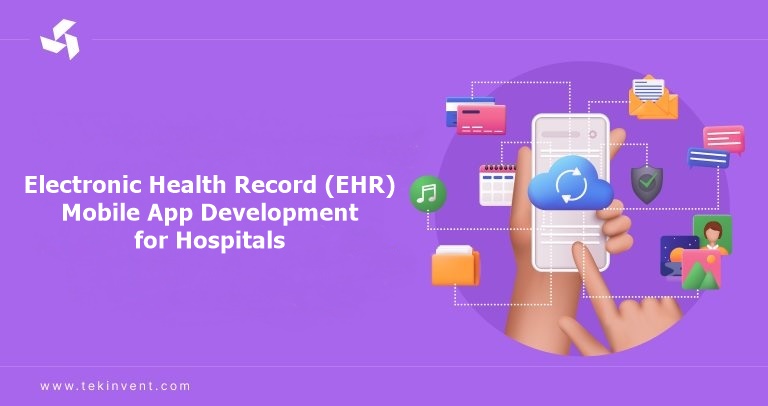
Hospitals in 2026 need reliable and secure systems to manage patient data efficiently, making Electronic Health Record apps crucial for modern healthcare operations and effective patient care management.
A mobile app development company specializing in iOS app development can create centralized EHR solutions that replace paper records, providing real-time access, reducing errors, and streamlining workflows across multiple hospital departments seamlessly.
These applications enhance collaboration between doctors, nurses, and specialists, ensuring faster, data-driven decisions, better care coordination, and improved patient outcomes while complying with industry regulations and privacy standards effectively.
Investing in a custom EHR solution allows hospitals to integrate existing software systems, improve interoperability, and adopt emerging trends in healthcare technology, making patient management more secure, scalable, and future-ready.
This comprehensive guide explores all aspects of EHR healthcare app development for hospitals, including essential features, regulatory compliance, challenges, and best practices to ensure optimal implementation and long-term success.
Why Are Hospitals Choosing iOS EHR Solutions for Business?
Hospitals today are rapidly adopting iOS-based digital solutions to manage patient information efficiently, making Electronic Health Record applications essential for improving operational workflows and healthcare delivery effectively.
These iOS EHR apps allow medical staff to access patient history, prescriptions, allergies, and lab results in real time, ensuring healthcare providers make accurate and informed treatment decisions quickly.
1. Enhancing Patient Care with Digital Access
EHR iOS applications enable doctors to deliver superior patient care by centralizing complete medical histories, allowing fast reference during consultations, reducing redundant tests, and supporting timely interventions across all departments.
Instant access to past treatments, lab results, and medications helps healthcare professionals tailor therapies to each patient, improving recovery outcomes and satisfaction while reducing treatment delays and inefficiencies significantly.
2. Ensuring Regulatory Compliance in Healthcare
Hospitals must comply with data privacy standards like HIPAA, HITECH, and GDPR, and iOS EHR applications provide built-in tools to enforce these regulations efficiently and securely.
Encrypted storage, access permissions, and audit trails prevent unauthorized access, ensuring patient information remains confidential while healthcare organizations consistently adhere to government and industry requirements.
3. Boosting Efficiency Through Automation
iOS EHR solutions reduce administrative burdens by automating scheduling, record updates, and billing processes, allowing healthcare staff to dedicate more time to patient care instead of paperwork.
Automation minimizes human errors, accelerates workflows, and ensures consistent documentation, so doctors, nurses, and administrative teams operate efficiently while patients receive timely, organized, and uninterrupted healthcare services.
4. Achieving Seamless Interoperability Across Platforms
Modern hospitals rely on multiple systems, including labs, pharmacies, insurance platforms, and specialist software, and iOS EHR apps enable seamless integration for real-time data exchange and coordinated care.
Interoperable EHR solutions allow accurate updates, holistic reporting, and smooth communication between departments, ensuring doctors have complete information to make informed decisions and improve patient management effectively.
5. Strengthening Data Security and Backup
iOS EHR apps provide secure storage with encryption and automated backups to protect patient information from unauthorized access, accidental deletion, or cyber threats while maintaining historical data for clinical purposes.
Strict access controls, encrypted transmission, and reliable cloud or local backups give healthcare organizations confidence that sensitive patient records remain safe and accessible whenever required.
How do iOS EHR Apps Help Transform Patient Care and Hospital Workflows?
Hospitals today are increasingly adopting iOS-based EHR apps to improve patient care while streamlining internal operations, ensuring faster, safer, and more organized healthcare delivery across multiple departments.
Instant Access to Patient Records for Faster Diagnosis
iOS EHR applications allow doctors to retrieve patient medical history, lab reports, allergies, and prescriptions instantly, enabling quicker diagnoses and timely treatment decisions that prevent unnecessary delays in critical cases.
With real-time data available on mobile devices, healthcare professionals can immediately reference previous treatments, reducing the risk of errors and supporting more informed clinical decisions across the hospital ecosystem efficiently.
1. Improving Collaboration Between Healthcare Teams
EHR apps on iOS enable seamless communication among doctors, nurses, specialists, and administrative staff, ensuring everyone accesses the same patient information for coordinated and accurate healthcare services.
Shared digital records reduce repetitive tests, prevent miscommunication, and allow medical teams to make consistent treatment plans while improving overall workflow efficiency and patient satisfaction in busy hospital environments.
2. Minimizing Administrative Work and Paper-Based Errors
Digital patient records in iOS EHR apps eliminate reliance on paper charts, handwritten notes, and physical filing systems, which significantly reduces human error and operational inefficiencies in hospitals.
Automated features like digital prescriptions, billing, and appointment scheduling further streamline administrative work, allowing staff to focus on patient care instead of time-consuming paperwork and repetitive manual processes.
3. Enhancing Overall Hospital Efficiency and Patient Experience
By integrating iOS-based EHR apps, hospitals can improve operational efficiency, reduce waiting times, and provide patients with faster, safer, and more reliable healthcare services that strengthen trust and satisfaction.
The combined benefits of instant data access, improved collaboration, reduced administrative burden, and accurate record management make iOS EHR applications an indispensable tool for modern hospitals aiming to optimize care.
The Essential Features Hospitals Need for iOS EHR Apps
Developing an iOS EHR app for hospitals requires incorporating essential features that enhance patient care, improve hospital workflows, and ensure data security, regulatory compliance, and seamless usability.
These applications must store patient information securely while providing automation, smooth integration with existing systems, and intuitive access for doctors, nurses, and administrative staff to optimize hospital operations effectively.
1. Comprehensive Patient Profile Management
iOS EHR apps allow doctors and hospital staff to view, update, and manage complete patient profiles, including medical history, prescriptions, lab results, and allergies, all in one centralized location.
By consolidating patient information into a single digital platform, healthcare professionals can make quicker, more accurate decisions, reduce errors, and provide personalized treatment while improving the overall patient experience.
2. Centralized Doctor and Staff Dashboard
A unified dashboard gives doctors, nurses, and administrative personnel immediate access to patient records, appointments, lab reports, medications, and other relevant data in real-time through iOS devices.
This centralization simplifies workflows, reduces unnecessary back-and-forth communication, and allows healthcare teams to coordinate more effectively, ensuring that all staff members are informed and able to act efficiently.
3. Smart Appointment Scheduling and Automated Reminders
iOS EHR applications automate patient appointment booking and deliver reminders via push notifications, SMS, or email, helping reduce missed visits while improving scheduling efficiency for busy hospitals.
Patients can select convenient time slots themselves, while staff receive an organized overview of upcoming appointments, which reduces administrative burden and ensures smoother hospital operations and patient satisfaction.
4. E-Prescription and Medication Management
Digital prescriptions within iOS EHR apps enable doctors to prescribe medications securely, with alerts for dosage, potential drug interactions, and reminders for refills to ensure patients follow treatment safely.
By automating prescription management, hospitals reduce errors, save time, and improve patient adherence to medication schedules, which enhances healthcare outcomes and supports safer clinical practices.
5. Clinical Decision Support with AI Assistance
AI-powered iOS EHR apps provide doctors with treatment recommendations based on patient history, allergies, and lab results, allowing medical staff to make informed, accurate, and timely clinical decisions efficiently.
This feature helps healthcare professionals analyze complex data, improve diagnostic accuracy, and personalize care plans, ultimately ensuring higher-quality patient care and reducing the likelihood of mistakes.
6. Compliance with HIPAA, HL7, and GDPR
iOS EHR apps ensure secure data handling through encryption, role-based access, and audit trails, meeting essential healthcare regulations like HIPAA, HL7, and GDPR standards for privacy and compliance.
By adhering to these standards, hospitals protect sensitive patient information, reduce legal risks, and establish trust with patients while maintaining high-quality data security protocols across their digital systems.
7. Interoperability with Hospital Systems
iOS EHR applications integrate seamlessly with hospital management platforms, laboratories, pharmacies, and insurance providers, enabling smooth, real-time exchange of medical data across systems.
This integration ensures accurate information sharing, reduces administrative errors, and allows healthcare teams to provide coordinated care without unnecessary delays or repeated manual data entry processes.
8. Automated Billing and Insurance Processing
EHR apps on iOS automate patient billing, invoicing, and insurance claim processing, reducing manual administrative tasks while improving accuracy and minimizing payment errors for hospitals and patients alike.
By streamlining financial operations, hospitals can focus more on patient care, ensure timely reimbursements, and maintain transparent, organized records for both internal management and external compliance requirements.
The Step-by-Step Guide to Developing iOS EHR Apps for Hospitals
Creating an iOS EHR app requires a systematic approach to ensure hospitals can manage patient data efficiently, maintain regulatory compliance, and improve healthcare workflows across all departments.
By following a structured process, healthcare providers can guarantee secure data handling, seamless interoperability, and a user-friendly experience for doctors, nurses, and administrative staff, while optimizing operational efficiency.
1. Requirement Analysis and Strategic Planning
The first step in iOS EHR app development is identifying hospital workflows, understanding user needs, and defining compliance standards that will guide the selection of essential app features.
This includes determining modules for patient management, appointment scheduling, billing, reporting, and interoperability with other hospital systems to ensure the application meets functional and regulatory expectations efficiently.
2. Designing Intuitive User Interfaces
Next, the design phase focuses on creating a user-friendly iOS interface that is intuitive for doctors, nurses, and hospital administrators, minimizing the learning curve and enhancing workflow efficiency.
Accessible navigation, clear menus, and responsive layouts are essential, ensuring that all users can access patient records, schedules, and critical information quickly without delays or confusion.
3. Development and Technology Stack Selection
During development, the right programming languages, frameworks, databases, and cloud infrastructure are chosen to ensure smooth performance, high reliability, and scalability for hospital-grade EHR applications on iOS devices.
Recommended technology stacks often include Flutter or React Native for frontend development, Node.js or Python for backend logic, PostgreSQL or MongoDB for database management, and AWS or Azure for cloud hosting solutions.
4. Integrating with Existing Hospital Systems
EHR apps must integrate seamlessly with existing hospital systems, laboratory platforms, medical devices, and insurance providers to enable real-time data exchange and interoperability across all departments efficiently.
This involves implementing APIs and connecting to HL7 and FHIR standards, ensuring patient data flows securely between hospital management systems, diagnostic labs, pharmacies, and clinical teams without manual intervention.
5. Implementing Security and Regulatory Compliance
iOS EHR apps require robust security features such as end-to-end encryption, multi-factor authentication, and role-based access controls to protect sensitive patient information and hospital operations.
Compliance with healthcare regulations like HIPAA, HITECH Act, and GDPR is enforced, ensuring data privacy, legal adherence, and secure handling of patient medical records throughout the app lifecycle.
6. Rigorous Testing and Quality Assurance
Before launch, EHR applications undergo functional, security, and performance testing to identify and eliminate bugs, vulnerabilities, or inefficiencies, guaranteeing a safe and reliable experience for hospital staff.
Load testing ensures the app can handle high traffic, simultaneous user activity, and large volumes of patient data, while usability testing confirms that workflows remain intuitive and efficient.
7. Deployment and Ongoing Support
Finally, the iOS EHR app is deployed on a secure cloud infrastructure, enabling hospitals to scale operations as needed while providing continuous updates, maintenance, and technical support to ensure smooth operation.
Regular monitoring, patch updates, and performance optimization ensure uninterrupted access to patient data, maintain compliance standards, and adapt the application to evolving healthcare workflows and organizational needs.
Final Thoughts
Partnering with a trusted iPhone app development company allows hospitals to leverage advanced mobile app development to create secure, scalable, and efficient EHR solutions for iOS devices.
iOS EHR apps streamline patient management, enhance collaboration among doctors, nurses, and staff, and reduce administrative workload, ensuring faster decision-making, improved care quality, and regulatory compliance across departments.
By adopting custom iOS EHR solutions, healthcare organizations can integrate existing systems, maintain accurate medical records, stay ahead of emerging healthcare technology trends, and improve overall patient satisfaction and operational efficiency. Reach out to TekInvent today!

Build Smart with The Right Team.
We bring expertise, technology, and trust you look for in your digital journey.