
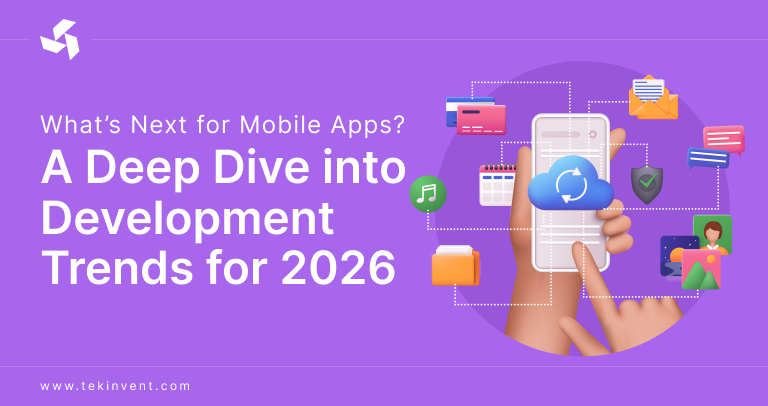
In an industry where technology evolves at an unstoppable pace, maintaining a leading edge in mobile app development is critical. As we move through 2026, a wave of powerful innovations is reshaping how mobile applications are designed, built, and experienced. Mobile app development companies and developers who fail to keep up risk falling behind in an increasingly competitive digital environment.
This article explores the most influential trends redefining mobile app development today. It serves as a practical guide for developers, innovators, and technology enthusiasts who want to confidently navigate this fast-changing landscape. The insights shared here are designed to help you understand where mobile development is heading. They will also help you prepare for what comes next.
Latest trends to watch out for in 2026 that impact business
The agile app development landscape is constantly evolving, shaped by shifting market demands, changing user behavior, and rapid technological progress. As new tools and innovations emerge, development teams continue to adopt smarter, more efficient approaches that deliver stronger business results.
Organizations that stay aligned with these emerging trends are far better equipped to build applications that not only meet their immediate goals but also align with broader industry expectations and future growth.
Below are some of the key app development trends to watch as we move into 2026:
1. Progressive Web App Development
Progressive Web Apps (PWAs) are created using modern web development technologies that enable them to run smoothly on any device or platform with a browser. These apps combine the best of both worlds; meaning they offer the accessibility of web applications alongside the performance and experience of native apps.
PWAs automatically adapt to different screen sizes, ensuring content displays correctly across devices. They also support advanced features such as push notifications, offline access, and limited hardware integration, delivering an app-like experience without requiring a traditional app store download. For businesses, PWAs offer clear advantages, including higher engagement, improved conversion rates, and simplified distribution. Over time, they are also easier to maintain and update, making them a cost-effective and scalable solution.
2. AI & ML Integration

One of the most influential trends shaping modern application development is the growing integration of artificial intelligence (AI) and machine learning (ML) across the development lifecycle.
Over the past year, developers have increasingly relied on AI-driven tools and ML algorithms to build smarter, more capable applications. Features such as AI-powered personalization, natural language processing (NLP), and generative AI–assisted coding are becoming standard. These tools help automate coding tasks, minimize repetitive work, and significantly speed up development timelines.
Beyond development efficiency, AI and ML are also transforming how apps perform in real-world use cases. In sectors like healthcare, retail, and finance, AI-powered chatbots and intelligent systems enhance user engagement, streamline operations, and reduce manual effort. App developers are able to deliver better experiences for both users and businesses.
3. No-Code and Low-Code App Development

The emergence of no-code and low-code app development makes it possible to build apps without writing code from scratch. This has far-reaching impacts on businesses as it helps reduce workloads and the overdependence of traditional development teams to build and deploy apps.
No-code apps are just as functional as apps built from scratch with code but are less expensive, allowing businesses to adapt to quick innovations and remain competitive.
4. App and Data Security

Any lapse in data security can seriously damage a brand’s reputation; this includes ways that are difficult to recover from. Since customer trust is the foundation of a business’s credibility, app security has become a top priority in modern app development.
To protect against breaches and data compromises, businesses now implement multiple layers of security within their applications. This includes conducting regular vulnerability assessments, applying frequent software updates to strengthen defenses, and integrating multi-factor authentication to ensure that user data remains safe and secure.
5. Citizen Development

Citizen development has emerged as a natural extension of the low-code and no-code revolution. With platforms that require minimal or no coding, business users can actively participate in the app development process
These citizen developers are regular employees without formal coding skills, but they bring valuable knowledge of business processes and logic. This allows them to create applications tailored to their team’s needs, streamline workflows, and address specific business challenges. By enabling faster, more cost-effective app creation, citizen development enhances overall business agility and has become one of the most significant trends in the app development landscape.
6. Internet of Things (IoT) App Integration
The Internet of Things (IoT) continues to be one of the most transformative trends in mobile app development for 2026, redefining how users interact with connected devices. As smartphones increasingly serve as the central hub for managing smart homes, wearables, healthcare monitors, and connected vehicles, IoT-enabled mobile apps are delivering unprecedented levels of automation, convenience, and control.
Looking ahead to 2026, IoT-powered applications will focus on enhanced data security, interoperability, and intuitive user experiences. For businesses, investing in custom mobile apps that integrate IoT systems offers the opportunity to gain actionable insights, optimize operations, and deliver smarter, more connected digital experiences to users.
7. 5G Technology Integration
The rollout of 5G technology is poised to create a transformative shift in the mobile app development industry, ushering in a new era defined by faster connectivity and cutting-edge digital innovation.
With its remarkable speed and unmatched reliability, 5G is set to redefine how apps are designed and operate. This technology will significantly enhance user experiences while opening the door to a host of forward-thinking features and possibilities that were previously unattainable.
8. Augmented Reality (AR) and Virtual Reality (VR)

Augmented Reality (AR) and Virtual Reality (VR) are set to redefine mobile app development trends in 2026, merging the digital and physical worlds to deliver deeply immersive and interactive experiences. As mobile devices become more powerful and cloud XR technologies improve scalability, AR and VR apps are increasingly accessible without the need for high-end hardware. According to MarketsandMarkets, the global AR/VR market is projected to grow from $37 billion in 2023 to over $114 billion by 2027, with adoption expanding across both consumer and enterprise sectors.
While AR and VR initially gained popularity in gaming and entertainment, their applications are now spreading to retail, healthcare, education, real estate, and manufacturing. AR features like virtual try-ons, product visualization, and immersive real estate tours help users make informed decisions, while VR is driving innovation in training simulations, remote collaboration, and therapeutic healthcare solutions. By 2026, over 1.7 billion AR-enabled devices are expected to be in use, highlighting a major shift toward immersive experiences on mobile platforms.
For businesses, investing in custom AR/VR app solutions unlocks new opportunities for engagement, interactivity, and brand differentiation. As these technologies continue to evolve, they will play a central role in shaping how users explore, learn, and shop in a mobile-first world.
9. Evolution of Cross-Platform Development Frameworks

Cross-platform development frameworks let developers build apps that work on both iOS and Android using a single codebase. This saves time, reduces costs, and ensures a consistent user experience.
Popular frameworks include React Native for JavaScript-based native-like apps, Flutter for visually rich apps with fast rendering, and Xamarin for C# apps with access to native APIs.
These frameworks continue to evolve, making it easier for businesses to deliver high-quality apps faster and reach more users, while supporting modern technologies like AR, AI, and IoT.
10. Apps for Foldable Devices

Foldable models like Samsung Galaxy Fold, Huawei Mate X, and Motorola Razr, are transforming how users engage with mobile apps. These devices offer flexible screens that allow users to switch seamlessly between compact and expanded modes.
The foldable device market is growing, with an estimate reach of $30.5 billion by 2026. Other than this the CAGR is expected to increase over 21%. As more consumers adopt these devices, developers need to ensure their apps provide responsive, adaptive experiences across different folding states. This involves optimizing for multi-window functionality, resizable layouts, and smooth UI transitions to maintain both performance and usability.
By designing apps with foldable optimization in mind, businesses can create innovative experiences, engage users in new ways, and stay ahead in a market increasingly driven by next-generation mobile devices.
11. Development for Wearable Devices
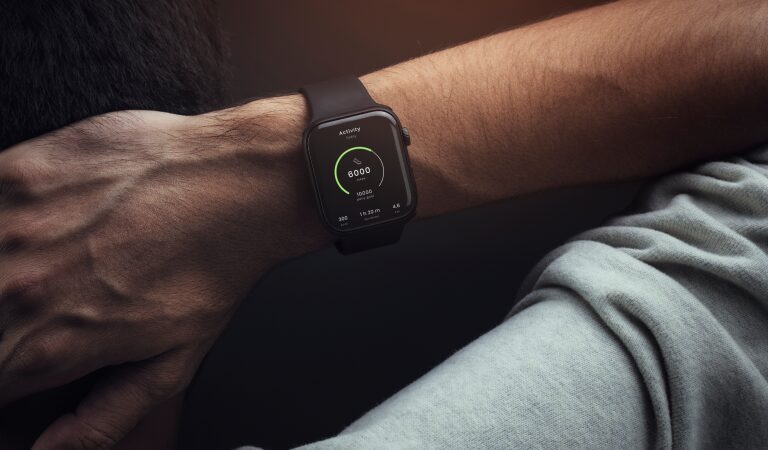
Wearable technology like smartwatches, fitness trackers, and health-monitoring bands is transforming how users interact with mobile apps. As these devices become increasingly sophisticated, they have evolved from simple accessories into essential tools for health monitoring, productivity, and real-time connectivity.
By 2026, the global wearable technology market is expected to grow rapidly, fueled by consumer demand for devices that simplify daily tasks and promote well-being. Platforms like watchOS and Wear OS now support standalone apps, allowing users to download and access applications directly from their wrists, without depending on smartphones.
For developers, this trend presents exciting opportunities to create lightweight, data-driven apps optimized for small screens and quick interactions. From real-time fitness tracking to voice-enabled notifications and IoT integration, wearable technology opens the door to innovative solutions that enhance user engagement and expand the possibilities of mobile app experiences.
12. Modernization of DevOps practices

The rise of cloud computing has fundamentally changed how DevOps teams develop, deploy, and manage applications.
In particular, cloud-native application development has made it easier for DevOps teams to create applications that are scalable, portable, and highly resilient. This approach shifts development away from traditional monolithic architectures and manual workflows toward modular, cloud-optimized processes that prioritize flexibility, scalability, and continuous innovation.
Another key trend in modern DevOps is the adoption of DevSecOps, an integrated approach that combines development, security, and operations. Traditionally, application security was handled by separate teams after development was complete. DevSecOps, however, leverages cloud-native technologies and automation to integrate security directly into the development lifecycle. This ensures a smoother development process, reduces vulnerabilities, and delivers more secure and reliable applications from the outset.
Why it’s Important to Stay Up-to-Date with New App Development Trends?
Applications play a crucial role in helping businesses drive revenue and growth. By automating essential processes, improving communication, and enhancing agility, apps allow companies to operate more efficiently and respond faster to market demands. Businesses that leverage the latest technological tools are far more likely to outperform those relying on outdated, traditional methods.
In the fast-paced tech world, software that is cutting-edge today can quickly become obsolete in just a few years. Staying updated with the latest app development trends gives companies a competitive edge, enabling them to operate in the most productive and efficient way possible.
Organizations that lag behind in adopting new app development practices often face redundant workflows and decreased efficiency. Over time, this can result in lost market share to more agile competitors who embrace innovation. The need to remain competitive in a rapidly evolving landscape is a key reason why keeping up with app development trends is essential for any forward-thinking business.
Different Stages of Building a Mobile App
Building a mobile app is a long-term investment that demands expertise, technical know-how, and a clear strategic vision. While developing an app independently is possible, partnering with professional services saves both time and effort, while ensuring your app is modern, feature-rich, and equipped with innovative functionalities.
The app development lifecycle typically consists of the following key steps:
1. Planning and Requirements: Business stakeholders and developers collaborate to define what the application should accomplish and establish the project’s scope.
2. Design: The DevOps team translates these requirements into a detailed blueprint for the app, including the user interface (UI) and user experience (UX) design.
3. Development: Engineers write the software code based on the design specifications, bringing the app’s functionality to life.
4. Testing: The app undergoes rigorous testing to ensure it meets performance, security, and quality standards. Bugs are identified and resolved before launch.
5. Deployment: The finalized app is released into a production environment, making it accessible to employees or customers.
6. Monitoring and Maintenance: After launch, the app is continuously monitored and updated to address performance issues, fix bugs, and maintain compatibility with new devices and technologies.
How Do These Trends Affect Your Mobile App Industry?
Mobile app development trends in 2026 are not just technological updates; in fact, they are reshaping entire industries. From improving operational efficiency to delivering richer user experiences, these trends influence how businesses create, manage, and scale their applications. Let’s explore how key industries are being impacted:
1. Retail and E-Commerce
Emerging mobile app trends are transforming retail and e-commerce, creating more personalized, immersive, and seamless shopping experiences. AI-driven recommendations, chatbots, and push notifications allow retailers to engage customers more effectively. Whereas, AR features enable virtual try-ons and product visualizations. Mobile commerce apps streamline payments with secure one-click checkouts, digital wallets, and in-app purchases to boost conversion rates. Social commerce and voice-enabled shopping further enhance engagement, making it easier for consumers to browse, interact, and purchase from anywhere.
2. Manufacturing and Industrial IoT
In manufacturing, trends like IoT integration, 5G connectivity, and cloud-native app development are driving smarter operations. Mobile apps can monitor equipment in real time, predict maintenance requirements, and optimize production workflows, reducing downtime and increasing efficiency. IoT-enabled apps connect machines, sensors, and operators, enabling instant communication and data-driven decision-making. AI-powered analytics identify bottlenecks, forecast demand, and support smarter resource allocation, helping manufacturers become more agile, cost-effective, and competitive.
3. Government
Government agencies are leveraging mobile app trends to enhance citizen engagement, streamline services, and improve operational efficiency. Progressive Web Apps (PWAs) and low-code platforms allow faster deployment of public services, while AI and automation simplify administrative tasks. Mobile apps facilitate real-time updates, digital transactions, and direct communication with citizens. Security and data privacy are critical, with multi-layered protections and compliance ensuring sensitive information remains safe. By adopting these trends, governments can increase transparency, accessibility, and service effectiveness.
4. Healthcare
Healthcare mobile apps are being transformed by AI, IoT, wearable devices, and AR/VR technologies. AI supports diagnostics, predictive analytics, and personalized care recommendations, while IoT devices and wearables track patient health in real time. AR and VR enable immersive therapy sessions, advanced medical training, and remote consultations. Maintaining strict security and data privacy standards ensures sensitive medical data remains protected. Integrating these trends allows healthcare providers to improve patient outcomes, streamline workflows, and offer more connected, patient-centric experiences.
How Can TekInvent Help Your Business?
At TekInvent, we specialize in delivering end-to-end mobile app and web development solutions to help businesses thrive. By staying ahead of the latest trends like AI, IoT, AR/VR, 5G, PWAs, and more; we create apps that are innovative and also tailored to meet your specific business needs.
Our team of expert developers, designers, and strategists works closely with you to understand your goals and challenges. We build apps that enhance efficiency, boost customer engagement, and drive measurable business growth. Whether it’s creating scalable enterprise solutions, developing immersive AR/VR experiences, or integrating IoT systems for smarter operations; TekInvent ensures your digital solutions are modern, secure, and future-ready.
Partner with TekInvent to give your business a chance to leverage cutting-edge technology. This will help you stay competitive, streamline processes, and deliver superior experiences to your customers.
What Does 2026 Look Like for App Development?
The year 2026 promises to be an important one for mobile app development. It’ll be marked by rapid technological advancements and increasingly sophisticated user expectations. AI and machine learning will continue to drive personalized and intelligent experiences, while 5G connectivity will enable faster, smoother, and more interactive applications. Progressive Web Apps, low-code/no-code platforms, and citizen development will empower businesses to innovate faster and reduce development costs, making app creation more accessible than ever.
Wearable technology, AR/VR, and IoT integration will further blur the lines between digital and physical experiences. Meanwhile, security, data privacy, and sustainable development practices will remain central, as businesses strive to maintain user trust.
In short, 2026 is set to be a year where apps are smarter, faster, more connected, and more personalized than before. Companies that embrace these trends early will gain a competitive edge. So, gear up to deliver exceptional digital experiences that meet the demands of a mobile-first world.

Build Smart with The Right Team.
We bring expertise, technology, and trust you look for in your digital journey.