
Building a SaaS product is a strategic move for businesses aiming for long-term scalability and sustainable growth. Whether you are modernizing an existing platform or launching a SaaS solution from the ground up, success depends on a clear understanding of SaaS architecture, development best practices, and the common challenges that can impact performance and scalability.
This guide provides a detailed overview of SaaS development in 2026, including key technical considerations and outsourcing strategies, to help you convert the inherent advantages of SaaS into measurable business growth.
Let’s get into how to Build Software as a Service:
What Does SaaS Mean? What is SaaS Development?
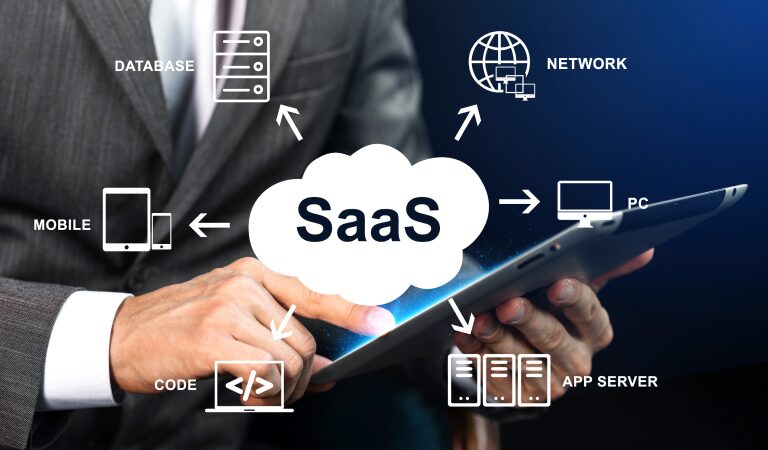
Short for Software as a Service, a SaaS application is a cloud-based software model designed to deliver flexible, configurable features tailored to the needs of different user groups. It allows users to access data and functionality from any device or web browser with an active internet connection, removing the limitations of location or hardware.
Thanks to its subscription-based, on-demand structure, SaaS eliminates the need for local installations or costly hardware upgrades. Users interact with SaaS platforms through web browsers or APIs, while the service provider manages updates, security, performance, and ongoing maintenance. In most cases, the underlying infrastructure is hosted and maintained by a third-party cloud service provider.
The adaptability and cost efficiency of SaaS solutions are key drivers behind their widespread adoption. Market projections indicate strong, sustained growth in the SaaS sector, reinforcing why investing in SaaS development is a forward-looking strategy. For businesses, building SaaS applications offers a scalable, future-ready approach to innovation and a lasting competitive advantage.
SaaS Application Architecture
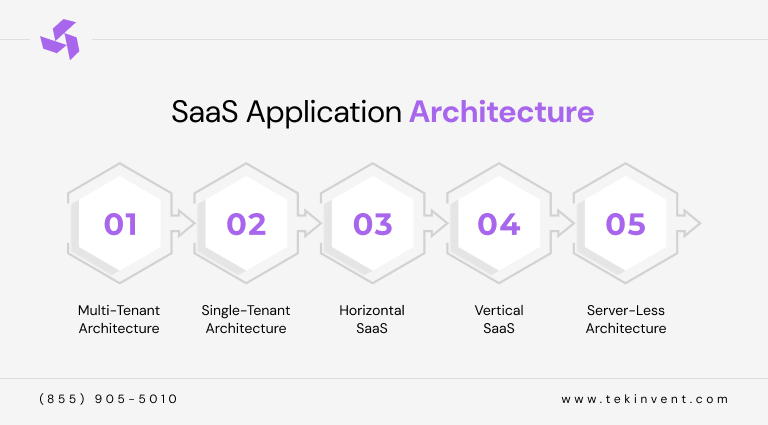
There are several architectural models to consider when building a SaaS application, each offering different levels of scalability, cost efficiency, and security.
1. Multi-Tenant Architecture
In a multi-tenant setup, a single application infrastructure is shared among multiple customers, while each tenant’s data remains securely isolated. This model can be implemented in two primary ways:
- Single application, single database: All users access the same database within a shared cloud environment. While this approach is simpler and more cost-effective to deploy, it has limited scalability and may impact application performance as the user base grows.
- Single application, multiple databases: User data is distributed across multiple databases, with new users redirected once capacity limits are reached. This improves responsiveness and performance but requires higher upfront investment and greater infrastructure complexity.
2. Single-Tenant Architecture
With single tenancy, each customer operates on a dedicated instance of the application. This model offers enhanced security and greater control but increases maintenance overhead and operational costs compared to multi-tenant environments.
3. Horizontal SaaS
Horizontal SaaS solutions are designed to serve businesses across multiple industries. Common examples include marketing automation, CRM, and accounting platforms that provide standardized functionality regardless of the business domain.
4. Vertical SaaS
Vertical SaaS applications are tailored for a specific industry or niche. These platforms deliver specialized features designed to meet the unique requirements of particular sectors, offering deeper functionality for targeted user groups.
5. Server-less Architecture
Beyond traditional single- and multi-tenant models, server-less architecture is an increasingly important option to consider. It can be implemented as Backend as a Service (BaaS), where backend infrastructure is managed entirely in the cloud, or Function as a Service (FaaS), where code executes in response to specific events. By running functions only when needed, server-less architectures improve scalability, reduce operational overhead, and support more efficient resource usage.
Types of SaaS Apps
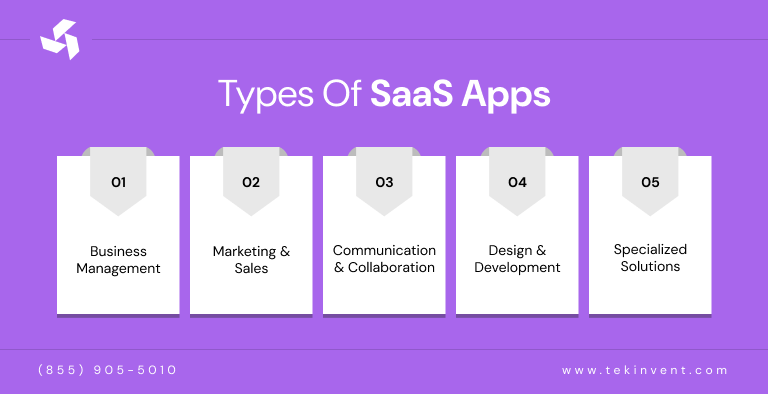
SaaS applications come in many forms, each designed to solve specific business challenges and support different operational needs. From managing internal workflows to driving customer engagement and enabling collaboration, SaaS platforms power modern digital ecosystems. Understanding the different types of SaaS applications helps businesses choose the right model, define feature priorities, and build scalable solutions aligned with long-term growth objectives.
1. Business Management
Business management SaaS applications help organizations manage core operations such as finance, HR, project management, supply chains, and analytics. These platforms centralize data, automate repetitive tasks, and improve decision-making through real-time insights. By reducing manual processes and improving operational visibility, business management SaaS solutions enable companies to scale efficiently while maintaining control and compliance.
2. Marketing & Sales
Marketing and sales SaaS applications focus on customer acquisition, engagement, and revenue growth. They support activities such as campaign management, lead nurturing, CRM, email automation, and performance tracking. These tools help businesses personalize customer journeys, optimize conversion funnels, and align sales and marketing teams, resulting in higher ROI and predictable growth.
3. Communication & Collaboration
Communication and collaboration SaaS platforms enable teams to work together efficiently, regardless of location. These applications include messaging systems, video conferencing, document sharing, and project collaboration tools. By improving transparency and real-time communication, they reduce delays, support remote work, and enhance productivity across distributed teams and organizations.
4. Design & Development
Design and development SaaS applications support the creation, testing, and deployment of digital products. They include tools for UI/UX design, code management, prototyping, DevOps, and continuous integration. These platforms help teams collaborate faster, reduce development cycles, and maintain product quality while adapting quickly to changing business and user requirements.
5. Specialized Solutions
Specialized SaaS solutions are built to serve specific industries or niche use cases such as healthcare, fintech, education, or logistics. These applications address unique workflows, compliance requirements, and operational challenges. By offering tailored functionality instead of generic features, specialized SaaS platforms deliver higher value, better adoption, and stronger competitive advantages.
Benefits of SaaS Development
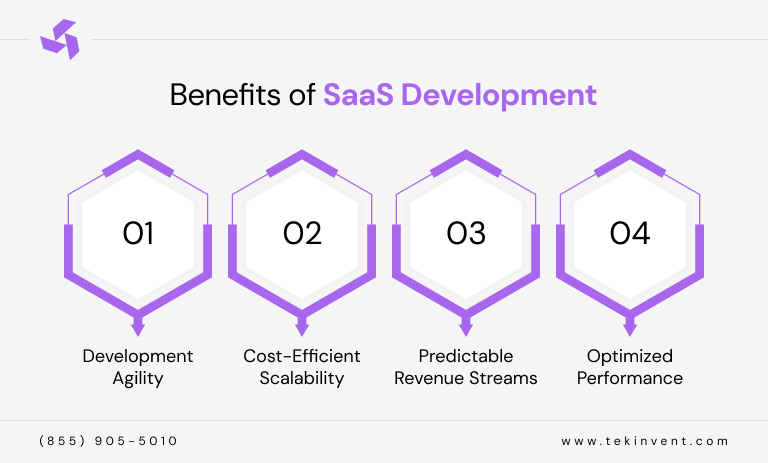
SaaS development continues to be a powerful growth driver for businesses in 2026, offering several strategic advantages:
1. Development Agility
SaaS platforms enable rapid iteration and feature enhancements without relying on manual updates or hardware upgrades. Cloud-based access allows users to work from anywhere, while development teams can respond quickly to evolving market and customer demands.
2. Cost-Efficient Scalability
With flexible subscription models, SaaS allows businesses to launch with minimal investment and scale gradually. Feature-based pricing makes it easier to align costs with user needs, improving affordability and value for both providers and customers.
3. Predictable Revenue Streams
Recurring subscription plans create consistent, forecastable revenue through monthly or annual billing, helping businesses plan growth, manage cash flow, and attract long-term investors.
4. Optimized Performance
By running on centralized, cloud-hosted infrastructure, SaaS applications deliver faster load times, smoother interactions, and more reliable performance compared to traditional on-premise software.
SaaS Application Development Challenges
Even when following Agile and Lean practices, developing SaaS applications presents unique challenges that require careful planning and strategy:
1. Understanding Customer Needs
One of the biggest hurdles is building a product that truly meets evolving customer expectations. Success requires a customer-centric approach, thorough research, and continuous integration of user feedback throughout the development process.
2. Building a Service-Oriented Team
A skilled, service-focused team is essential for SaaS success. Hiring professionals experienced in SaaS development ensures the team understands project nuances and delivers solutions that effectively solve user problems.
3. Choosing the Right Technology Stack
Selecting an appropriate technology stack is critical for scalability and performance. Consulting SaaS experts helps identify technologies that align with project goals, enabling robust and future-ready applications.
4. Cloud Migration Challenges
For applications transitioning from on-premise to cloud, a well-defined migration strategy is key. Whether moving physical-to-virtual, virtual-to-cloud, or other combinations, careful planning ensures minimal downtime and seamless adoption.
How to Build a SaaS Application: Step-by-Step
Developing a cloud-based SaaS application requires a structured approach to ensure it is scalable, reliable, and user-friendly. The following step-by-step guide walks you through the entire process from ideation to launch and beyond:
Step 1: Validate Your Idea and Conduct Market Research
Start by assessing the viability of your SaaS concept. Identify your target audience, understand their pain points, and analyze competitors to ensure your product meets market demand.
Step 2: Define Your Business Model
Decide how your SaaS will generate revenue. Choose between subscription tiers, freemium models, or one-time payments, aligning your pricing with customer expectations and business goals.
Step 3: Plan Your Application Features
Outline the core functionalities of your SaaS platform. Prioritize features based on market research and the value they deliver to users, ensuring a focused and impactful product.
Step 4: Choose the Right Technology Stack
Select technologies for your frontend, backend, database, and other essential components. Consider scalability, maintainability, and the availability of skilled developers to support future growth.
Step 5: Design UX and UI
Focus on simplicity, usability, and accessibility. Develop wireframes and prototypes to map the user journey. Keep mobile-first design in mind, as it remains a key trend in SaaS development.
Step 6: Develop the SaaS Application
Use agile methodologies to iteratively build, test, and refine your platform. Ensure the development aligns with planned features and design specifications.
Step 7: Ensure Security and Compliance
Implement strong security protocols to protect user data. Ensure compliance with regulations like GDPR or HIPAA from the outset to avoid legal and operational risks.
Step 8: Test Thoroughly
Conduct extensive testing, including functional, performance, cloud security, and user acceptance tests, to identify and resolve issues before launch.
Step 9: Deploy Your Application
Host your SaaS on a reliable cloud provider. Monitor performance closely during and after deployment to ensure stability and responsiveness.
Step 10: Launch and Market Your Product
Prepare a marketing strategy that includes SEO, social media, content campaigns, and email outreach to attract and engage users effectively.
Step 11: Gather Feedback and Iterate
Collect user feedback through surveys, analytics, and usability tests. Use insights to refine features, enhance usability, and address emerging needs.
Step 12: Continuous Improvement and Scaling
Regularly update your SaaS with new features and improvements. Plan infrastructure scaling to accommodate growing user demand and maintain high performance.
Following this structured approach ensures your SaaS application meets user expectations, delivers value, and remains competitive in a rapidly evolving market.
SaaS Development Team Structure
A successful SaaS project relies on a well-organized, cross-functional team. At the helm, a Project Manager coordinates tasks, monitors timelines, and ensures alignment with project goals. A Business Analyst evaluates market opportunities to guide a robust business strategy, while a UX/UI Designer creates intuitive, visually consistent user experiences.
Back-end Developers manage server-side functionality and integrations, while Front-end Developers bring designs to life through interactive interfaces. QA Engineers ensure the application is reliable and bug-free through thorough testing.
Depending on project needs, additional roles such as Technical Writers, Marketing Specialists, Product Managers, or DevOps Engineers may be required to support product delivery and scalability. Partnering with a skilled software development vendor can help assemble a complete, product-focused team efficiently.
Choosing the Tech Stack and Engineering for SaaS
Selecting the right technology stack is crucial for building scalable, reliable, and user-friendly SaaS applications. The tech stack forms the backbone of your platform, enabling efficient development, smooth performance, and long-term maintainability. Below are key technologies widely used in SaaS development in 2026:
Programming Languages
- JavaScript: Versatile for both frontend and backend, especially with frameworks like Node.js.
- Python: Known for simplicity and rapid development with Django or Flask.
- Ruby: Ruby on Rails simplifies development through convention over configuration.
- Java: Offers robustness and portability, ideal for enterprise-level SaaS solutions.
Frontend Technologies
- React: A flexible JavaScript library for creating dynamic user interfaces.
- Angular: A complete framework for building interactive web applications.
- Vue.js: Progressive framework for single-page applications and responsive UIs.
Backend Technologies
- Node.js: Enables scalable backend development using JavaScript.
- Django: High-level Python framework for clean and efficient backend development.
- Spring Boot: Streamlines Java-based SaaS application development and deployment.
Database Management Systems
- PostgreSQL: Advanced open-source relational database with strong reliability.
- MongoDB: Scalable NoSQL database for document-oriented data storage.
- MySQL: Popular, efficient relational database system for diverse applications.
Cloud Platforms
- AWS (Amazon Web Services): Comprehensive infrastructure with computing, storage, and networking.
- Google Cloud Platform: Cloud services built on Google’s powerful internal infrastructure.
- Microsoft Azure: Extensive cloud services supporting enterprise SaaS deployment.
DevOps and Automation Tools
- Docker: Containerization platform ensuring consistency across development and production.
- Kubernetes: Automates deployment, scaling, and management of containerized applications.
- Jenkins: Open-source automation server for continuous integration and delivery.
Other Essential Tools
- Git: Version control system for tracking code changes throughout development.
- GraphQL: Query language for APIs enabling precise and efficient data retrieval.
Choosing the right combination of these technologies ensures your SaaS application is scalable, secure, and efficient, empowering your team to deliver a robust product that meets modern business and user expectations.
The Cost of SaaS Development
The cost of developing a SaaS application depends on multiple factors, including the project’s complexity, chosen tech stack, required features, team size, and deployment strategy. Understanding these elements helps businesses budget effectively and plan for scalable growth. Below is an estimated breakdown of costs associated with SaaS development in 2026:
| Cost Factor | Description | Estimated Range (USD) |
| Idea Validation & Research | Market research, competitor analysis, and concept validation | $2,000 – $10,000 |
| UI/UX Design | Wireframes, prototypes, and interface design | $5,000 – $20,000 |
| Frontend Development | Coding the client-side interface and interactivity | $10,000 – $50,000 |
| Backend Development | Server-side logic, database setup, APIs, and integrations | $15,000 – $70,000 |
| Testing & QA | Functional, performance, and security testing | $5,000 – $15,000 |
| Cloud Hosting & Infrastructure | Cloud platform setup, scaling, and server costs | $500 – $5,000/month |
| Maintenance & Updates | Ongoing support, feature updates, and security patches | $2,000 – $10,000/year |
| Marketing & Launch | Pre-launch campaigns, digital marketing, and onboarding | $3,000 – $15,000 |
Key Considerations:
- Complexity: More advanced features like AI integration, multi-tenancy, or custom analytics increase costs.
- Team Structure: In-house teams may incur higher costs compared to outsourcing to experienced SaaS vendors.
- Scalability: Planning infrastructure and features for growth upfront may increase initial investment but reduces long-term costs.
- Compliance & Security: Meeting regulations such as GDPR, HIPAA, or SOC 2 adds to development and operational expenses.
Careful planning and budgeting allow businesses to optimize development costs while building a scalable, high-performing SaaS application that delivers long-term value.
Final Thoughts
Building a SaaS application in 2026 requires strategic planning, the right technology stack, and a skilled, cross-functional team. By understanding architecture options, development best practices, costs, and scaling strategies, businesses can create secure, efficient, and user-friendly platforms. With continuous iteration and customer-focused improvements, SaaS solutions offer a scalable, future-ready approach that drives growth, enhances competitiveness, and delivers lasting value.

Build Smart with The Right Team.
We bring expertise, technology, and trust you look for in your digital journey.