
Choosing the right technology stack is one of the most critical decisions when building a successful online store. Whether you’re launching a new platform or upgrading an existing one, the technologies you choose directly impact performance, scalability, security, and user experience.
For businesses investing in ecommerce app development, this decision becomes even more important, as your tech stack must support smooth mobile experiences, quick load times, and smooth integrations across all devices and platforms.
An e-commerce technology stack includes front-end frameworks, back-end technologies, databases, payment gateways, and third-party integrations. Each component plays an important role in how your store functions and how customers interact with it.
A poor choice can lead to slow performance, limited scalability, and higher maintenance costs, while the right stack sets the foundation for long-term growth.
In this guide, we’ll walk you through how to choose an e-commerce technology stack that aligns with your business goals, budget, and growth plans.
Whether you need flexibility, speed, or enterprise-level scalability, this practical guide will help you make an informed, future-ready decision.
What is a Tech Stack?
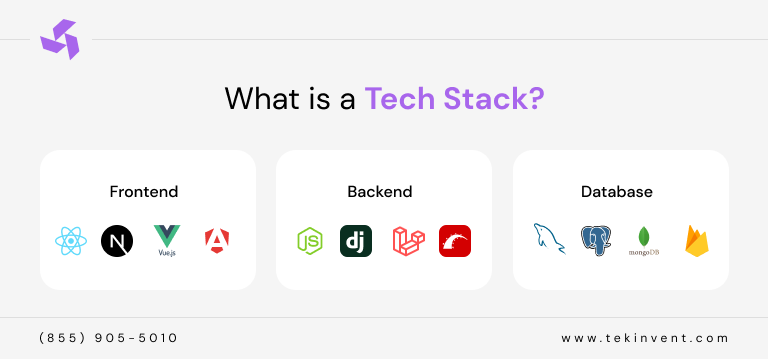
A technology stack refers to the collection of frameworks, programming languages, tools, platforms, and software solutions used to build and run a website or mobile application. In the retail and online selling space, this combination is commonly known as an e-commerce technology stack.
It acts as the foundation of your online store, supporting everything from how your website looks and performs to how orders, payments, and customer data are managed. Choosing the right stack is crucial because it directly influences your store’s speed, scalability, security, and overall customer experience.
The term “technology stack” comes from the way different technologies are layered together, with each layer performing a specific function while supporting the others. When these technologies work seamlessly, they create a reliable and fully functional digital ecosystem that keeps your e-commerce platform running efficiently.
An e-commerce technology stack is generally divided into two main components. The front-end, also known as the client-facing side, focuses on the visual and interactive elements customers engage with. The back-end, or server-facing side, manages data processing, server operations, and core business logic that powers the platform. Let’s explore both components in more detail to better understand their role in building a successful e-commerce solution.
Understanding the Technology Stack for E-Commerce Development
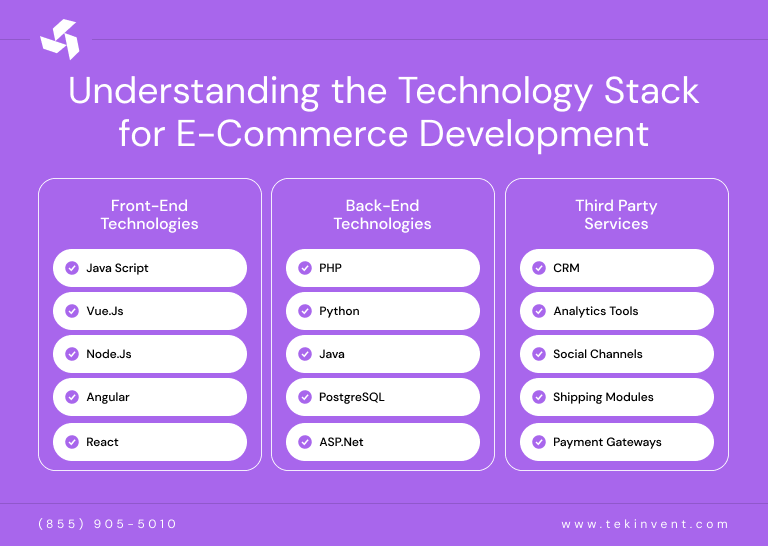
Selecting the right technology stack for your e-commerce platform is a crucial decision that can significantly influence your business success. Even the smallest delay in page loading speed can affect customer experience, reduce engagement, and ultimately lower conversion rates and revenue. A well planned tech stack ensures that your online store performs smoothly, handles high traffic efficiently, and delivers a seamless shopping journey across devices.
While product features and functionality are important, businesses must also pay close attention to how different technologies are connected and distributed within the system. Strong integration between various components helps maintain platform stability, improves scalability, and allows your store to grow without performance issues.
Another helpful approach when planning your platform is to create a visual representation of your technology framework. An e-commerce tech stack diagram can help you understand how different elements such as front end interfaces, back end systems, databases, APIs, and third party tools work together.
This visual mapping makes it easier to identify potential gaps, streamline integrations, and ensure that every layer of your e-commerce ecosystem supports business growth and customer satisfaction.
1. Popular Front-End Technologies Used in E-Commerce
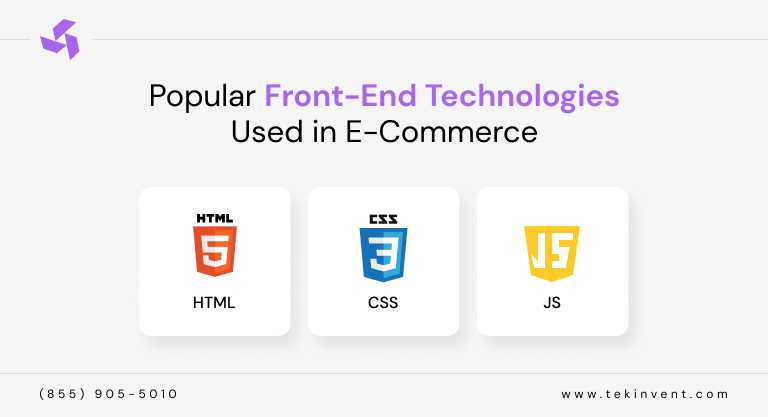
The first and foremost is front-end technologies because that’s what the user sees when they visit your website or open your mobile app. Every e-commerce website relies on a set of core technologies that form the foundation of the front-end. At the most basic level, these include HTML, CSS, and JavaScript.
In addition to these fundamental technologies, advanced styling tools like SCSS, LESS, and SASS are often used as well to simplify and enhance CSS management. Once the code is ready to go live, Gulp, WebPack, and Grunt, come into the picture for fast assembly. Hence, the final output is created that’s efficient, fast, and ready for deployment.
From the smallest button to the full page layout, the developers create every detail carefully. Their goal is to deliver a seamless and visually appealing experience. You can’t really pick and choose the front-end technologies because the three basic ones work together. Let’s look at what each does in detail.
1.1. HTML
HTML, or HyperText Markup Language, forms the backbone of every e-commerce website. It structures the content, including text, images, buttons, and links. Every page starts with HTML.
It allows developers to organize content logically, making it accessible and readable for browsers and search engines. Without HTML, a website cannot exist.
1.2. CSS
CSS, or Cascading Style Sheets, handles the styling of your e-commerce platform. It defines colors, fonts, layouts, spacing, and responsive design across devices.
Using CSS, developers ensure the website looks polished and consistent. Advanced tools like SASS, SCSS, and LESS make styling efficient and maintainable.
1.3. JavaScript
JavaScript powers interactivity on your online store. It enables dynamic elements like image sliders, dropdown menus, and real-time content updates without page reloads.
Popular libraries and frameworks such as React, Vue, Angular, and jQuery simplify front-end development. JavaScript ensures smooth, engaging experiences for users.
2. Popular Back-End Technologies Used in E-Commerce
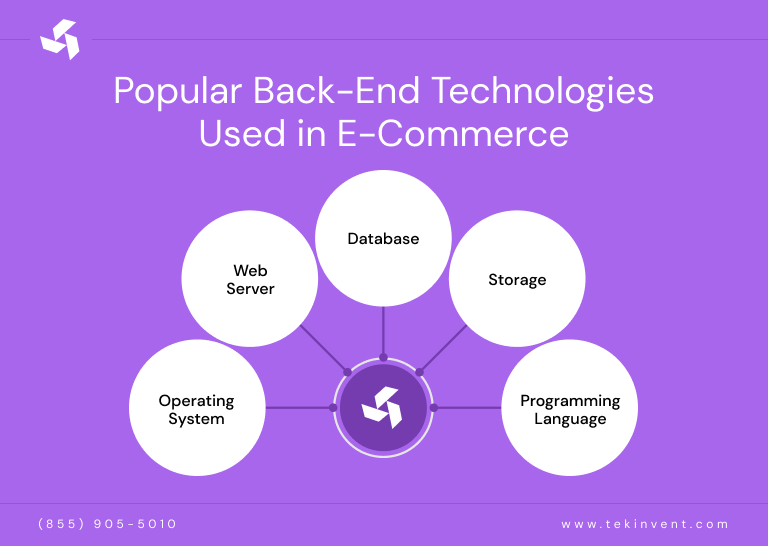
The back end is the engine that powers your e-commerce platform behind the scenes. It handles critical operations such as processing transactions, managing inventory, and storing customer data.
It also connects various services, including payment gateways, shipping providers, and third-party APIs, ensuring everything works seamlessly. These systems form the operational core of your e-commerce technology stack.
Without a strong back end, even the most visually appealing front end cannot function properly. It ensures that every order, payment, and customer interaction is processed accurately and efficiently.
A well-designed back end improves website performance, supports scalability, and allows your store to grow without disruption. In essence, it drives every transaction and interaction, making it the backbone of a successful e-commerce platform.
2.1. Operating systems
The operating system forms the foundation of your back-end environment. It manages hardware, runs applications, and provides a stable platform for your e-commerce server. Choosing the right OS ensures reliability, security, and compatibility with your chosen tools and frameworks.
Popular Options:
- Linux (Ubuntu, CentOS, Debian)
- Windows Server
- macOS (for development/testing environments)
2.2. Web Server
Web servers handle requests from users and deliver content from your back end to the front end. They are crucial for performance, scalability, and uptime of your e-commerce platform.
Popular Options:
- Apache HTTP Server
- Nginx
- Microsoft IIS
- LiteSpeed
2.3. Databases
Databases store and organize all essential information, including product catalogs, user accounts, orders, and transactions. The right database ensures fast access, reliability, and data integrity.
Popular Options:
- MySQL
- PostgreSQL
- MongoDB
- Microsoft SQL Server
- Oracle Database
2.4. Storage
Storage solutions manage static assets like images, videos, and downloadable files. Scalable and secure storage is critical for handling high traffic and large media libraries.
Popular Options:
- Amazon S3
- Google Cloud Storage
- Microsoft Azure Blob Storage
- Local server storage (on-premise)
2.5. Programming language
The programming language defines the logic and functionality of your e-commerce platform. Choosing the right language ensures faster development, easier maintenance, and compatibility with frameworks and libraries.
Popular Options:
- PHP (Laravel, Symfony)
- Python (Django, Flask)
- JavaScript (Node.js)
- Java (Spring)
- Ruby (Ruby on Rails)
Proven Web Development Technology Stacks Businesses Trust
Choosing the right web development technology stack can determine the success of your e-commerce platform. A proven stack ensures performance, security, scalability, and long-term maintainability.
Over the years, businesses have relied on certain technology combinations that consistently deliver reliable results. These stacks are widely trusted for building everything from small online stores to enterprise-level e-commerce platforms.
1. .NET Stack
The .NET stack, developed by Microsoft, is ideal for building robust, secure, and scalable web applications. It supports multiple programming languages like C# and VB.NET and integrates seamlessly with Microsoft tools and Azure cloud services. Businesses often choose .NET for enterprise-level platforms requiring high security and complex functionality.
2. Python-Django
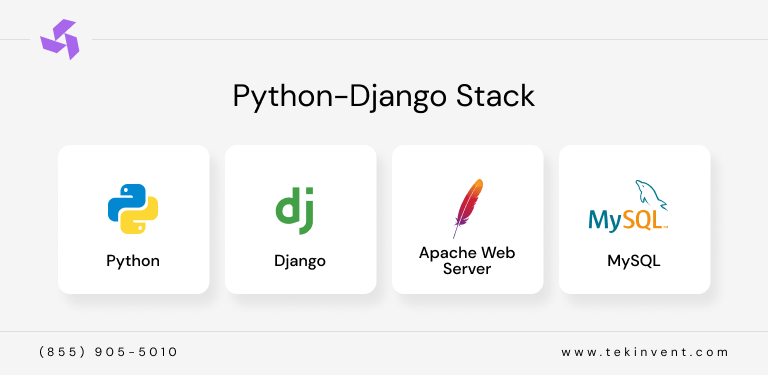
Python combined with the Django framework offers a fast, clean, and scalable development environment. Django simplifies backend development with built-in security features, admin panels, and ORM (Object-Relational Mapping). This stack is popular for e-commerce sites that require rapid development and easy maintenance.
3. LAMP
The LAMP stack includes Linux, Apache, MySQL, and PHP. It is one of the most widely used stacks for web development. Its open-source nature makes it cost-effective while providing reliability, flexibility, and strong community support. LAMP is a go-to choice for many small to medium e-commerce stores.
4. MEAN Stack
The MEAN stack uses MongoDB, Express.js, Angular, and Node.js, offering a full JavaScript environment for both front-end and back-end development. It is highly scalable and ideal for real-time applications, single-page apps, and modern, interactive e-commerce platforms.
The Best Examples of E-Commerce Brand with A Tech Stack
Successful e-commerce brands are not just defined by their products but by the technology stacks that power their platforms. A carefully chosen tech stack ensures fast performance, seamless shopping experiences, secure transactions, and scalable operations.
Leading brands around the world leverage advanced technology to create robust and reliable online stores that consistently meet customer expectations. Let’s explore some of the best examples and the tech stacks behind their success.
1. Amazon

Amazon uses a highly complex and scalable tech stack that includes Java, Python, and AWS cloud services. Its backend architecture supports millions of transactions daily, while frontend technologies provide a responsive and user-friendly shopping experience.
2. Walmart

Walmart relies on a combination of Java, Node.js, and cloud services like Google Cloud and Akamai for fast, reliable, and secure e-commerce operations. Their stack allows high traffic handling and real-time inventory management.
3. Target

Target’s e-commerce platform leverages Java, Spring, and React along with cloud infrastructure to ensure smooth performance across web and mobile apps. This stack supports personalized shopping and quick checkout processes.
4. Patagonia
Patagonia focuses on sustainability while providing a seamless online experience. Their tech stack includes Ruby on Rails for backend development and React for frontend interfaces, ensuring flexibility and maintainability.
5. Sephora

Sephora combines Magento, Java, and React to create a visually rich, interactive shopping experience. The stack enables advanced product recommendations, real-time inventory updates, and omnichannel integration.
6. Purple

Purple, the mattress brand, uses Shopify along with custom APIs and JavaScript frameworks for a fast, mobile-friendly e-commerce platform. Their stack supports smooth transactions and personalized marketing.
The Important Tools to Scale Your Business

Scaling an e-commerce business requires more than just a visually appealing website or mobile app. The right tools streamline operations, improve efficiency, and enhance customer experiences. From managing payments and inventory to analyzing user behavior and automating marketing campaigns, these tools form the backbone of a scalable and sustainable online store.
Selecting the right solutions ensures your business can handle growth, boost conversions, and maintain seamless operations as your customer base expands.
1. Payment Gateways and Checkout Solutions
Payment gateways process transactions securely and efficiently, ensuring a smooth checkout experience for customers. Choosing reliable gateways reduces cart abandonment and increases conversions.
Popular Options:
- PayPal
- Stripe
- Square
- Authorize.Net
- Braintree
2. Order Management and Inventory Systems
These tools help track orders, manage stock levels, and synchronize inventory across multiple sales channels. Efficient systems prevent overselling and streamline fulfillment processes.
Popular Options:
- TradeGecko
- Zoho Inventory
- NetSuite
- Orderhive
- ShipBob
3. Customer Authentication and Account Management
Secure authentication and user account management protect customer data and simplify login processes. They also enable personalized experiences and loyalty programs.
Popular Options:
- Okta
- Auth0
- Firebase Authentication
- OneLogin
- Amazon Cognito
4. Shipping, Logistics, and Fulfillment Integrations
Integrating shipping and fulfillment tools automates order tracking, shipping label creation, and delivery notifications, reducing errors and enhancing customer satisfaction.
Popular Options:
- ShipStation
- EasyPost
- Shippo
- FedEx APIs
- UPS APIs
5. Analytics, Conversion Tracking, and User Behavior Tools
These tools provide insights into customer behavior, conversion rates, and overall website performance, allowing businesses to make data-driven decisions.
Popular Options:
- Google Analytics
- Hotjar
- Mixpanel
- Kissmetrics
- Adobe Analytics
6. Marketing Automation and CRM Integrations
Marketing automation and CRM tools help manage campaigns, track leads, and nurture customer relationships at scale. They ensure consistent engagement and increased sales.
Popular Options:
- HubSpot
- Salesforce
- Mailchimp
- ActiveCampaign
- Klaviyo
7. Security, Fraud Detection, and Compliance Tools
Security and compliance tools protect sensitive customer and business data while preventing fraud and ensuring adherence to regulations like GDPR and PCI DSS.
Popular Options:
- Cloudflare
- Sift
- Signifyd
- McAfee SECURE
- Qualys
Leading Platforms for Modern E-Commerce Development
Choosing the right platform is a key step in building a scalable and high-performing e-commerce store. Modern platforms offer flexibility, security, and integration options that support growth, enhance user experiences, and streamline business operations. Selecting the best platform depends on your business size, budget, technical expertise, and desired features. Here’s a detailed look at the leading platforms powering today’s e-commerce success stories.
1. Shopify
Shopify is a popular hosted platform known for its ease of use, speed, and robust app ecosystem. It is ideal for small to medium-sized businesses and supports both online stores and POS systems.
Popular Options and Integrations:
- Shopify Payments
- Oberlo
- Klaviyo
- Mailchimp
- Stripe
2. WooCommerce
WooCommerce is a flexible plugin for WordPress, allowing businesses to turn any WordPress site into a fully functional online store. It is highly customizable and ideal for businesses already using WordPress.
Popular Options and Integrations:
- PayPal
- Stripe
- Jetpack
- Yoast SEO
- ShipStation
3. Magento (Adobe Commerce)
Magento is a powerful open-source platform designed for enterprise-level e-commerce. It offers extensive customization, multi-store support, and advanced features for large-scale online stores.
Popular Options and Integrations:
- Adobe Sensei
- Klarna
- Amazon Pay
- Avalara
- ElasticSearch
4. BigCommerce
BigCommerce is a SaaS platform that provides a scalable and secure solution for growing e-commerce businesses. It offers strong SEO capabilities, multi-channel selling, and built-in marketing tools.
Popular Options and Integrations:
- PayPal
- Stripe
- HubSpot
- Klaviyo
- ShipStation
5. Wix eCommerce
Wix is a beginner-friendly platform that allows businesses to create visually appealing online stores quickly. It is ideal for small businesses and entrepreneurs with minimal technical expertise.
Popular Options and Integrations:
- Wix Payments
- Square
- ShipStation
- PayPal
- Mailchimp
6. Salesforce Commerce Cloud
Salesforce Commerce Cloud is an enterprise-level platform built for global e-commerce operations. It offers AI-driven personalization, advanced analytics, and seamless CRM integration.
Popular Options and Integrations:
- Salesforce Marketing Cloud
- MuleSoft
- Stripe
- PayPal
- Avalara
Tips for Choosing the Right Tech Stack

Selecting the right technology stack is one of the most critical decisions for building a successful e-commerce platform. Your tech stack impacts performance, security, scalability, and the overall customer experience. Making the right choice ensures your online store can handle growth, provide fast and seamless interactions, and remain maintainable over time. Here are some practical tips to guide businesses in choosing the ideal technology stack.
1. Define Your Business Goals and Requirements
Start by clearly identifying your business objectives. Consider the type of products you sell, target audience, expected traffic, and required features. A well-defined goal helps determine which technologies best align with your needs.
2. Consider Scalability and Future Growth
Choose technologies that can grow with your business. Your stack should handle increased traffic, additional product lines, and new features without major overhauls or performance issues.
3. Evaluate Performance and Speed Requirements
Page load times, response speed, and overall system performance directly impact user experience and conversions. Select technologies optimized for fast, reliable performance under high traffic.
4. Prioritize Security and Compliance
Ensure your stack includes robust security measures to protect customer data. Compliance with standards like PCI DSS and GDPR is essential for e-commerce businesses.
5. Assess Development and Maintenance Costs
Consider the cost of development, licensing, hosting, and ongoing maintenance. Open-source solutions can reduce upfront costs, but may require more developer expertise.
6. Ensure Third-Party Integration Compatibility
Your tech stack should easily integrate with payment gateways, shipping providers, analytics tools, and marketing platforms. Seamless integrations save time and improve operational efficiency.
7. Focus on User Experience and Mobile Responsiveness
Choose technologies that enable intuitive navigation, responsive design, and fast interactions across devices. A positive user experience increases engagement and conversion rates.
8. Choose Technologies with Strong Community Support
Opt for proper tools, frameworks, and languages with active communities. Strong community support ensures access to tutorials, plugins, updates, and troubleshooting help when needed.
Final Thoughts
Choosing the right e-commerce technology stack is a decision that can make or break your online store. Every component, from front-end frameworks and back-end technologies to databases, APIs, and third-party integrations, plays a vital role in performance, scalability, security, and user experience. A carefully selected stack ensures fast load times, smooth mobile experiences, and seamless integrations across all platforms, creating a reliable and engaging shopping journey for customers.
By analyzing your business goals, expected traffic, growth plans, and technical requirements, you can select technologies that not only meet current needs but also support long-term scalability. Proven stacks like .NET, Python-Django, LAMP, and MEAN, along with modern platforms such as Shopify, WooCommerce, and Magento, provide businesses with flexibility, speed, and maintainability.
Ultimately, a well-planned tech stack empowers your e-commerce business to operate efficiently, adapt to evolving customer expectations, and grow sustainably. Investing time in choosing the right technologies today lays the foundation for a successful, future-ready online store.

Build Smart with The Right Team.
We bring expertise, technology, and trust you look for in your digital journey.