
Web3 is reshaping how mobile applications are built, owned, and experienced by users. As decentralized technologies continue to mature, iOS apps are no longer limited to traditional backend systems and centralized data models. Instead, they are evolving into secure, transparent, and user-owned platforms powered by blockchain, smart contracts, and decentralized networks.
Web3 iOS app development brings a new layer of innovation to the Apple ecosystem, enabling features such as crypto wallets, decentralized authentication, NFT integration, and blockchain-based transactions. For startups and enterprises alike, this shift opens the door to building trust-driven digital products that align with the future of the internet.
In this complete guide, we’ll explore the essential tools, emerging trends, and core technologies shaping Web3 iOS app development, helping businesses and developers understand what it takes to build next-generation decentralized iOS applications.
What is Web3?
Web3 is the next generation of the internet, built on blockchain and decentralized technologies. Unlike traditional web platforms that rely on central servers, Web3 empowers users with ownership of their data, digital assets, and online identities. It enables decentralized applications (dApps), smart contracts, and peer-to-peer interactions without intermediaries.
By combining security, transparency, and trustless systems, Web3 is transforming how digital platforms operate. For developers, understanding Web3 is essential for creating applications that leverage tokenization, decentralized finance, NFTs, and other innovative features shaping the future of digital experiences.
Why is Web3 Important for iOS App Development?
Web3 is redefining how iOS apps are designed, built, and experienced. Integrating blockchain, decentralized authentication, and crypto-enabled features allows iOS apps to offer enhanced security, transparency, and user control. Developers can build apps with decentralized finance functionalities, NFT marketplaces, and secure peer-to-peer interactions.
For businesses, adopting Web3 iOS app development means staying ahead of the innovation curve, attracting tech-savvy users, and creating applications that align with the future of mobile technology. Essentially, Web3 equips iOS apps to be more secure, user-centric, and adaptable to emerging digital trends.
The Evolution of Web3: Essential Concepts to Know
Web3 represents the next evolution of the internet, moving beyond Web2’s interactive user experiences to a decentralized ecosystem powered by blockchain. Unlike traditional web platforms, Web3 is open, trustless, and permissionless, giving users full ownership of their data, identity, and online actions while maintaining privacy through blockchain technology.
To navigate this transformative landscape, it’s essential to understand some key concepts:
1. Crypto Wallets

Crypto wallets serve as the gateway to the decentralized web. Beyond storing cryptocurrencies, they act as secure digital IDs, enabling users to interact with decentralized applications (DApps) without revealing personal information.
2. Smart Contracts

Smart contracts are self-executing digital agreements triggered by predefined conditions. Unlike conventional contracts, they don’t require intermediaries, ensuring trustless and automated execution. They power a wide range of decentralized apps, from exchanges to royalty distribution for artists.
3. Decentralized Storage

Decentralized storage solutions, such as IPFS and Filecoin, distribute data across multiple nodes worldwide. Unlike traditional cloud storage, no single entity controls the data, making it more resistant to censorship and centralized control.
4. Non-Fungible Tokens (NFTs)

NFTs are unique digital assets recorded on the blockchain, representing ownership of items such as art, collectibles, or digital content. Unlike cryptocurrencies like Bitcoin or Ethereum, NFTs are non-interchangeable due to their unique properties.
5. Decentralized Finance (DeFi)

DeFi is a blockchain-based financial ecosystem that offers services such as borrowing, trading, and investing without traditional intermediaries. By removing middlemen, DeFi aims to decentralize finance and give users more control over their assets.
6. Smart Contract Development for Web3 Mobile Apps

The DeFi and Web3 ecosystem is constantly evolving. Developing smart contracts and Web3 mobile applications offers opportunities to innovate, disrupt markets, and create scalable solutions for businesses and individuals ready to leverage the decentralized future.
Tools and Technologies Used for Web3 iOS App Development

Developing Web3 iOS applications requires a blend of modern programming tools, blockchain frameworks, and decentralized technologies. From coding environments to wallet integrations, developers must be well-versed in tools that facilitate secure transactions, smart contract execution, and data decentralization. Below is a breakdown of the essential tools and technologies shaping Web3 iOS app development:
1. Programming Language and Environment
– Swift: Apple’s preferred language for iOS apps, Swift allows developers to implement app logic, user interfaces, and Web3-specific components efficiently.
– Xcode: The official IDE for iOS development, Xcode includes a graphical interface builder, testing tools, and deployment capabilities.
2. Web3 Libraries for iOS
– EthereumKit: Enables smooth interaction with Ethereum nodes, wallet management, and smart contract calls.
– Web3.swift: Simplifies Ethereum integration across Apple platforms, handling transactions, node connections, and contract interactions.
– Flutter Web3: A cross-platform library that enables smart contract integration, WalletConnect support, and blockchain interactions in Flutter apps.
3. Wallet Integration Tools
– WalletConnect: Connects mobile wallets to DApps securely using QR codes.
– Trust Wallet SDK: Enables users to manage cryptocurrencies directly within iOS apps.
– MetaMask Mobile: Integrates mobile wallets with DApps, facilitating blockchain transactions.
4. Blockchain Network Providers
– Infura: Offers APIs to interact with Ethereum without running your own node.
– Alchemy: Provides scalable blockchain infrastructure and enhanced API support.
– Moralis: A Web3 SDK for user authentication, transaction tracking, and data integration.
5. Smart Contract Development Tools
– Solidity: The most widely used language for Ethereum-based smart contracts.
– Remix: Browser-based IDE for authoring, testing, and deploying Solidity contracts.
– Truffle: Organizes, compiles, and deploys smart contracts efficiently.
6. Decentralized Storage Solutions
– IPFS (InterPlanetary File System): Stores files across a distributed network for censorship-resistant storage.
– Filecoin: A decentralized storage marketplace built on IPFS for secure file management.
7. Backend and Data Providers
– The Graph: Indexes blockchain data to simplify queries like transaction histories and contract-specific information.
– Chainlink: Connects smart contracts with external APIs and real-world data in a decentralized manner.
8. Development and Testing Tools
– Ganache: Simulates a personal Ethereum blockchain for testing transactions and contracts.
– Hardhat: IDE for compiling, deploying, testing, and debugging Solidity smart contracts.
Trends of Web3 in 2026
The Web3 ecosystem continues to evolve rapidly, introducing innovative ways for developers and businesses to create decentralized applications. Here are the key trends shaping the future of Web3 iOS apps in 2026:
1. Regulation Bringing Legitimacy to Innovation
Governments are increasingly clarifying blockchain and crypto regulations, providing legal frameworks that foster trust and wider adoption of Web3 apps.
2. Smarter dApps with AI and Web3
Integrating AI with decentralized applications allows for intelligent automation, personalized experiences, and smarter decision-making within Web3 iOS apps.
3. Tokenization Injects Liquidity into Real Assets
Tokenization enables physical assets, real estate, and collectibles to be represented digitally on the blockchain, increasing liquidity and investment opportunities.
4. DePINs and Blockchain Gaming Create New Value Layers
Decentralized Physical Infrastructure Networks (DePINs) and blockchain-based gaming are creating new ways for users to interact, earn, and participate in digital economies.
5. Decentralized Identity and Privacy by Design
User-centric identity management and privacy-first protocols are becoming standard, ensuring secure authentication and control over personal data.
6. Green Blockchain and Sustainable Innovation
Energy-efficient blockchain solutions are gaining traction, emphasizing sustainability without compromising the performance or security of decentralized applications.
The Process of Web3 iOS App Development at TekInvent
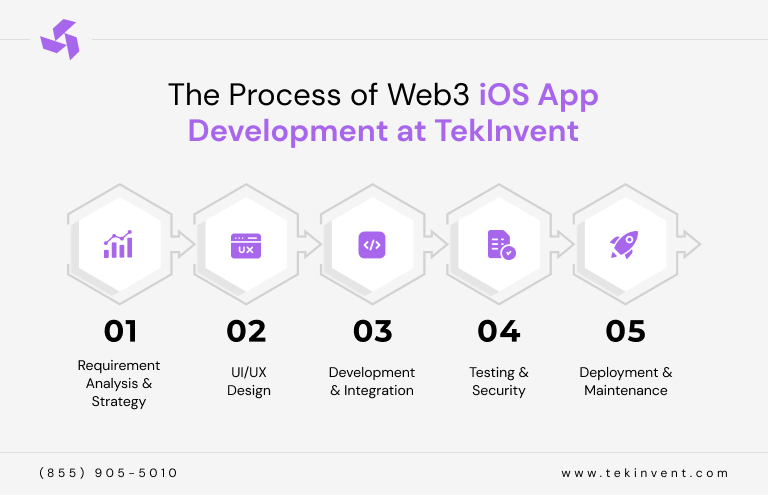
Developing a Web3 iOS application involves a structured approach to ensure security, usability, and seamless blockchain integration. The typical process includes:
1. Requirement Analysis & Strategy
Begin by identifying business objectives, target users, and the blockchain features the app requires to create a clear development roadmap.
2. UI/UX Design
Design intuitive, visually appealing interfaces that simplify interactions with decentralized networks while adhering to Apple’s design standards.
3. Development & Integration
Using Swift, Web3 libraries, and blockchain APIs, developers integrate smart contracts, wallets, and decentralized storage solutions to build a fully functional and secure app.
4. Testing & Security
Conduct thorough testing, including smart contract audits and transaction verification, to ensure performance, reliability, and data security.
5. Deployment & Maintenance
Launch the app and provide ongoing updates, feature enhancements, and maintenance to keep it scalable, secure, and aligned with emerging Web3 trends.
This structured process ensures that Web3 iOS apps are user-friendly, secure, and future-ready, while fully leveraging the benefits of decentralization.
Pros of Web3 iOS App Development
Web3 iOS apps offer several advantages over traditional applications, making them increasingly attractive for businesses and developers:
1. Enhanced User Ownership
Users gain full control over their data, digital assets, and identities, creating a trust-driven ecosystem.
2. Transparency and Security
Blockchain integration ensures that transactions, interactions, and smart contract operations are secure, immutable, and verifiable.
3. Decentralized Functionality
Removing intermediaries reduces reliance on central servers, increasing app reliability and resilience.
4. Innovation Opportunities
Features like NFTs, tokenized assets, DeFi services, and decentralized identity systems open new avenues for creative and monetizable solutions.
5. Global Accessibility
Web3 iOS apps can operate across borders without dependence on centralized financial systems, enabling broader user adoption.
By leveraging these benefits, businesses can build applications that are not only innovative but also align with the evolving expectations of modern users.
Challenges of Web3 iOS App Development
Despite its advantages, developing Web3 iOS applications comes with unique challenges that developers must address:
1. Complexity of Blockchain Integration
Implementing smart contracts, decentralized storage, and cross-chain functionality requires specialized knowledge.
2. Scalability Concerns
High transaction volumes on blockchain networks can lead to slower performance and higher costs.
3. Regulatory Uncertainty
Evolving government regulations on cryptocurrencies and decentralized platforms can impact app compliance.
4. User Adoption Barriers
Many users are unfamiliar with blockchain technology, wallets, and private keys, which can slow adoption.
5. Security Risks
While blockchain is secure, vulnerabilities in smart contracts, wallet integrations, or APIs can still be exploited if not carefully audited.
Understanding these challenges is critical for planning, designing, and deploying robust Web3 iOS apps that meet both user needs and technical standards.
What Does the Future Indicate for Web3 iOS App Development?
As users increasingly demand control over their data and online activities, Decentralized Identity (DID) is emerging as a cornerstone of the Web3 movement.
DID leverages blockchain and cryptography to allow users to create and manage their digital identities independently, without relying on central authorities such as social media platforms or government-issued IDs.
In the context of Web3 iOS app development, DID offers transformative potential. Imagine an app where users can authenticate themselves, access services, and sign transactions without sharing personal information with third-party servers. Instead of storing credentials in centralized databases, DID enables secure peer-to-peer authentication using public/private key pairs and verifiable credentials.
Popular DID frameworks like Sovrin, uPort, and Veramo are gaining traction among developers, providing tools to issue, request, and verify identity claims across platforms while enhancing interoperability.
As DID adoption grows, Web3 iOS apps that prioritize decentralized identity can meet regulatory requirements such as GDPR and CCPA, build stronger user trust, enhance control over personal data, and deliver a more inclusive, secure digital experience.
Final Thoughts
Web3 iOS app development is transforming the mobile landscape by introducing decentralization, enhanced security, and user empowerment. By leveraging blockchain, smart contracts, decentralized storage, and crypto-enabled features, iOS apps can move beyond traditional centralized systems, providing transparency, trust, and full control over personal data. Features like NFTs, tokenized assets, DeFi services, and decentralized identity systems are opening new avenues for innovation, creating opportunities for startups and enterprises to deliver engaging, future-ready digital experiences.
While the advantages of Web3 apps are significant, the development process presents unique challenges, including blockchain complexity, scalability concerns, regulatory uncertainty, and user adoption barriers. Addressing these challenges requires a structured approach, from requirement analysis and UI/UX design to development, testing, and ongoing maintenance. Developers must carefully select the right tools, libraries, and frameworks to ensure secure, scalable, and reliable applications.
Looking ahead, trends such as AI-integrated dApps, tokenization, DePIN networks, and green blockchain solutions will continue to redefine iOS app experiences. Decentralized Identity (DID) frameworks will empower users with privacy and autonomy while ensuring regulatory compliance. By embracing these innovations, businesses can create Web3 iOS apps that are not only technically robust but also user-centric, sustainable, and aligned with the next generation of mobile technology.

Build Smart with The Right Team.
We bring expertise, technology, and trust you look for in your digital journey.