
Augmented Reality continues to redefine how players interact with digital worlds, blurring the line between real and virtual experiences. As AR hardware becomes more powerful and smartphones continue to evolve, gaming is becoming more immersive, interactive, and context-aware, especially on mobile platforms.
In 2026, AR game development is no longer driven by novelty alone. Every forward-thinking mobile app development company is now leveraging artificial intelligence, spatial computing, cloud processing, and advanced device sensors to build AR games that feel realistic, responsive, and scalable. These technologies are transforming how players engage with games while helping businesses create deeper and more personalized experiences.
In this guide, we will explore the AR game development trends that will dominate 2026, highlighting the technologies and strategies shaping the future of immersive mobile gaming and helping developers and businesses stay competitive in a rapidly evolving market.
What is AR Game Development?
Augmented reality gaming integrates computer-generated digital assets with real-world environments to deliver interactive and immersive gameplay experiences. AR games utilize mobile devices, AR glasses, and head-mounted displays to overlay virtual objects, animations, and data onto physical surroundings in real time.
Unlike virtual reality, which creates a fully simulated digital environment, augmented reality enhances the physical world by enabling real-time interaction between digital content and the user’s environment through sensors, cameras, and spatial tracking technologies.
The Top AR Game Development Trends to Know in 2026
In 2026, AR game development is evolving rapidly. Developers and mobile app development companies are focusing on immersive gameplay powered by AR cloud streaming, 5G connectivity, and AI-driven interactions.
Mixed reality and wearable AR glasses are creating more natural, hands-free experiences, while multiplayer and shared environments enable players to connect across real and virtual spaces. These trends are shaping the future of AR gaming and how engaging experiences are designed.
1. AR Cloud Gaming

AR cloud gaming is transforming how augmented reality games are built and delivered by shifting heavy processing and rendering tasks to cloud infrastructure. Instead of relying entirely on device hardware, developers can stream complex AR content in real time, enabling richer graphics, persistent virtual environments, and seamless updates.
In 2026, AR cloud platforms will allow games to scale globally while maintaining consistent performance across devices, making high-quality AR experiences accessible to a wider audience.
2. 5G Powered AR Gaming
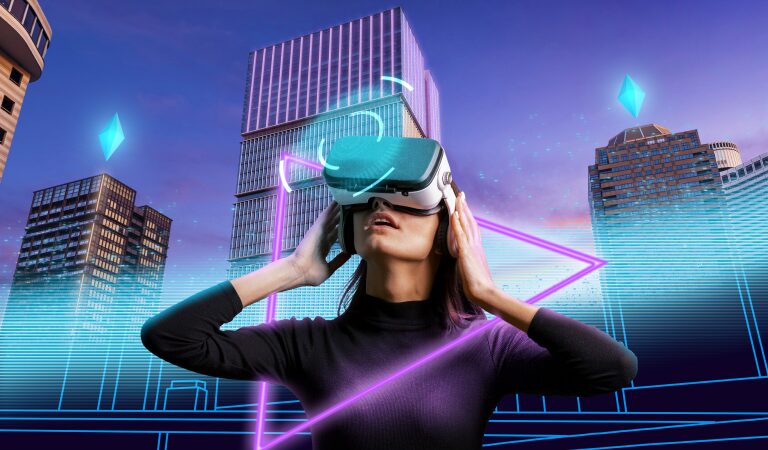
The rollout of 5G networks is playing a critical role in advancing AR game development. With ultra-low latency and faster data transfer speeds, 5G enables real-time interactions, smoother animations, and more responsive gameplay.
This technology supports complex AR features such as live multiplayer modes, real-time object recognition, and location-based gameplay, making AR games more immersive and reliable on mobile devices.
3. Mixed Reality Gaming
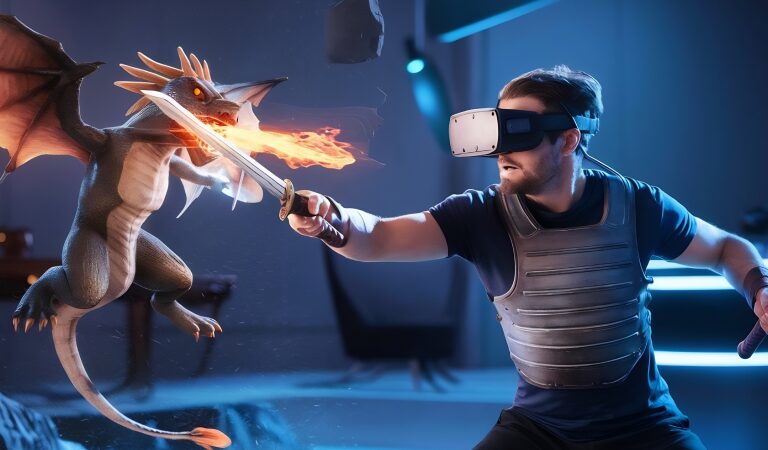
Mixed reality gaming is gaining momentum by combining elements of both augmented reality and virtual reality. This approach allows digital objects to interact intelligently with the physical environment, creating more realistic and dynamic gameplay.
In 2026, mixed reality games will leverage spatial mapping and depth sensing to understand room layouts, surfaces, and obstacles, allowing players to interact with virtual elements as if they exist naturally within their surroundings.
4. AI-Powered AR Experiences
Artificial intelligence is becoming a core component of advanced AR game development. AI algorithms enhance gameplay through intelligent non-player characters, adaptive difficulty levels, and personalized content based on user behavior.
In AR games, AI also improves object recognition, gesture tracking, and environmental understanding, enabling more realistic interactions between players and virtual elements. These capabilities help developers create smarter and more engaging AR gaming experiences.
5. Wearable AR Glasses
Wearable AR glasses are set to reshape how players experience augmented reality games. As hardware becomes lighter, more affordable, and more powerful, AR glasses will offer hands-free gameplay and a wider field of view compared to mobile devices.
In 2026, developers will increasingly design AR games optimized for wearable devices, focusing on gesture-based controls, voice interaction, and persistent overlays that blend seamlessly with the real world.
6. Multiplayer and Shared Experiences

Multiplayer and shared AR experiences are becoming a major focus in game development. These experiences allow multiple players to interact with the same virtual objects within a shared physical space or across different locations.
Using spatial anchors and real-time synchronization, developers can create collaborative gameplay, competitive modes, and social interactions that feel natural and immersive. In 2026, shared AR gaming will drive stronger player engagement and longer session times.
Major Features of AR Game Development
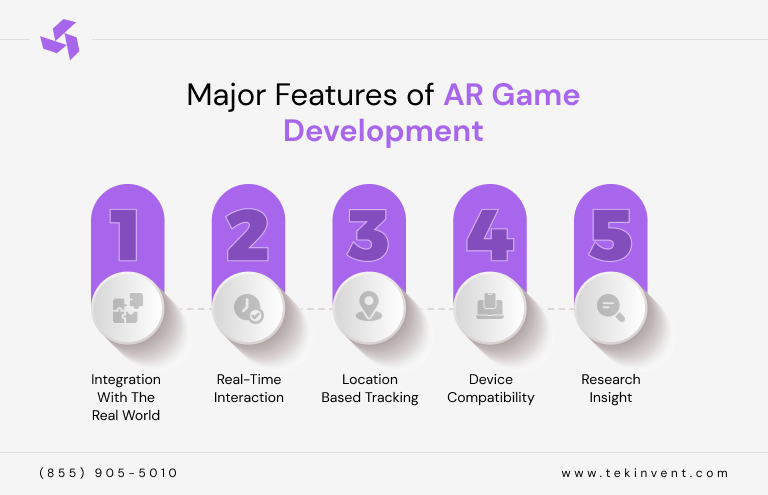
Here are some major features found in almost every AR Game:
1. Integration with the Real World
One of the key advantages of AR games is their ability to blend digital elements seamlessly into real-world environments. Players can see virtual objects, characters, or effects overlaid on actual surroundings, creating a highly immersive and engaging experience.
This integration allows games to feel more natural, interactive, and context-aware, making users feel like the game exists alongside the real world rather than in isolation.
2. Real-Time Interaction
AR games are designed to respond instantly to player actions, enabling real-time interaction with virtual characters, objects, and environments. This immediate feedback enhances gameplay immersion, allowing players to engage with digital content as if it were physically present.
Real-time interaction also supports adaptive gameplay mechanics, where game elements respond dynamically to the user’s movements, gestures, or decisions, making the experience more personalized and captivating.
3. Location-Based Tracking
Many AR games leverage GPS and geolocation technologies to create interactive, location-based experiences. These games can generate maps, quests, or challenges tied to specific real-world locations, encouraging players to explore their surroundings while engaging with the game.
By combining digital content with physical spaces, location-based AR gaming creates a unique blend of adventure, strategy, and social interaction that is particularly appealing for mobile users.
4. Device Compatibility
Modern AR games are designed to run across a variety of devices, including smartphones, tablets, and AR headsets. This broad compatibility ensures that players can access AR experiences regardless of the hardware they own, while developers can reach a wider audience.
Optimizing for multiple platforms also allows games to utilize device-specific capabilities such as advanced cameras, sensors, and motion tracking, enhancing both gameplay quality and user engagement.
5. Research Insight
The AR gaming market is growing rapidly, driven by technological advances and increasing consumer interest. According to a Statista analysis in 2023, the market is projected to surpass $32 billion by 2027.
Factors contributing to this growth include widespread adoption of 5G networks, improvements in mobile processing power, and the rising popularity of immersive AR experiences. This expansion presents significant opportunities for mobile app development companies and game studios to innovate and deliver next-generation AR content.
Types of AR Games
Augmented reality games come in many forms, each offering unique ways to engage players. From interactive social experiences to educational simulations, AR games are designed to blend digital content with the real world in creative ways. Understanding the different types of AR games helps developers, mobile app development companies, and businesses target their audience more effectively while designing immersive and memorable experiences.
1. AR Social Games
AR social games focus on collaborative or competitive interactions between players in real-world settings. These games encourage social engagement by allowing users to share experiences, trade virtual items, or compete in challenges that overlay digital content onto their environment.
Social AR games often leverage multiplayer functionality, location tracking, and shared virtual spaces, fostering stronger player connections and creating community-driven experiences that are both entertaining and interactive.
2. AR Educational Games
Educational AR games use augmented reality to make learning interactive and engaging. By overlaying digital content on real-world objects, these games allow students to visualize complex concepts, explore historical events, or simulate scientific experiments in real time.
AR educational games enhance retention, stimulate curiosity, and provide hands-on experiences that are difficult to achieve through traditional teaching methods. In 2026, they are expected to play an increasingly important role in classrooms, museums, and training programs.
3. AR Sports Games
AR sports games combine physical activity with digital gaming elements, offering immersive experiences that encourage movement, skill development, and competitive play. Players can compete in virtual matches, track their performance, or interact with AR-enhanced environments while exercising.
With the integration of sensors, wearables, and motion tracking, AR sports games deliver a more engaging and realistic experience than traditional sports simulations, making fitness and gaming more interactive and fun.
4. AR Stimulation Games
AR stimulation games are designed to activate the senses and enhance cognitive or emotional engagement. These games often combine visual, auditory, and tactile feedback to create highly immersive experiences. By stimulating multiple senses simultaneously, these games can improve focus, reaction times, and decision-making skills.
In the context of mobile AR gaming, stimulation games are particularly popular in experimental and therapeutic applications where engagement and interactivity are key.
5. AR Puzzle Games
AR puzzle games challenge players to solve problems by interacting with virtual objects in the real world. These games often involve spatial reasoning, pattern recognition, or logic-based challenges that are projected onto the player’s surroundings.
By combining mental stimulation with real-world interaction, AR puzzle games create highly engaging experiences that encourage critical thinking and creativity. They remain popular because they appeal to players of all ages and skill levels.
6. Location-Based AR Games
Location-based AR games leverage GPS and real-world geography to create interactive gameplay tied to specific locations. Players can explore neighborhoods, landmarks, or cityscapes while completing challenges, collecting virtual items, or competing with others.
This type of AR gaming encourages physical movement, social interaction, and exploration, providing a unique blend of adventure and digital entertainment. In 2026, location-based AR games will continue to grow, supported by advancements in mobile devices, 5G connectivity, and AR cloud technology.
How Much Does AR Game Development Cost?
The cost of developing an AR game can vary widely depending on factors such as complexity, platform, features, and the expertise of the development team. Unlike traditional mobile games, AR games require integration with real-world environments, advanced graphics, spatial mapping, and often real-time interactions, which can increase development costs.
Additional cost factors include:
- Platform selection: Developing for iOS, Android, AR glasses, or mixed reality devices affects budget and timeline.
- Design and UX: Highly immersive environments require detailed 3D modeling, animation, and UI/UX design.
- AR technology integration: Features like object recognition, real-time tracking, AI-driven NPCs, and multiplayer require specialized development expertise.
- Maintenance and updates: AR games often need ongoing updates to keep content relevant and compatible with new devices.
For businesses or startups looking to enter the AR gaming space, partnering with a skilled mobile app development company can help optimize costs while ensuring high-quality, scalable, and immersive gameplay.
By carefully planning features, platforms, and user experience, companies can balance development investment with long-term returns in engagement and revenue.
| Continent / Region | Junior AR Developer (0-2 years) | Mid-Level AR Developer (2-5 years) | Senior AR Developer (5+ years) |
| North America | USD 60 to 75 per hour | USD 75 to 90 per hour | USD 90 to 100 per hour |
| Australia | USD 60 to 75 per hour | USD 75 to 90 per hour | USD 90 to 100 per hour |
| Western Europe | USD 25 to 50 per hour | USD 50 to 75 per hour | USD 75 to 99 per hour |
| Eastern Europe | USD 50 to 60 per hour | USD 60 to 70 per hour | USD 70 to 80 per hour |
| Asia | USD 20 to 30 per hour | USD 30 to 40 per hour | USD 40 to 55 per hour |
Note: AR game development often requires specialized skills such as 3D modeling, ARKit/ARCore integration, AI implementation, and spatial mapping, which can impact hourly rates and overall project cost.
Best Tools for AR Game Development
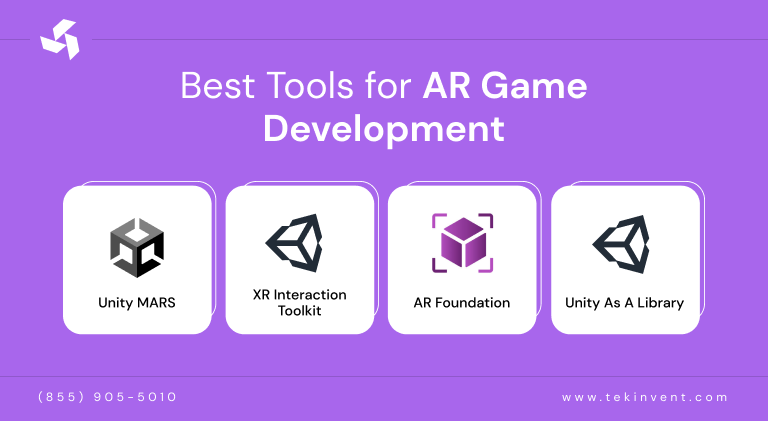
Creating high-quality AR games requires the right set of development tools and frameworks. These tools help developers design immersive environments, implement interactive gameplay, and ensure smooth performance across multiple devices.
Whether you are building games for smartphones, tablets, or wearable AR devices, using specialized frameworks like Unity and its associated toolkits can significantly speed up development while maintaining high levels of engagement and realism. In this section, we explore some of the most powerful tools available for AR game development in 2026.
1. Unity MARS
Unity MARS is designed to streamline and accelerate AR game development. It offers extensive templates and pre-built components that allow developers to integrate dynamic objects and virtual environments quickly.
With Unity MARS, creating responsive AR interactions and context-aware gameplay becomes easier, reducing development time while ensuring high-quality immersive experiences for players.
2. XR Interaction Toolkit
The XR Interaction Toolkit is a Unity package that simplifies the creation of interactive AR games. It enables developers to implement component-based interactions, gestures, and controls with minimal effort.
By providing tools for intuitive user engagement, this toolkit helps enhance gameplay experiences, making AR games more immersive and responsive for mobile users.
3. AR Foundation
AR Foundation is a powerful framework that works seamlessly with Unity to develop AR gaming applications. As a cross-platform solution, it enables developers to create immersive experiences that work across multiple devices.
The framework provides essential AR functionalities, supports pre-built libraries, and allows access to source code for enhanced customization. Developers can track device locations in real time and even build games for advanced hardware like Microsoft HoloLens, making it a versatile choice for AR game development.
4. Unity as a Library
Unity as a Library provides developers with a flexible framework to manage and control AR game app development efficiently. It allows you to integrate Unity features into existing Android or iOS projects, supporting Android Gradle and iOS Xcode environments.
This framework enhances game usability, enables modular feature deployment, and makes it easier to scale and update AR gaming applications.
Final Thoughts
AR game development is rapidly transforming the mobile gaming landscape, offering players immersive, interactive, and context-aware experiences. In 2026, trends such as AR cloud gaming, 5G connectivity, AI-powered interactions, mixed reality, wearable AR glasses, and multiplayer shared experiences are shaping the future of the industry.
For businesses and developers, understanding these trends and leveraging the right tools, frameworks, and tech stack is essential to creating high-quality AR games that engage users and stand out in a competitive market. While development costs vary based on complexity, platform, and features, partnering with a skilled mobile app development company can help optimize investment, ensure scalability, and deliver a seamless gaming experience.
By staying updated with emerging AR technologies, implementing innovative features, and focusing on user engagement, AR game developers can build games that are not only entertaining but also impactful, offering players a truly next-generation experience.

Build Smart with The Right Team.
We bring expertise, technology, and trust you look for in your digital journey.